Archiv der Kategorie: Lexikon

Roses and Cherry Blossoms

A japanese man said to me: „We Japanese like cherry blossoms and dislike roses“.

I don’t want to discuss the japanese soul or aesthetic. But this words were an interesting sum up of both things. I always asked myself why are japanese gardens looking so different. The have a pond, gras and flowers. All you have in a european garden too. The difference has to be in somewhere in the details and I cannot explain it. It is the same with japanese styled room. You can say if they were designed be a real Japanese or an European. Something is different with the aesthetic of Japanese.

Japan is the country formed by of Buddhism and Sinto ideas. Both religion honour the ancestors. And compared to the christian religion they seem to be more comfortable with death and afterlife, somehow. Samurai always were styled. No one liked the idea to end up as a unclean dead body.

But back to the roses. Roses wilt at the stem. It is like they are despirately try to stay alive. Cherry blossoms are falling easy and beautiful at the moment of most beauty, in the middle of their life. It is like they don’t want to hold out to the last possible moment. They don’t wilk. They fall white and clean. Their life is short but powerful in their impression.

Therefore the cherry blossom is center of japanese aesthetic. It is like the German saying: „To stop if it is the best.“ (it really loses in the translation). For the japanese the cherry blossom is a symbol of perishabililty but also for a new start. With the cherry blossom spring is starting in Japan. But also a new school year. We know this from Manga and Anime. Goodbye from former class mates or meeting new frieds (and first love) at the a new school; and the cherry blossom in the background. So cheesy. But also, so Japanese.

The roses that holds to the wrong values.
The cherry blossom as the symbol of begin and end.

We can find a similar aesthetic in the movie Samurai fiction. In an interview I saw, the author Hiroyuki Nakano talked about the (only) two female characters, Koharu and Lady Okatsu. He said that there are two moments of beauty in a female life. Koharu represents the first moment. She is young and unmarried. Lady Okatsu is a woman in her prime. The second moment of beauty. If you follow the idea of cherry blossom. it is only logical, that she dies. She will not wilk.
deutscher Blogeintrag

modern architecture – Yokohama

Like the other articles about architecture also this one is under construction …

In Yokohama you have to know that the whole harbour area was redesigned in a project called Mirai 21. The Queens Plaza and the Landmark Tower are the center of this new area. Another architectural highlight is the pilot office at the harbour and the old brick warehouses. You should visit the area at night.

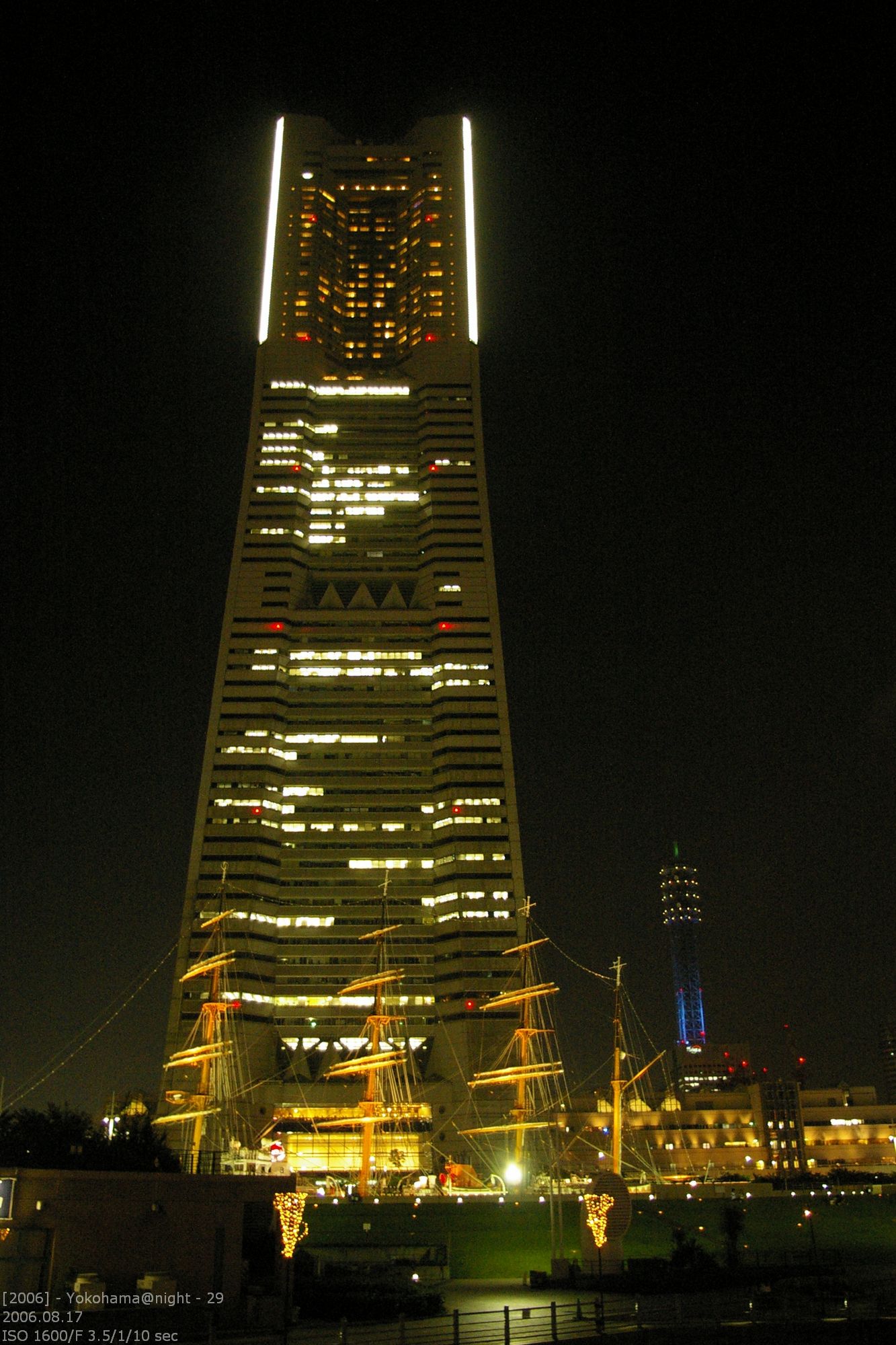
Landmark Tower
Landmark Tower

Height: 70 floors / 298,5m
Building Time: 03/1990 bis 07/1993
Architect: H. Stubbins & Associates

Before the completion of the Sky Tree in Tokyo, the Landmark Tower was the highest building in Japan. While the Sky Tree is a TV tower, the Landmark Tower is still the highest office / hotel building.

The building is splitted into two functional areas. The lower floors are a shopping mall with 160 shops. Above that until the 48th floor are office space. Above this floor is the Royal Park Hotel. At the floor 69 is a sight seeing platform called „Sky Garden“. The elevator was the fastest in the world (in 2004). He reached 750m/min. The whole ride takes less than 50 seconds including closing the doors.

Queens Plaza
Queens Plaza

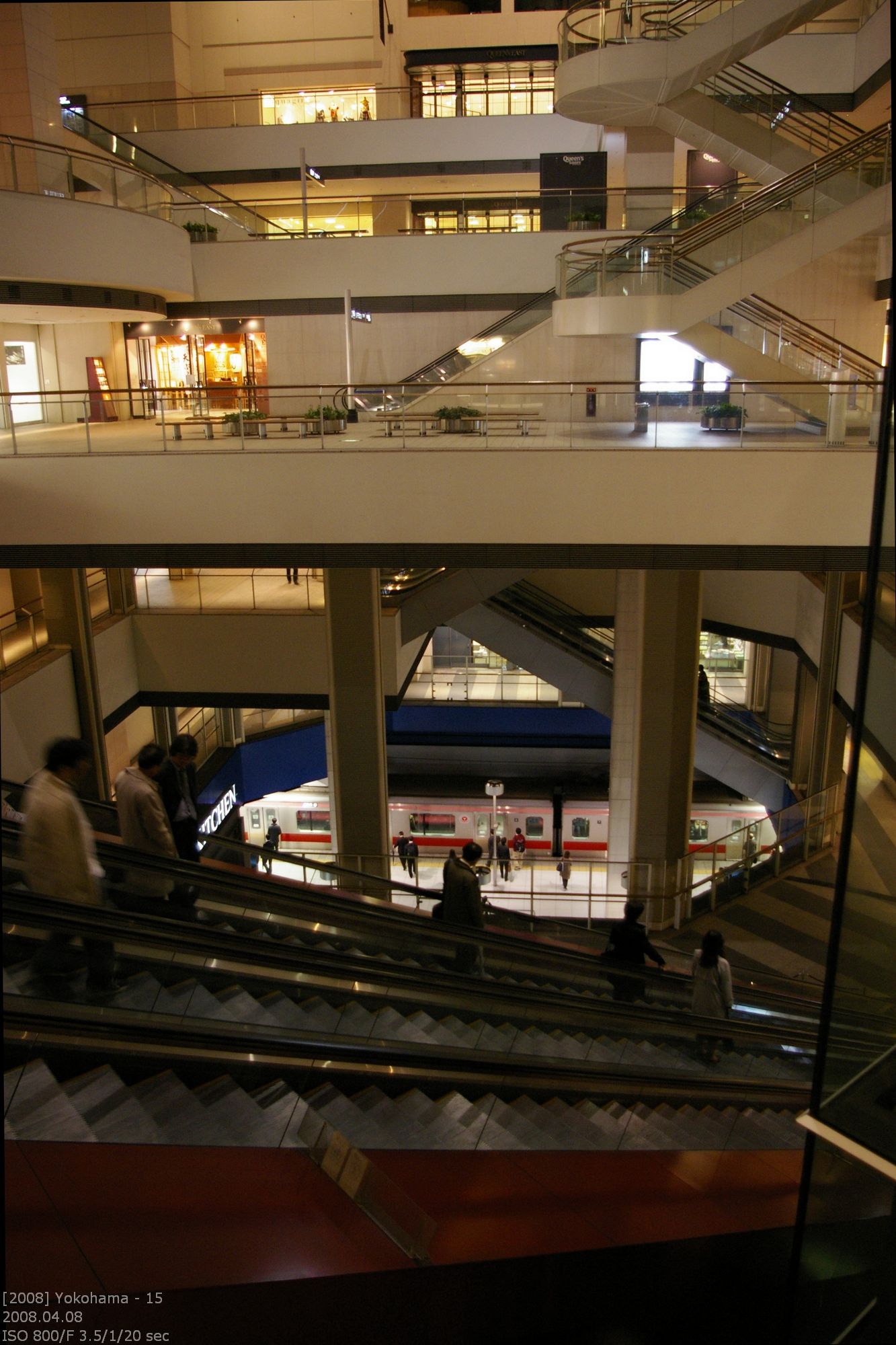
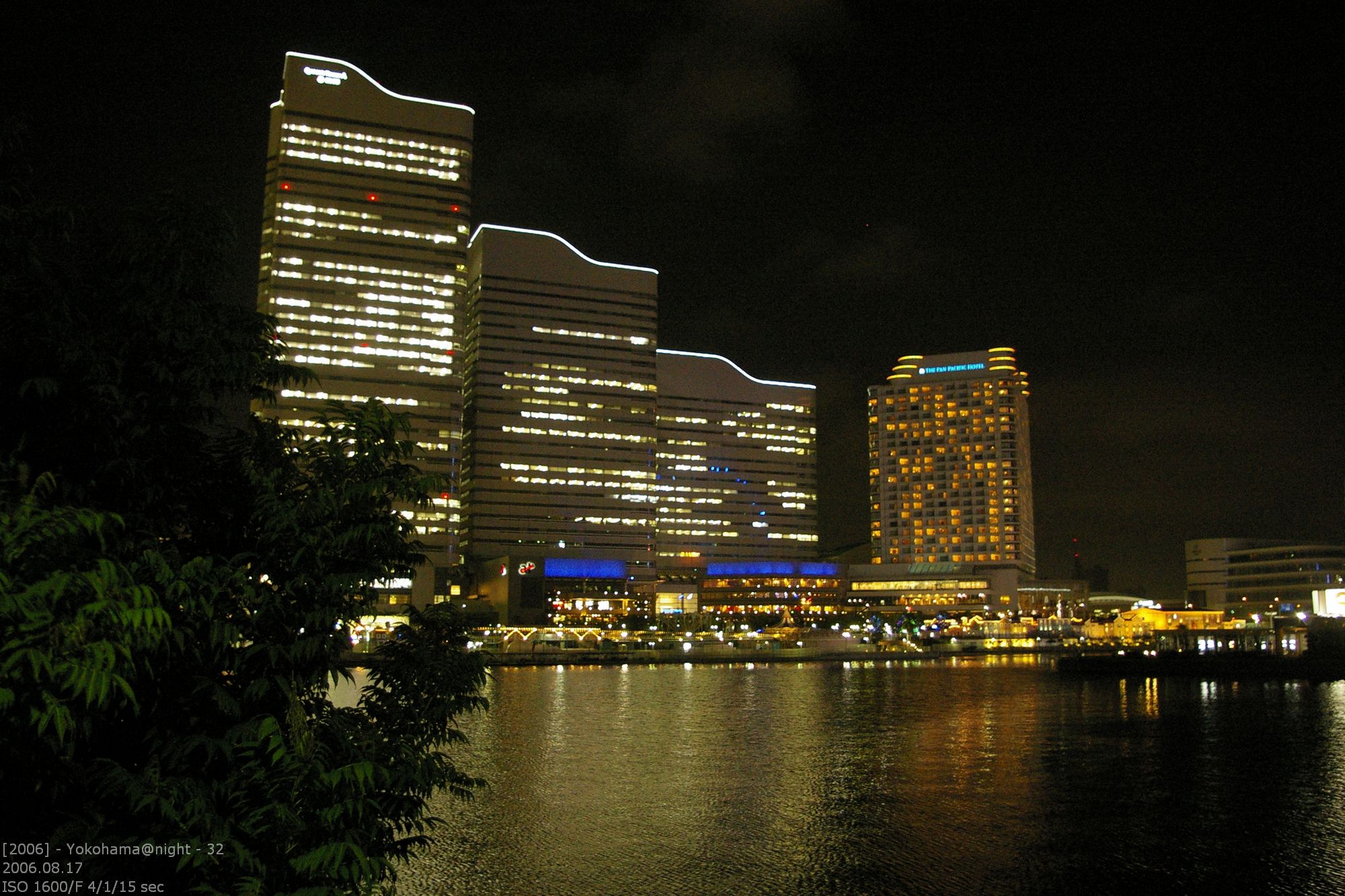
The Queens Plaza is a complex of three buildings that are connected at the basement level. In the core of building is the subway station. The station is totally integrated into the building. On on edge of the three buildings is a nose along the whole height.  It is very good to see if you are looking down from the Landmark Tower. The nose is there to break the air stream caused by wind. It prevents turbulences and reduced vibrations of the building.

Station Core
Station Core

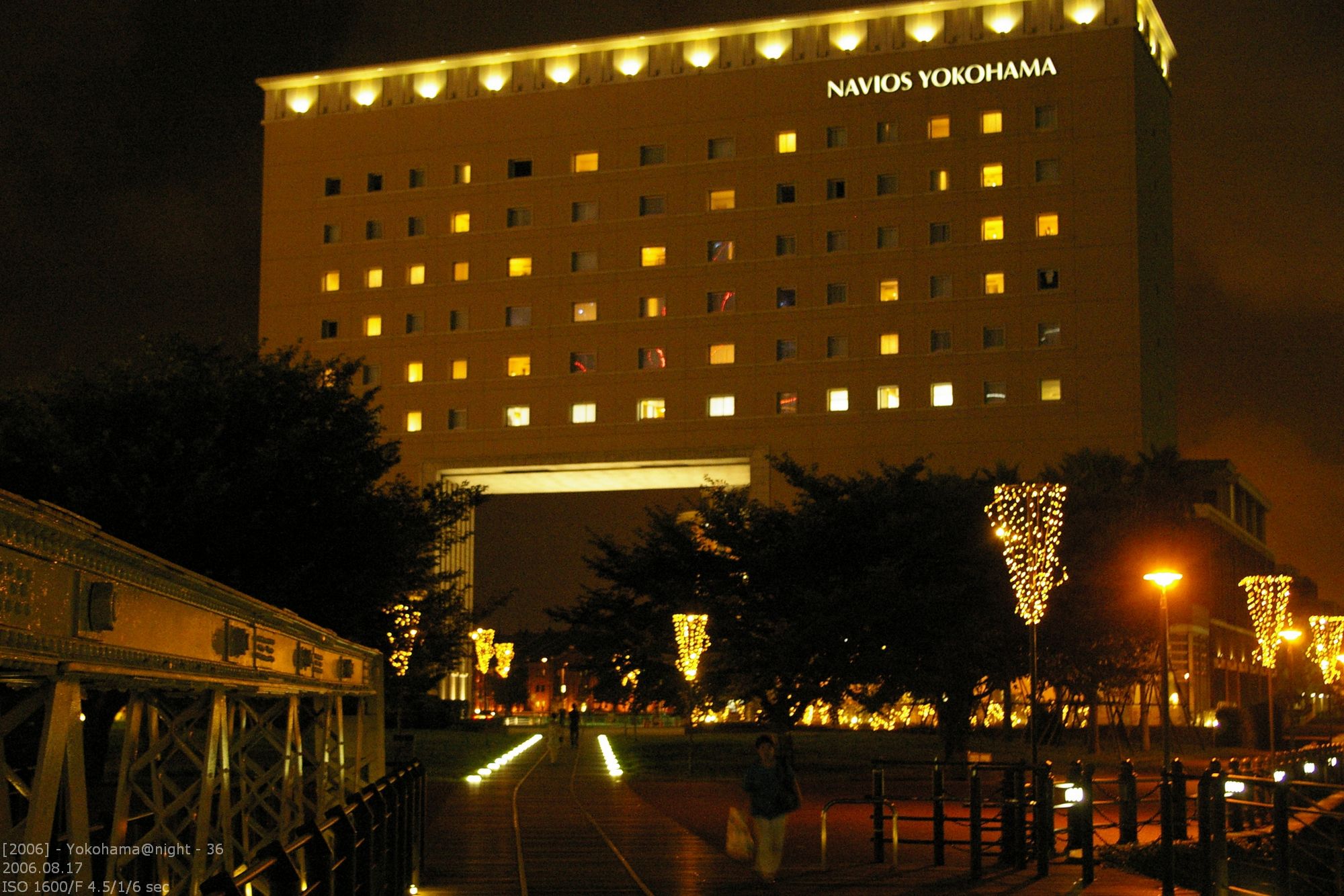
In the Mirai 21 project a part of the old train tracks was remodelled as a sidewalk. The tracks are still there and filled up with wood. The Navios Yokohama was built above this sidewalk.

Navios Yokohama
Navios Yokohama

The train tracks are leading from the Landmark Tower to the brick warehouses. 2010 there was unused space to pass. Looks like Mirai 21 is still not complete.

Ware Houses Yokohama
Warehouses in Yokohama

The warehouses are unchanged on the outside. The didn’t touch a thing. The just added big glass elements in the former doors. That was the best thing they could think of. At night, of the buildings are illuminated in yellow/orange light, it looks like the steels frame of the building is glowing. Behind the thick walls are several restaurants and bars. This is a good example for reviving and old object with only tiny, nearly invisible changes.

Lotsenstation
Lotsenstation

Not accessable for tourist but still an eyecatcher is the pilot station. It is one of the most important buildings of the Japanese Avantgarde.

Yokohama is a good example that japanese architect are designing their buildings for the night. Nowehere else is the impact of an building that powerful at night. And only at night. During the day they are more or less gray blocks of the steel, glass and concrete.

deutscher Blogeintrag

modern architecture – Oosaka

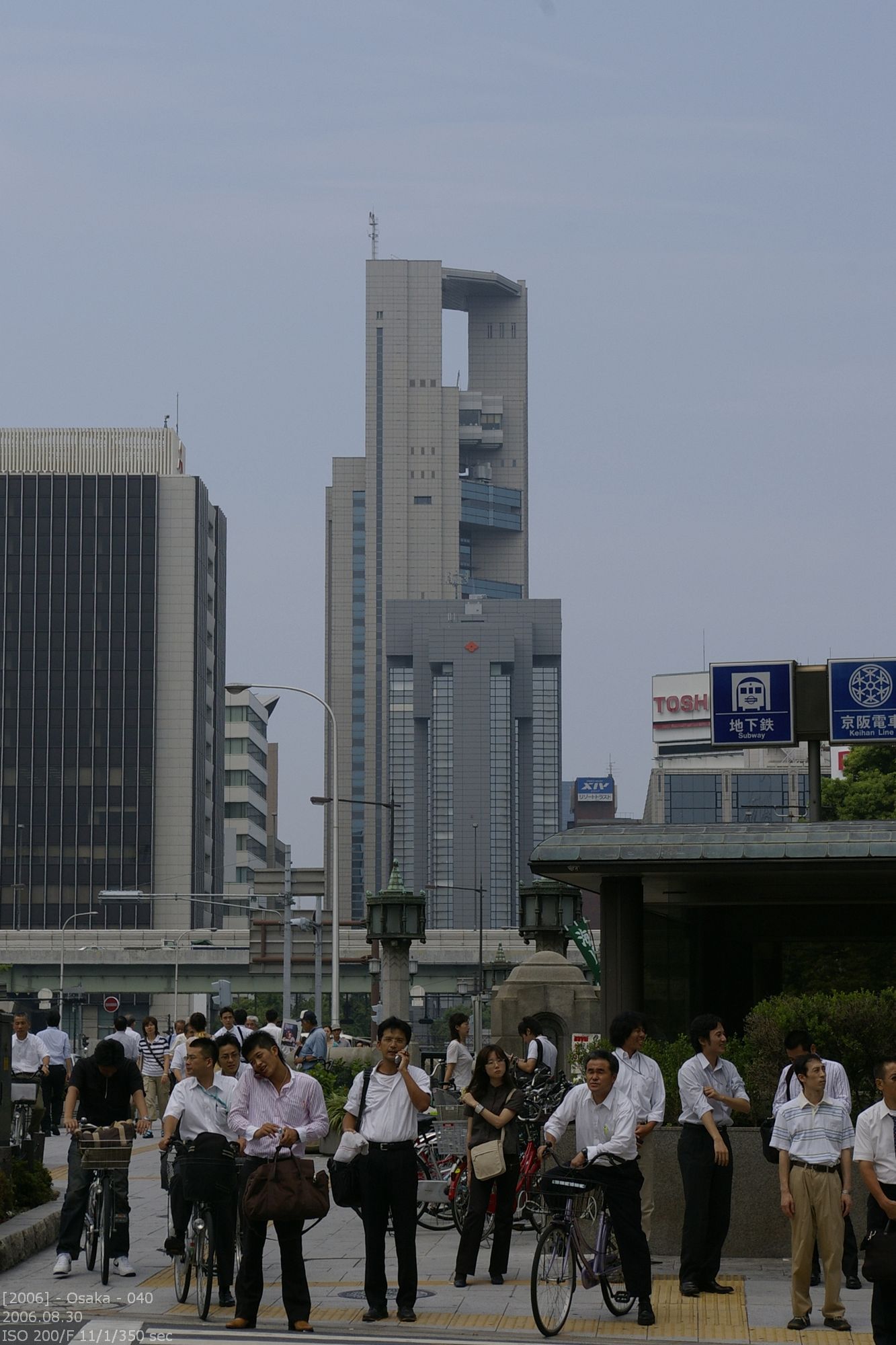
Only one article for Oosaka isn’t fair but I was only for two days in Oosaka with a digital camera. And I focused on the tourist attractions. Architecture wasn’t may aim at that time. But even then, one building was outstanding. At it is in walking distance of Umeda station. It also has a obeservation platform on the roof.

Umeda Sky Building (梅田スカイビル)
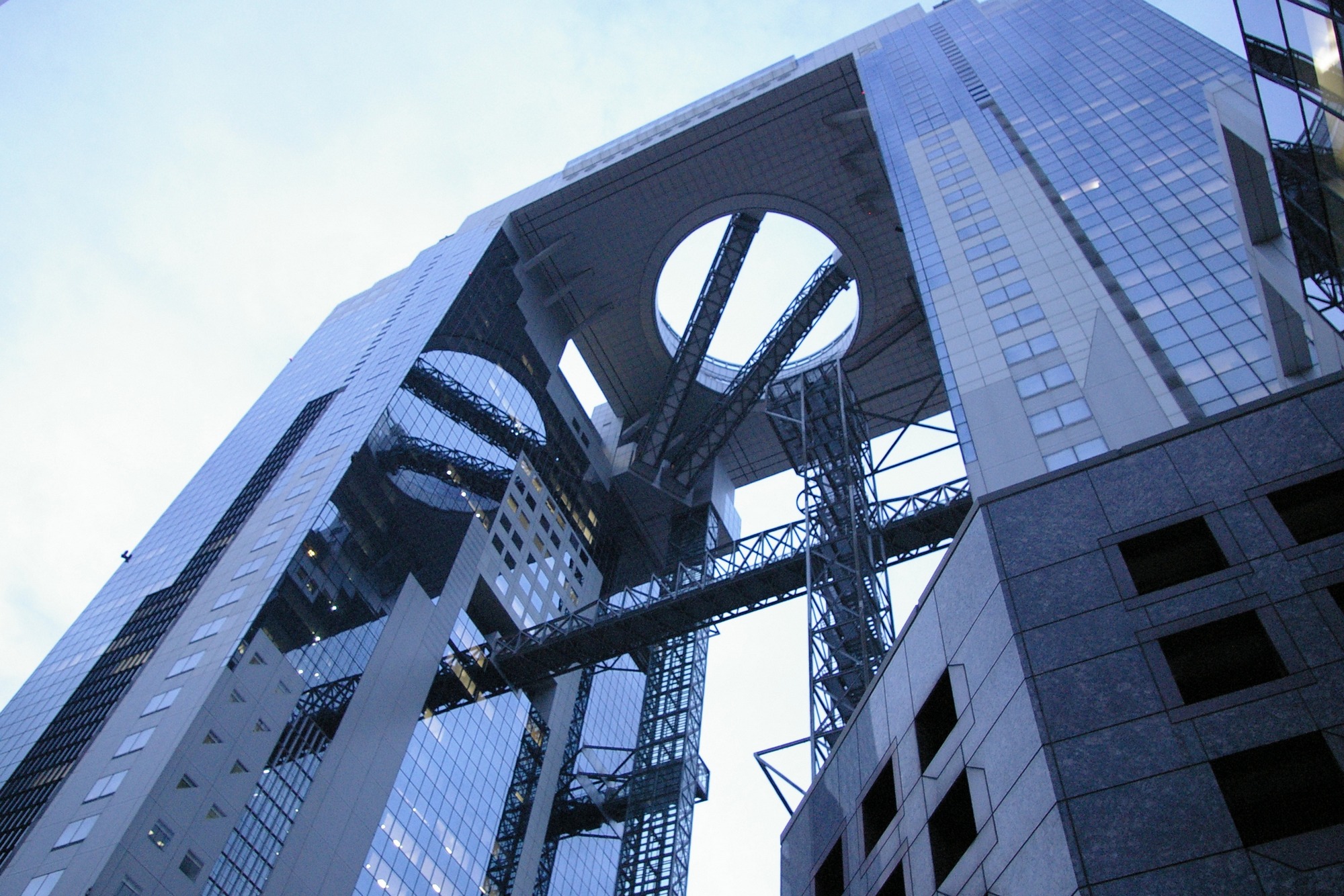
173m (43 floors), Architekt: Hiroshi Hara, 1993

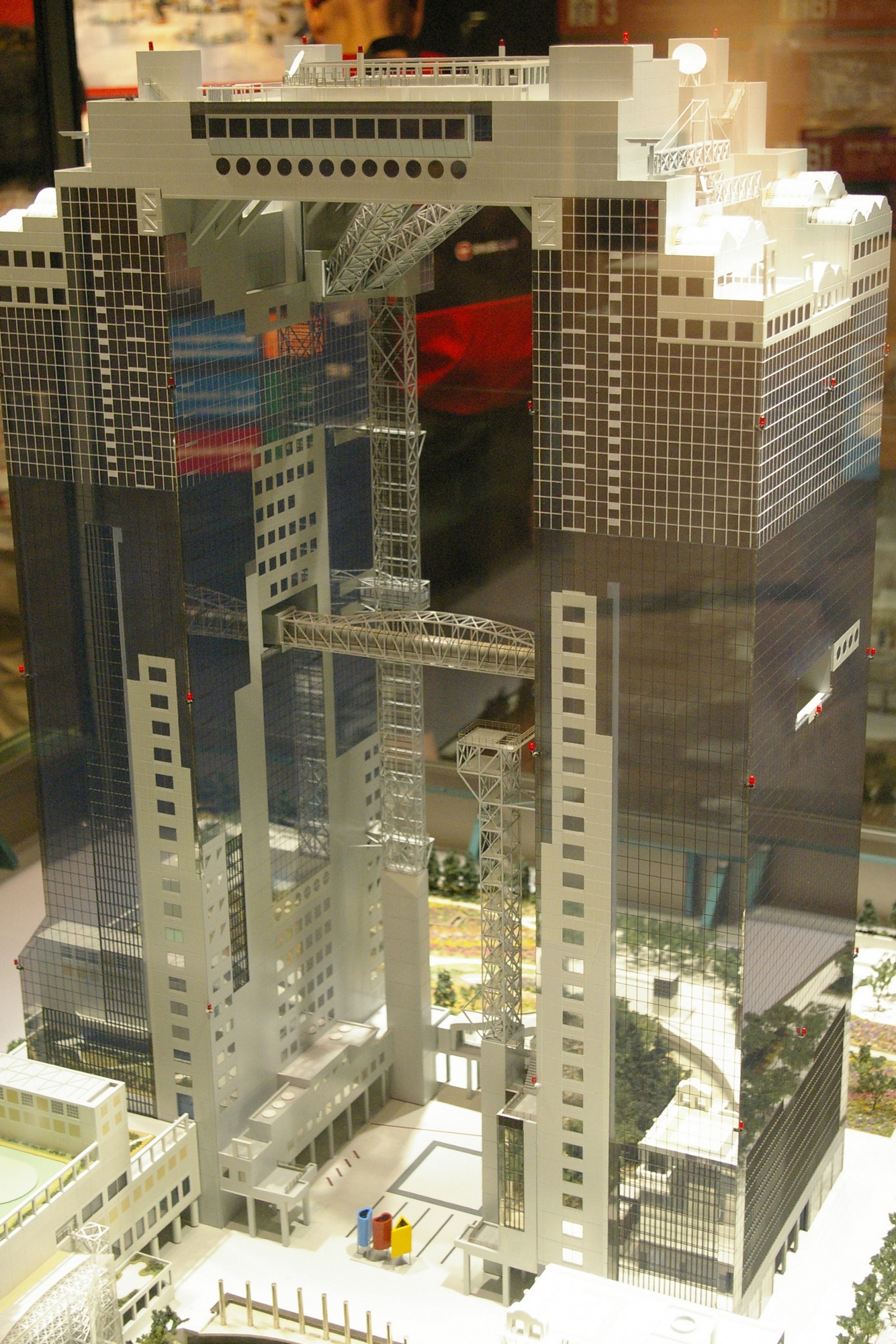
The building ins’t that high, but it’s concept is unique. It looks like a upside down U with a hole. The both towers of the building are connected at the top by a platform with a restaurant. A special elevator is ending below the platform. From there two elevator are leading to the restaurant area. The platform with the restaurant has a hole in the center. This panaroma glass front provides a good view down. It is obvious that the restaurant and the observation deck above was planned from the beginning. A common approach in Japan for high buildings, that tend the become the city landmark. The approach surely was taken over from the radio towers of the 1950ies („Eiffel Towers“).

The building was designed by Hiroshi Hara and was part of the „City of Air“ project in 1988. Originally there was a plan for 4 connected building but only two were realized. The opening was in 1993. The oberservation deck is called The Floating Garden Observatory.

Other buildings worth mentioning

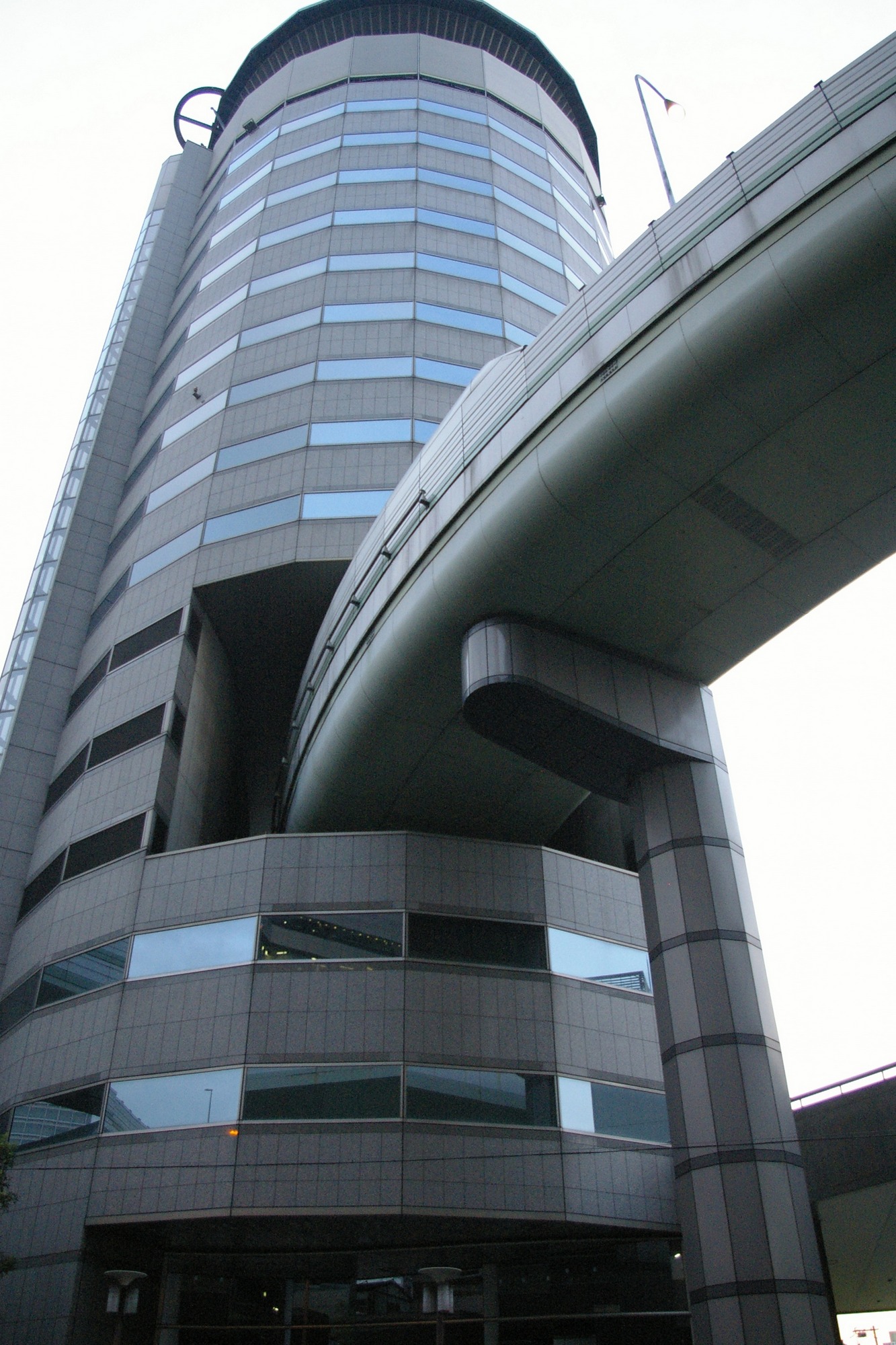
I don’t verified the identity of the left building. I will provide more information later.  The right building is for sure an eyecatcher. The on-ramp of the expressway is going right thru the building. This happens above the 5th floor. But the street is on no point connected to the building. Therefore no vibrations are transmitted to the building.

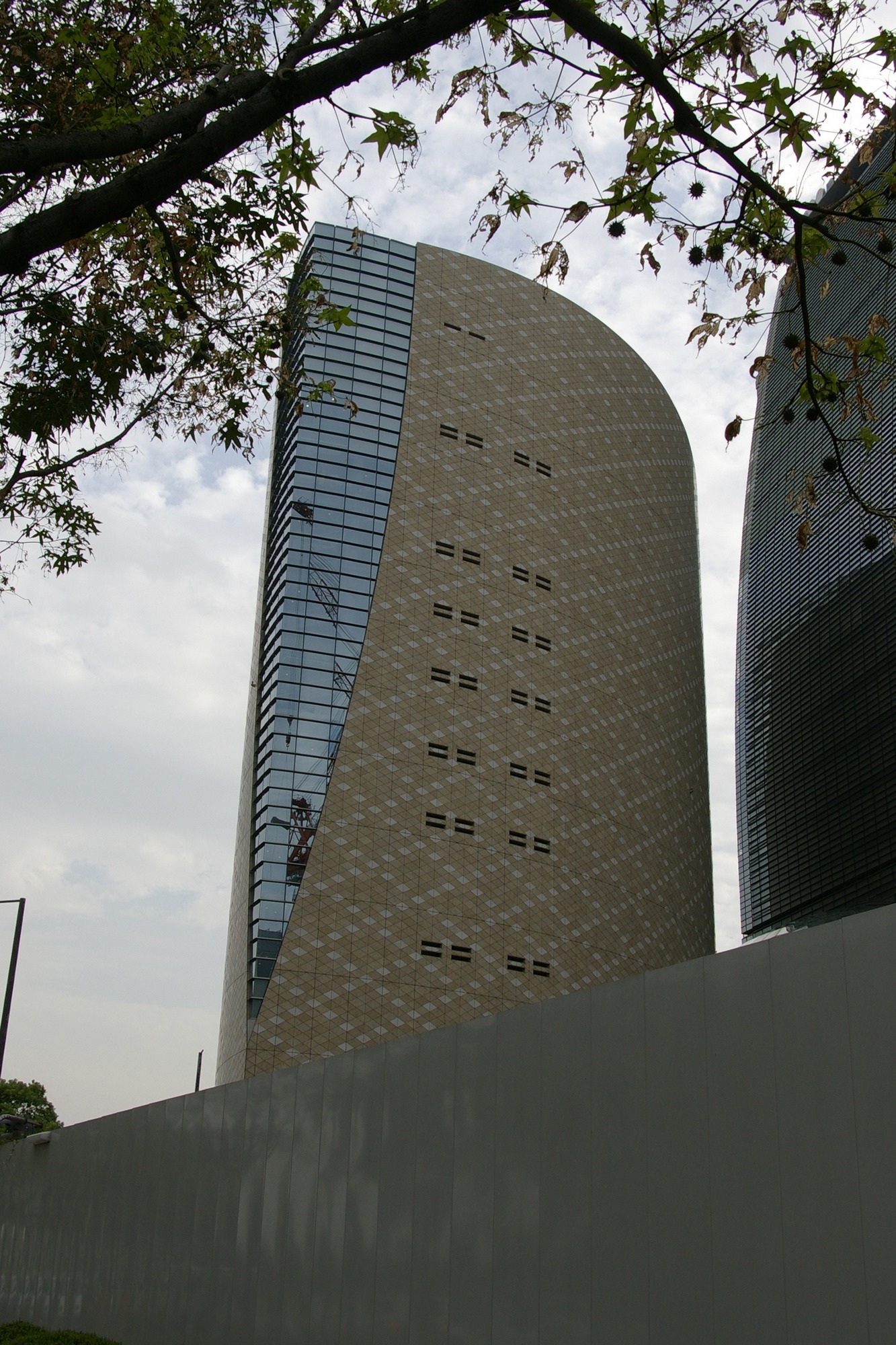
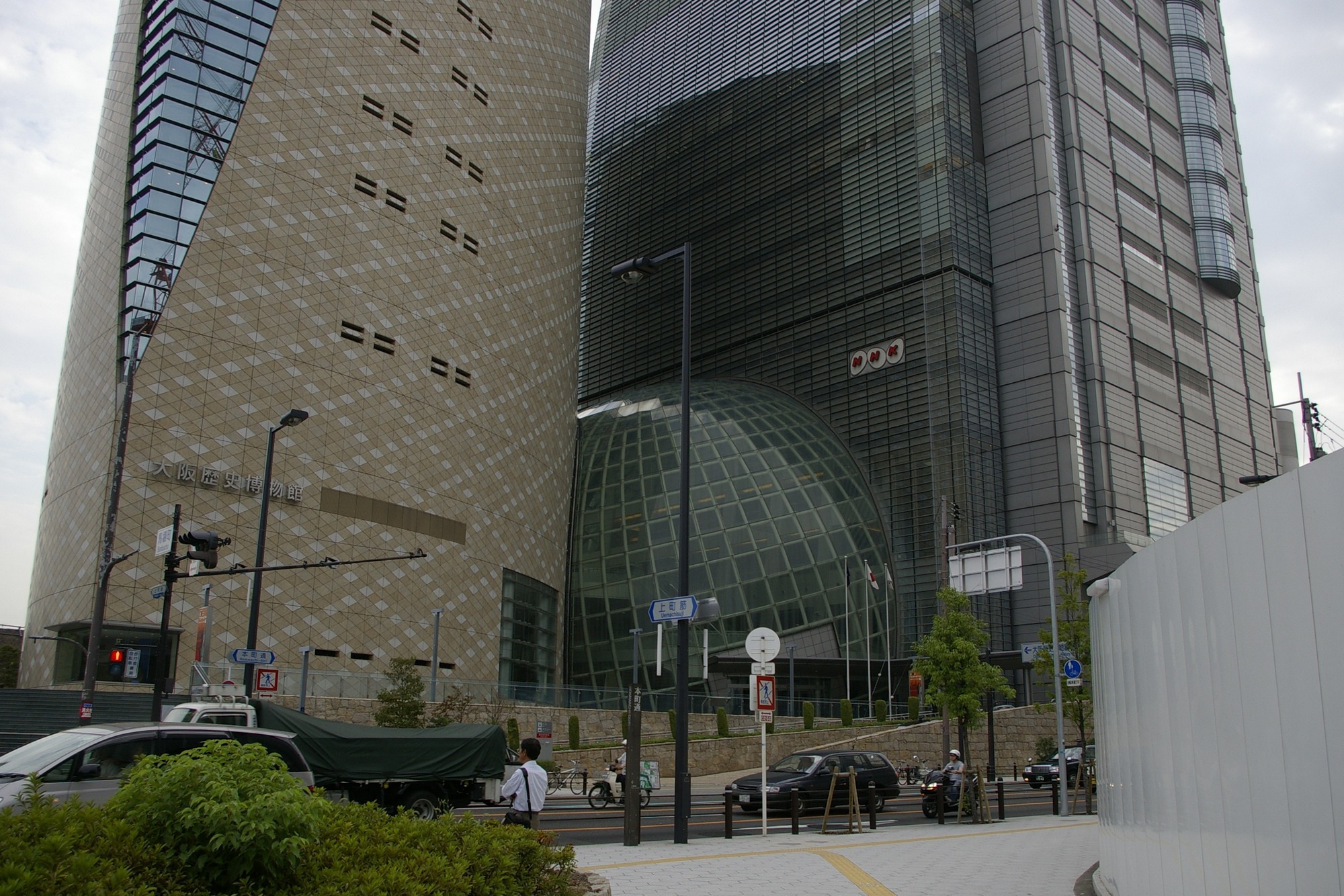
NHK building and the museum of Oosaka

Both building are sharing the entrance hall, which is optically a part of the NHK building. The design of the museum is independent from the NHK design. But even if they are so close together it doesn’t bother.

deutscher Blogeintrag

modern architecture – Nagoya

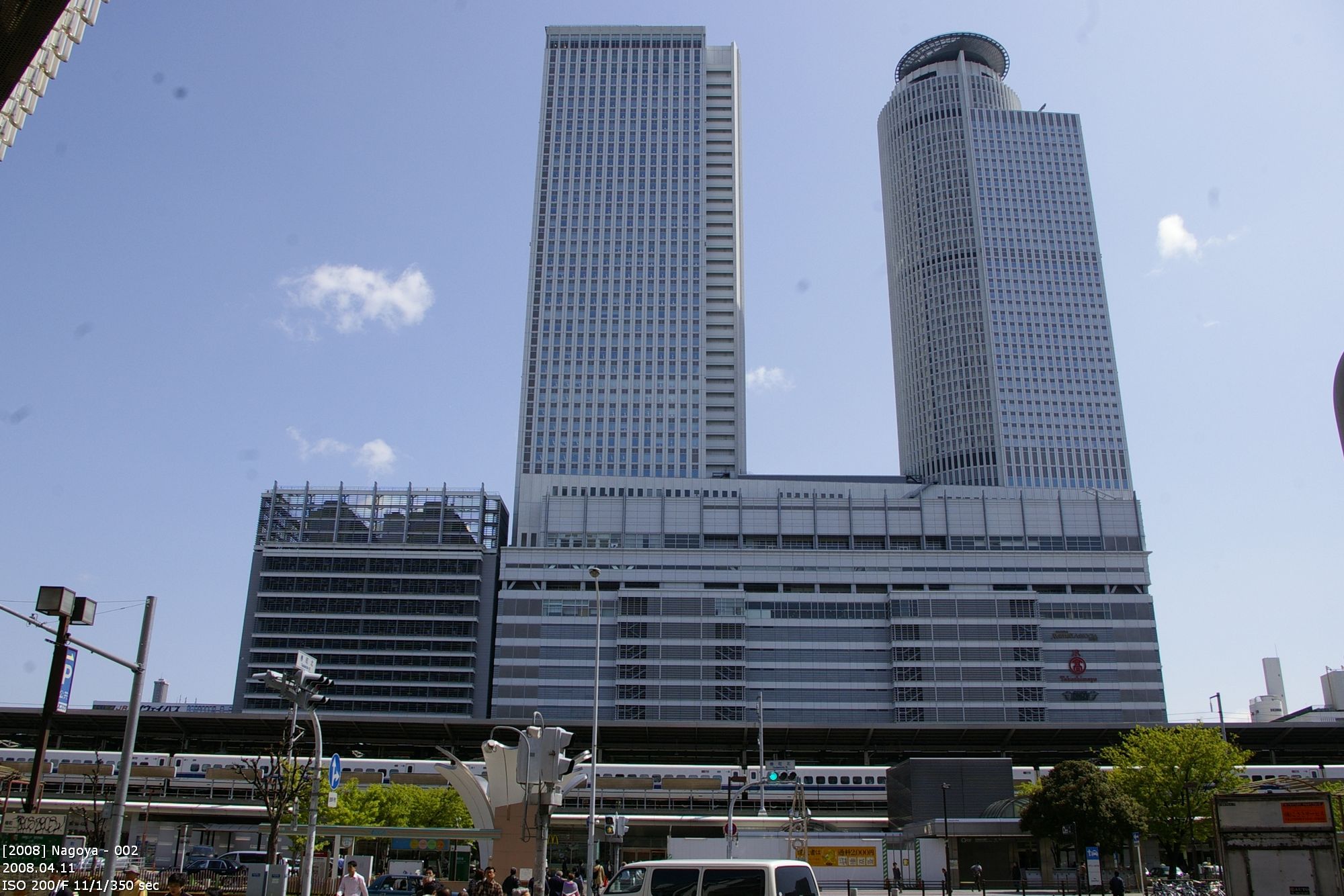
The building as two sections. The lower section is the train station. Above there are two towers: The JR Central Hotel Tower (left side, 59 floors) and the JR Central Office Tower (right side, 55 Etagen + Helipad). There is a restaturant in the uppermost floor of the Hotel Tower. This is some kind of a standard in Japan.

Modern architecture is not limited to Tokyo, it is only one of the biggest hot spots in the world. If you travel thru Japan you realize that train stations are epicenter of urban development. You cannot see that in Tokyo and Shinjuku because of the density of the buildings there. But you can see it in Nagoya. With its 40 and 59 floors the station building is visible even from far away.

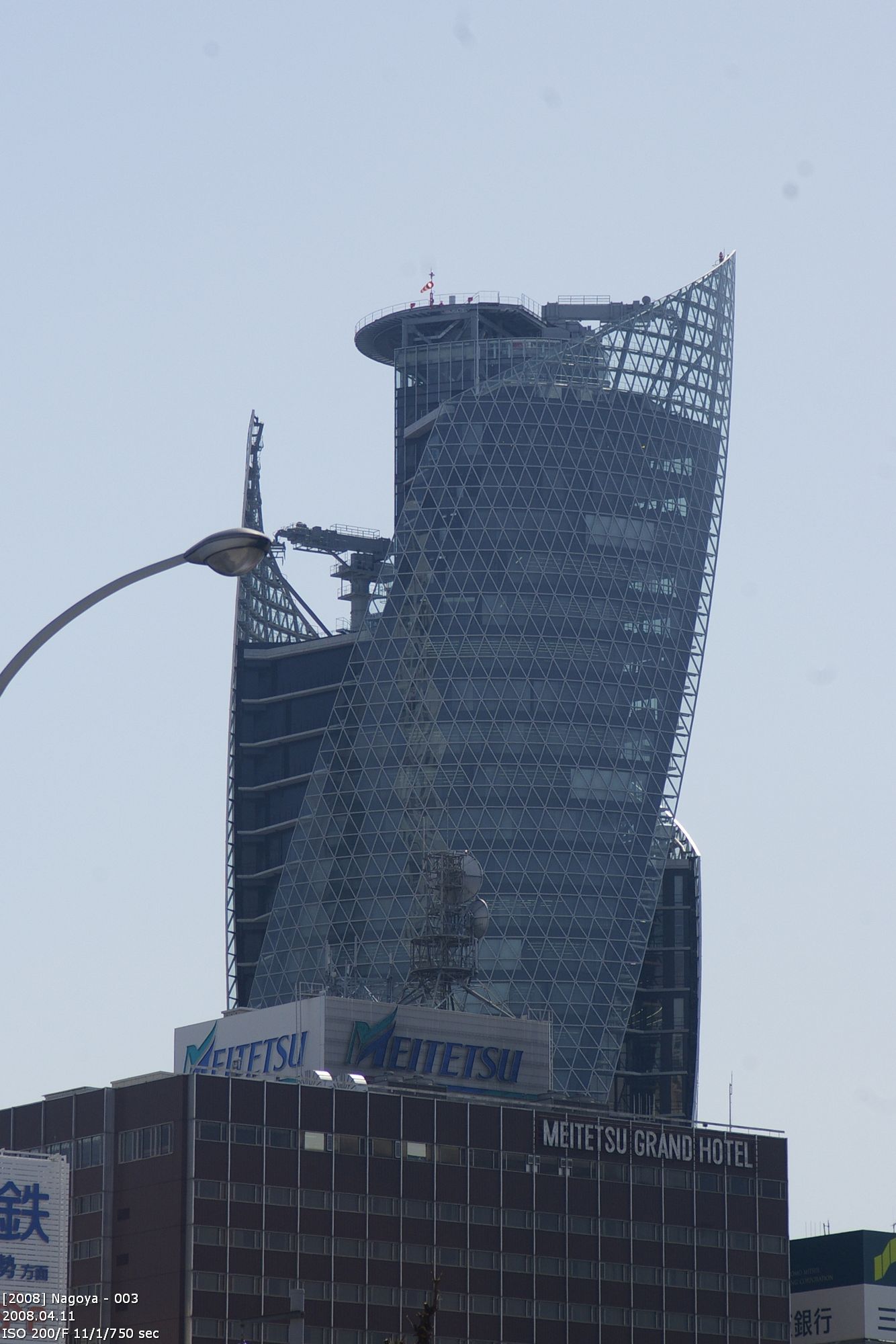
Mode Gakuen Sprial Tower
170m, 36 floors; 2005-2008; architect Nikken Sekkei

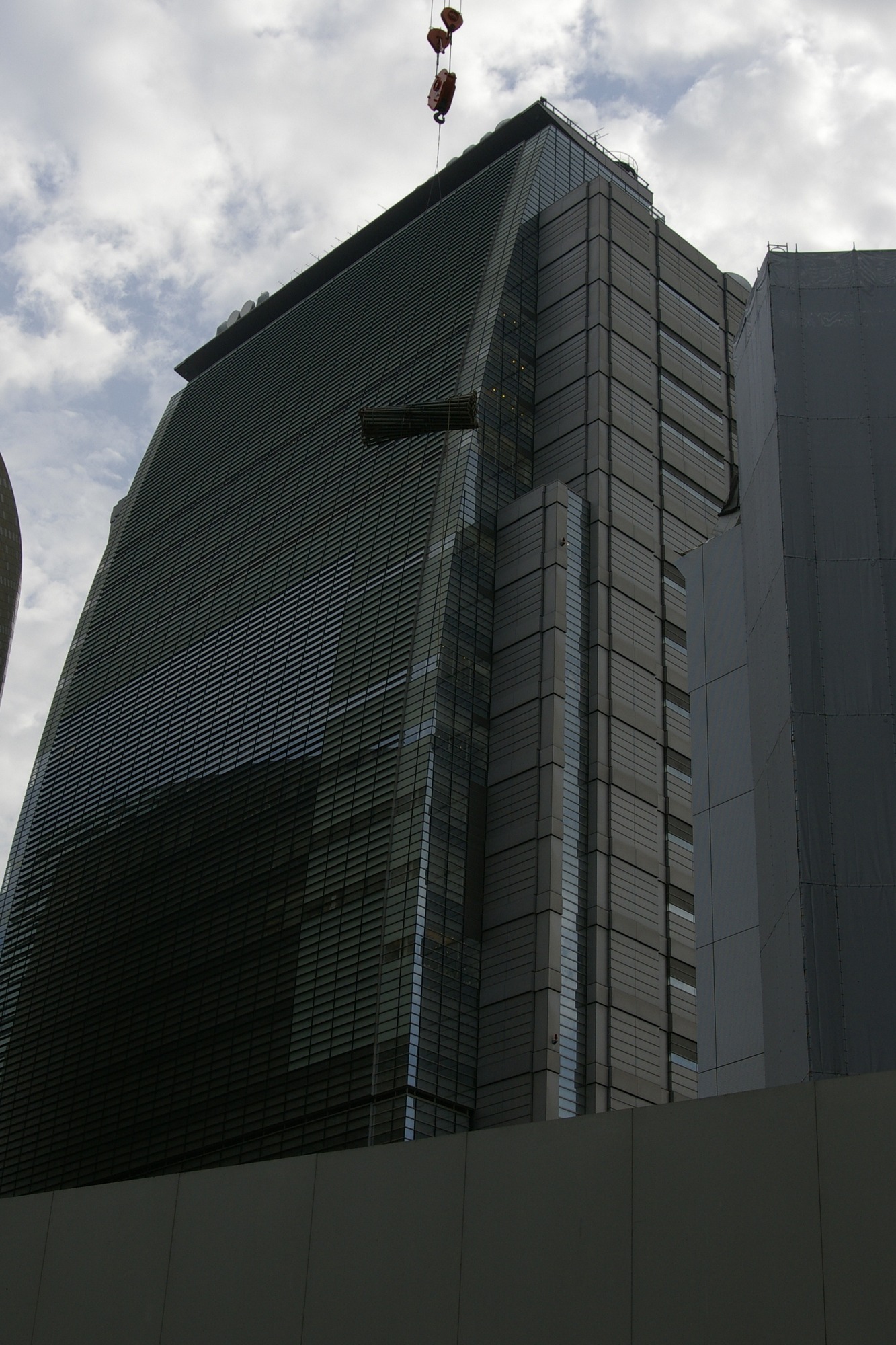
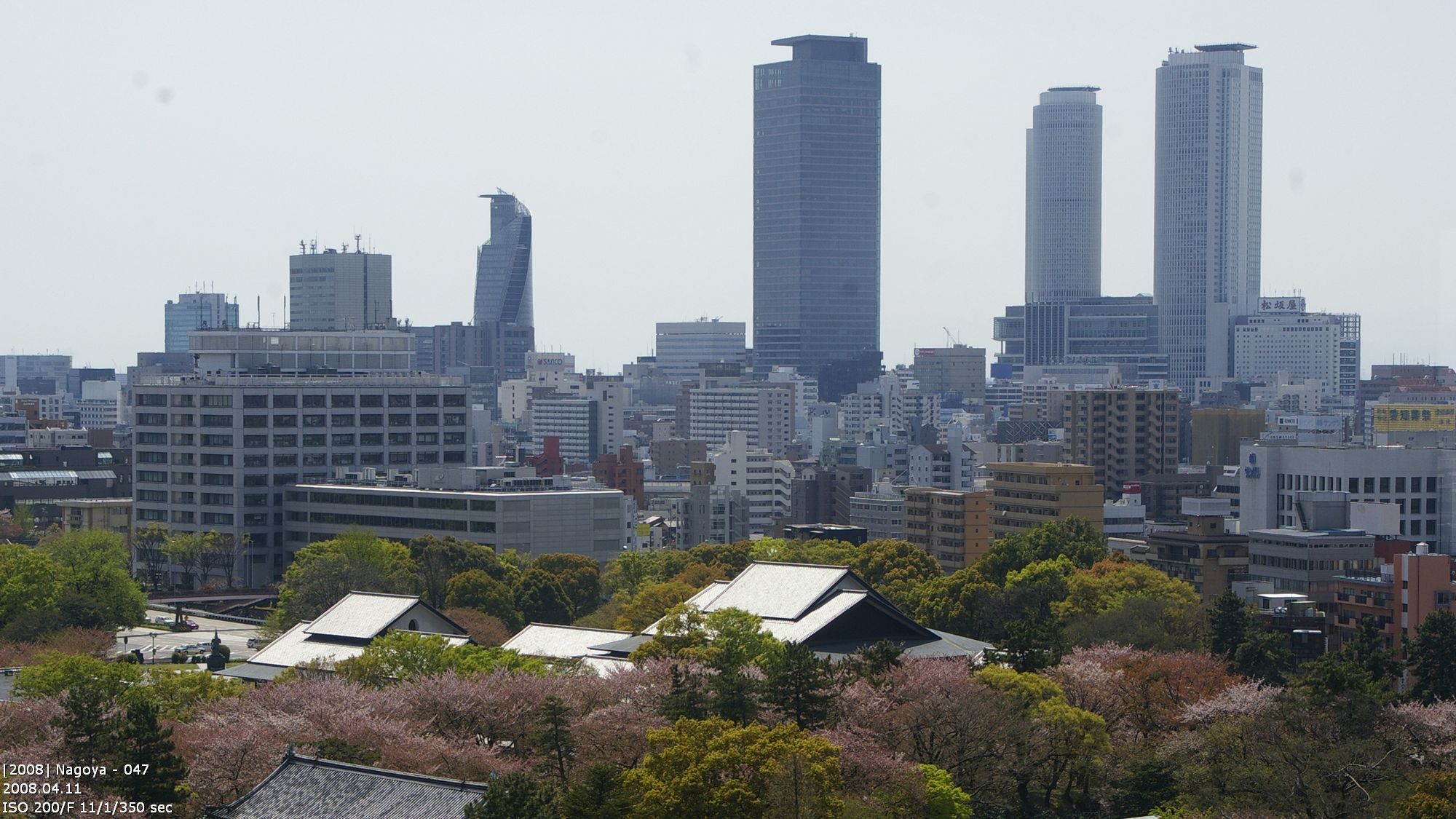
Next to the train station is the Mode Gakuen Sprial Tower of Nagaoya. Like the Mode Gakuen Cacoon Tower in Tokyo it houses a fashion school. Architect in charge was Nikken Sekkei. The building is with 170m (36 floors) one of highest buildings in Nagoya. It was built in 2005-2008. The picture is from 2008, right after the finished the work.

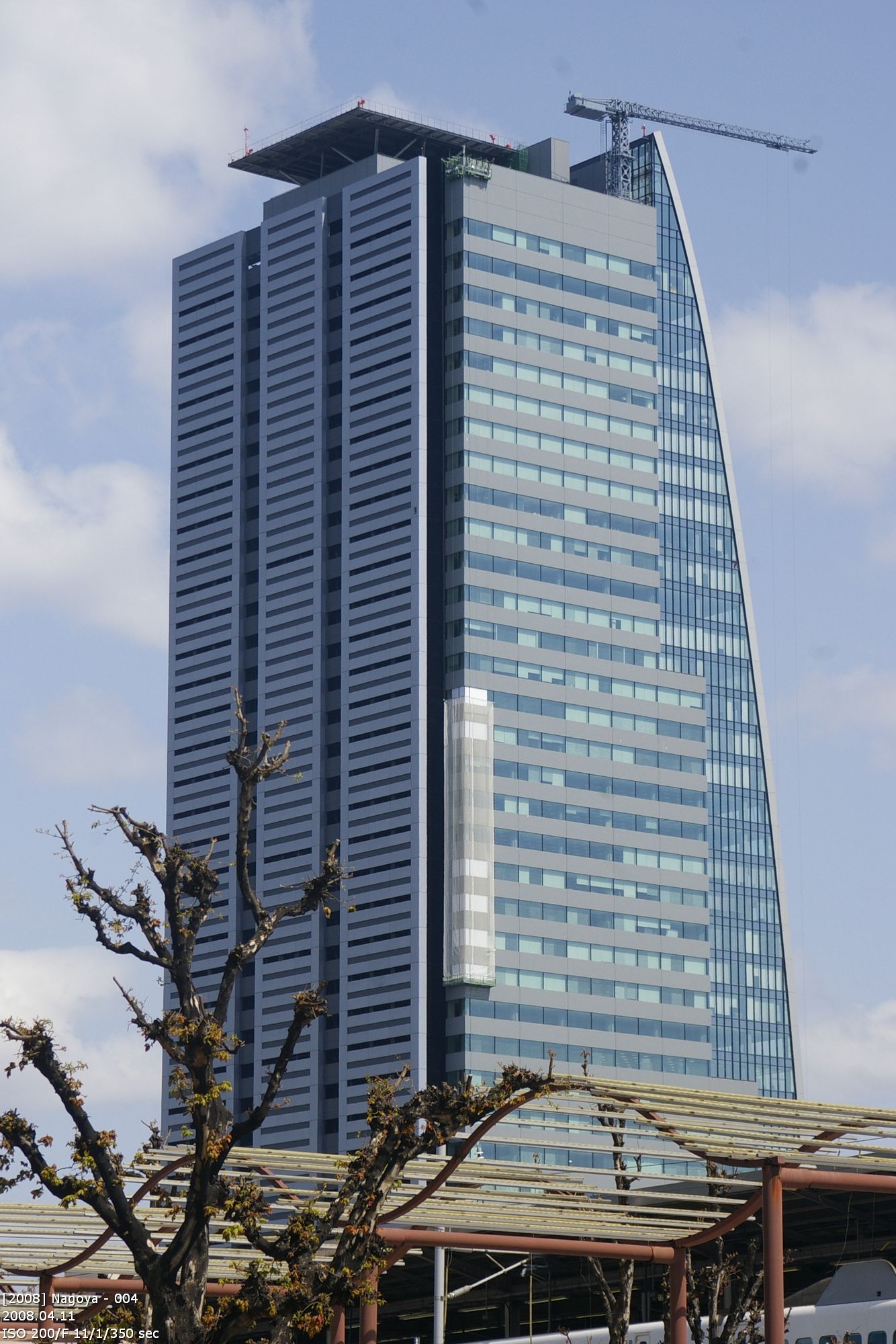
Spiral Tower and Lucent Tower

Nagoya Lucent Tower
180m, 40 floors

The Lucent Tower is with 180m (40 floors) the 4th tall builing in Nagaoya. On the panorama you can see he the 4 buildings stand out to the rest of Nagoya.

Nagoya City Hall / Aichi prefecture office

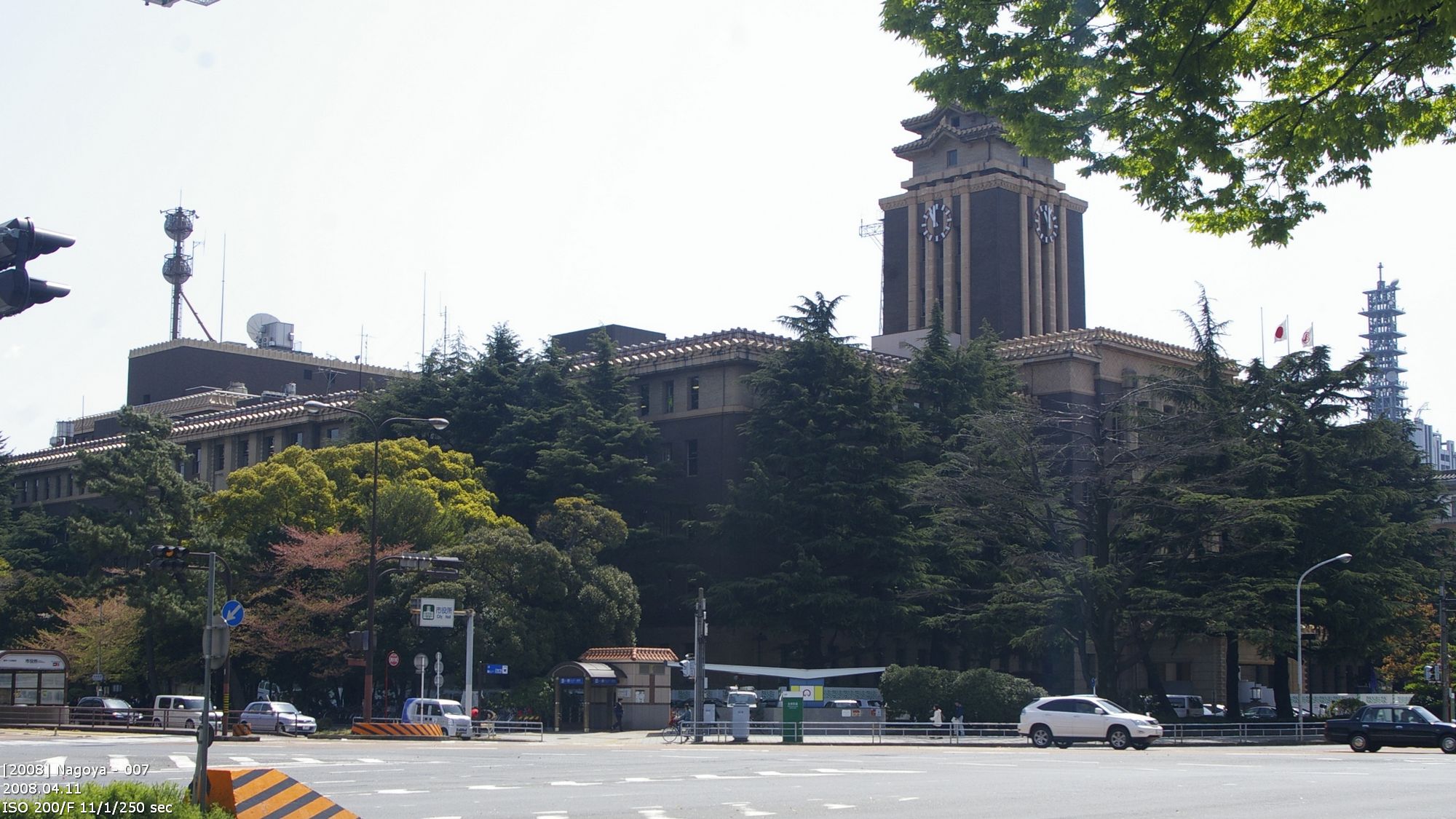
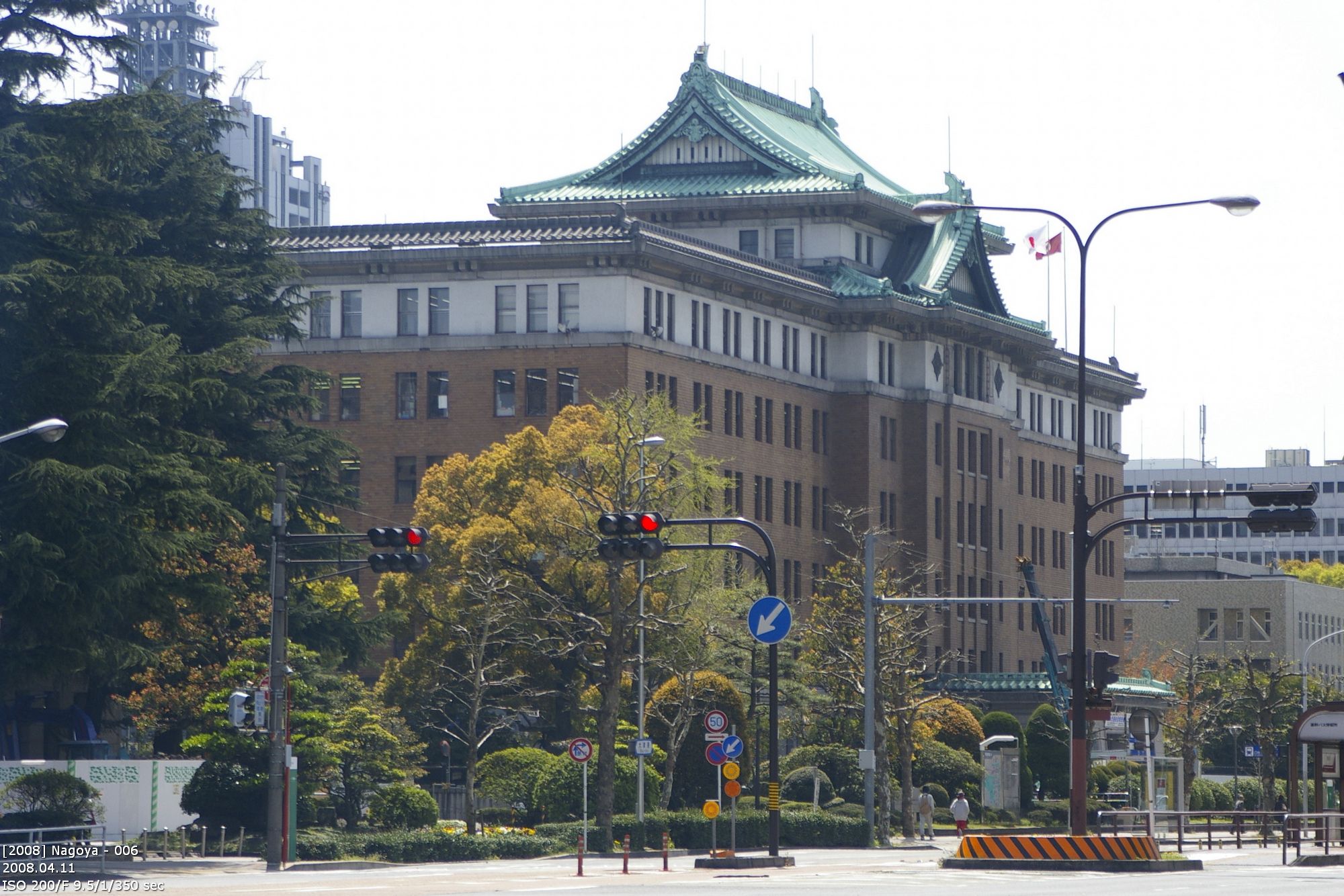
Away from the train station and next to Nagoya Castle are two older buildings I have to mention in this blog: Nagoya City Hall and the Aichi Prefectural Government Office. At both building the archtects played with classical japanese elements. The shape of the roof of city hall is like the shape of old temples. The government office uses the castle as a reference for its roof shape. The rest of the buildings is western style and creates a harsh contrast. The resulting tension between both styles is discussed until today.

 deutscher Blogeintrag

modern architecture – Shiodome

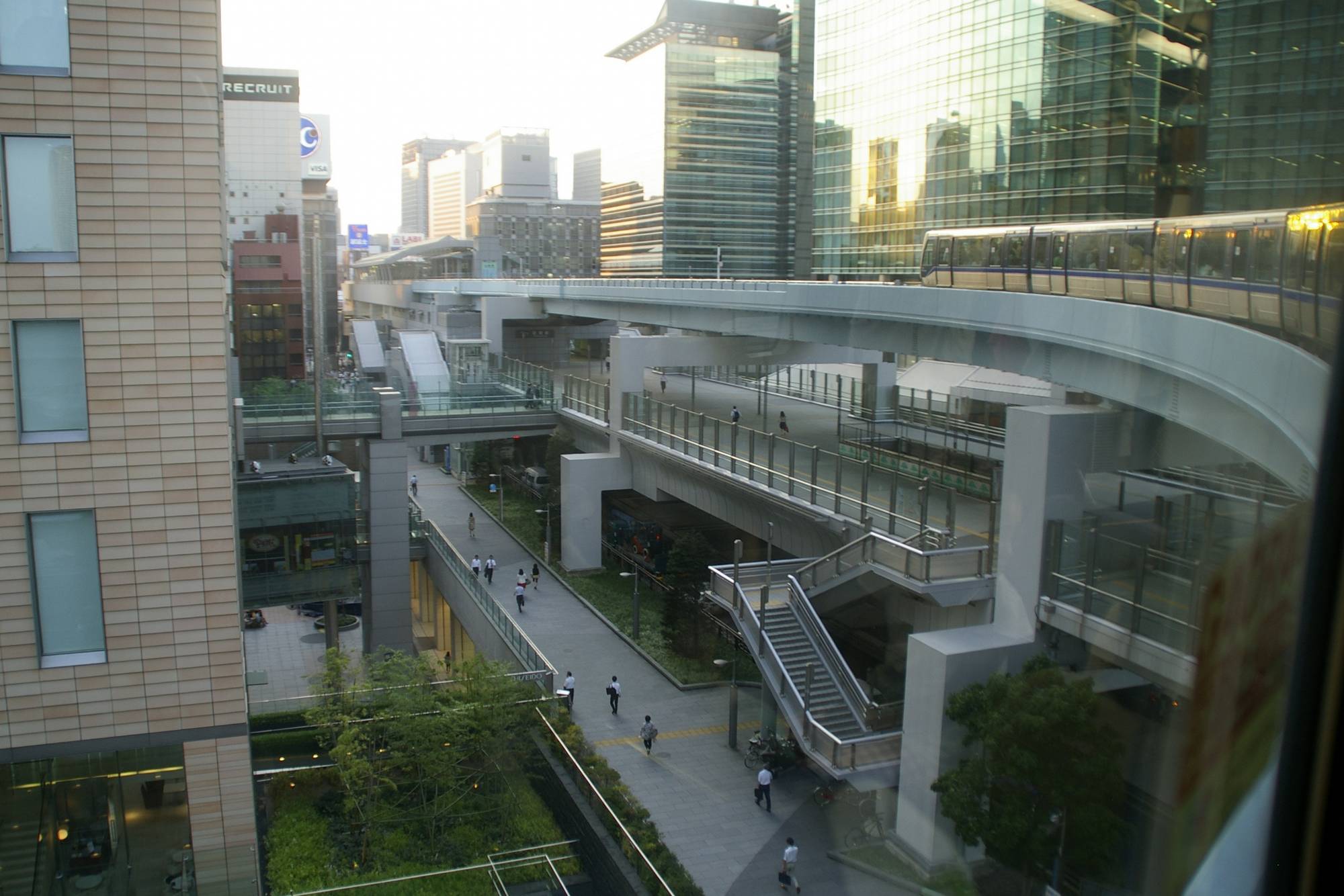
The Tokyo metropolitain area has many centers. Shibuya and Shinjuka are well known. A smaller one is Shiodome. A small spot south of Ginza. Tourist should memorize this place. Next to Shiodome is Hamarikyu Teien. One of the most beautiful japanese Garden in Tokyo. The famous fishmarket is close by. And in Shiodome the monorail across the Rainbow Bridge to Odaiba starts. It is also the place where you realize that Tokyo is 3D.

Shiodome is urban architecture and modern city development. Shiodome is the place where the word „ground level“ does not exist. Even the existence of trees is not a prove that you are at this level. You may be above or below. Stop thinking in 2D. Shiodome is the begin of science fiction, where city grow into the sky, where the different infrastructures pf the cities are stacked. The end of this development would be a city like in „The fifth element“.

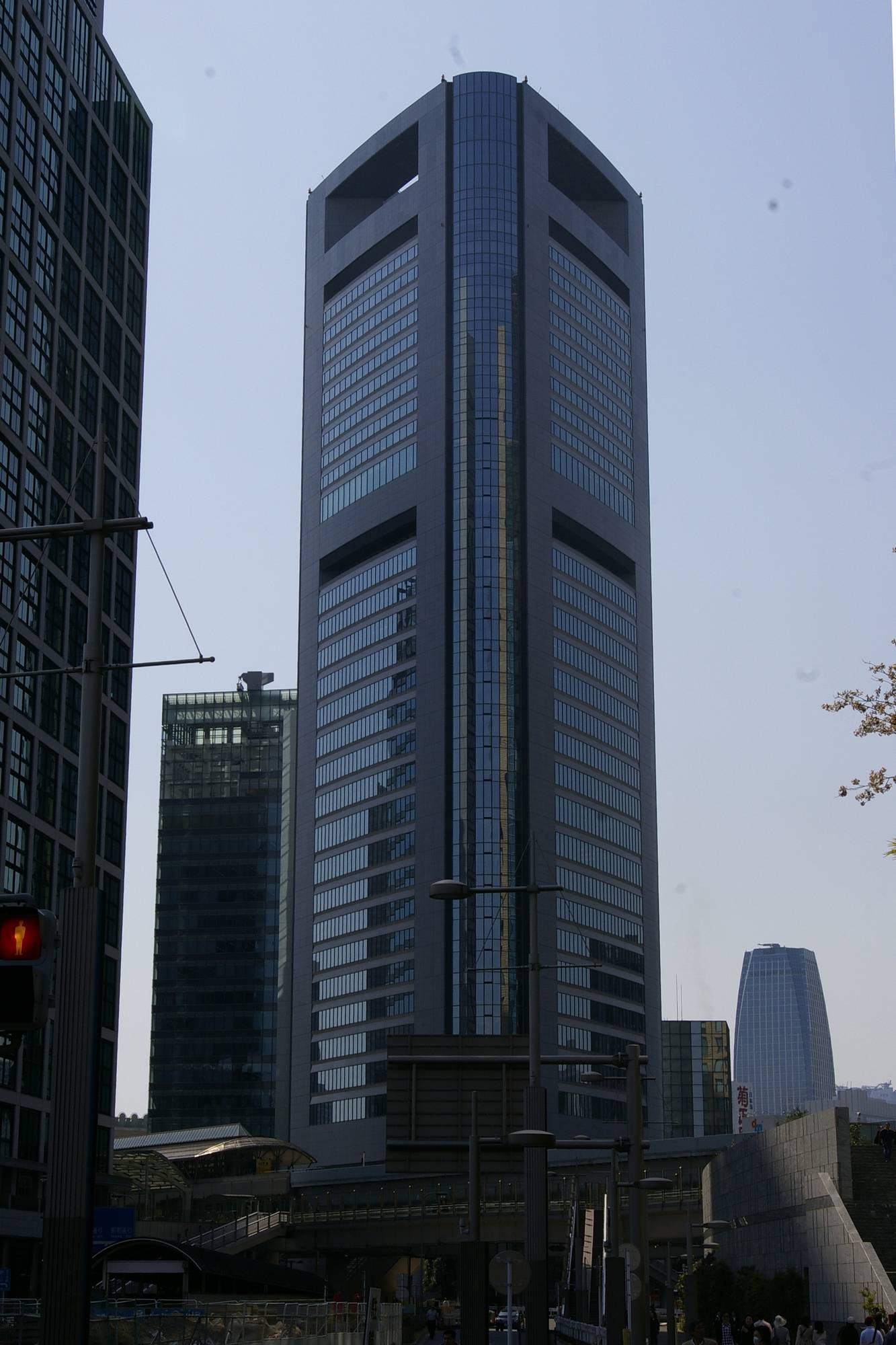
Nippon Television Headquarter
Rogers Stirk Harbours + Partner, 2003

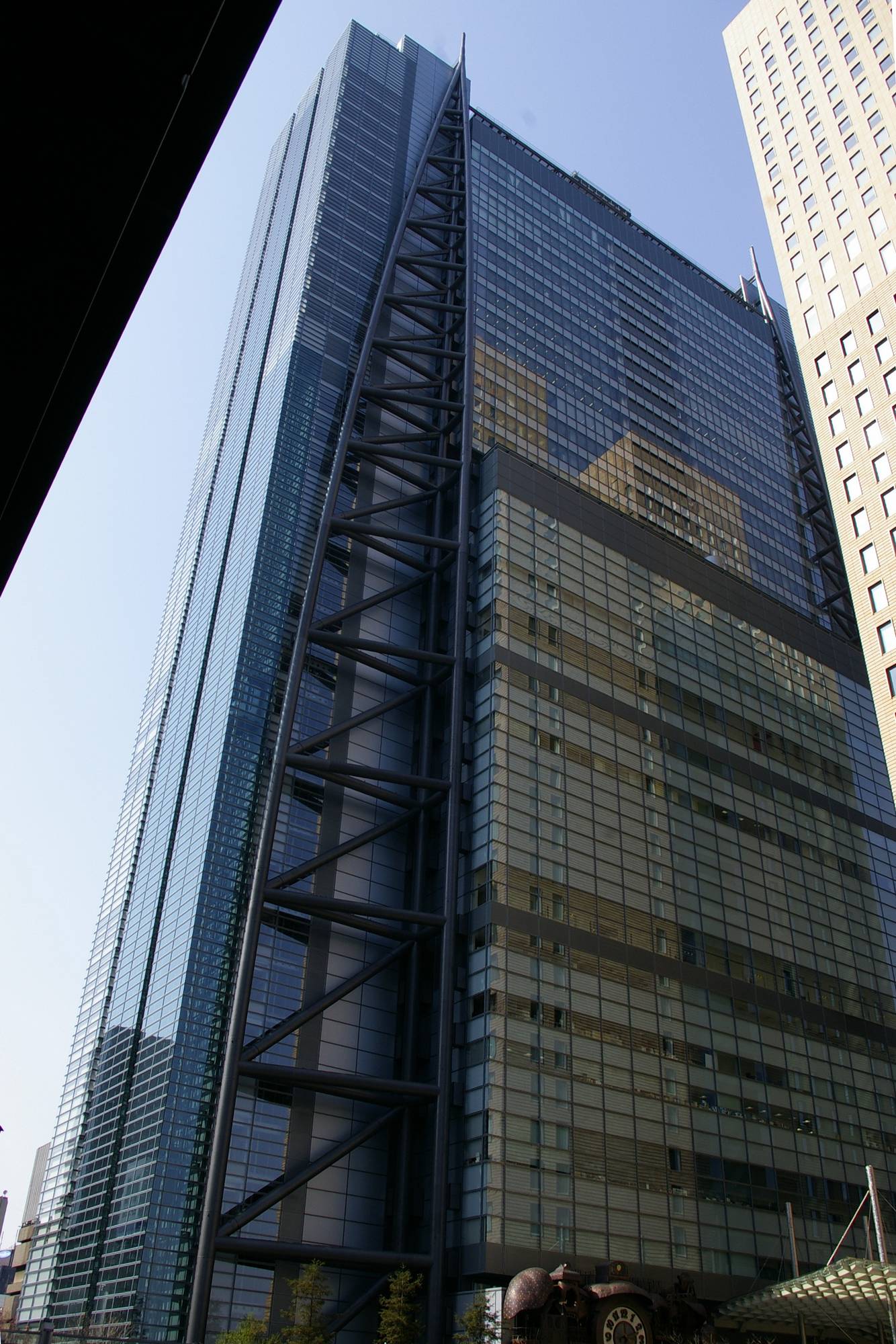
This was the answer to Fuji’s headquarter in Odaiba. Like many buildings in Tokyo this one is also split into areas for different purpose. In the lower half of the building are ste studios and above them the offices. You can see the both areas. The look of the building is dominated by the steel beams in the corners. They are no decoration but part of the building structure. The rest is covered in glass. The visible steel beams are remains from first sketch when the building had a complete exosceleton.

Nippon Television Headquarters and Dentsu Head Office

Dentsu Head Office
Ateliers Jean Nouvel, 2002

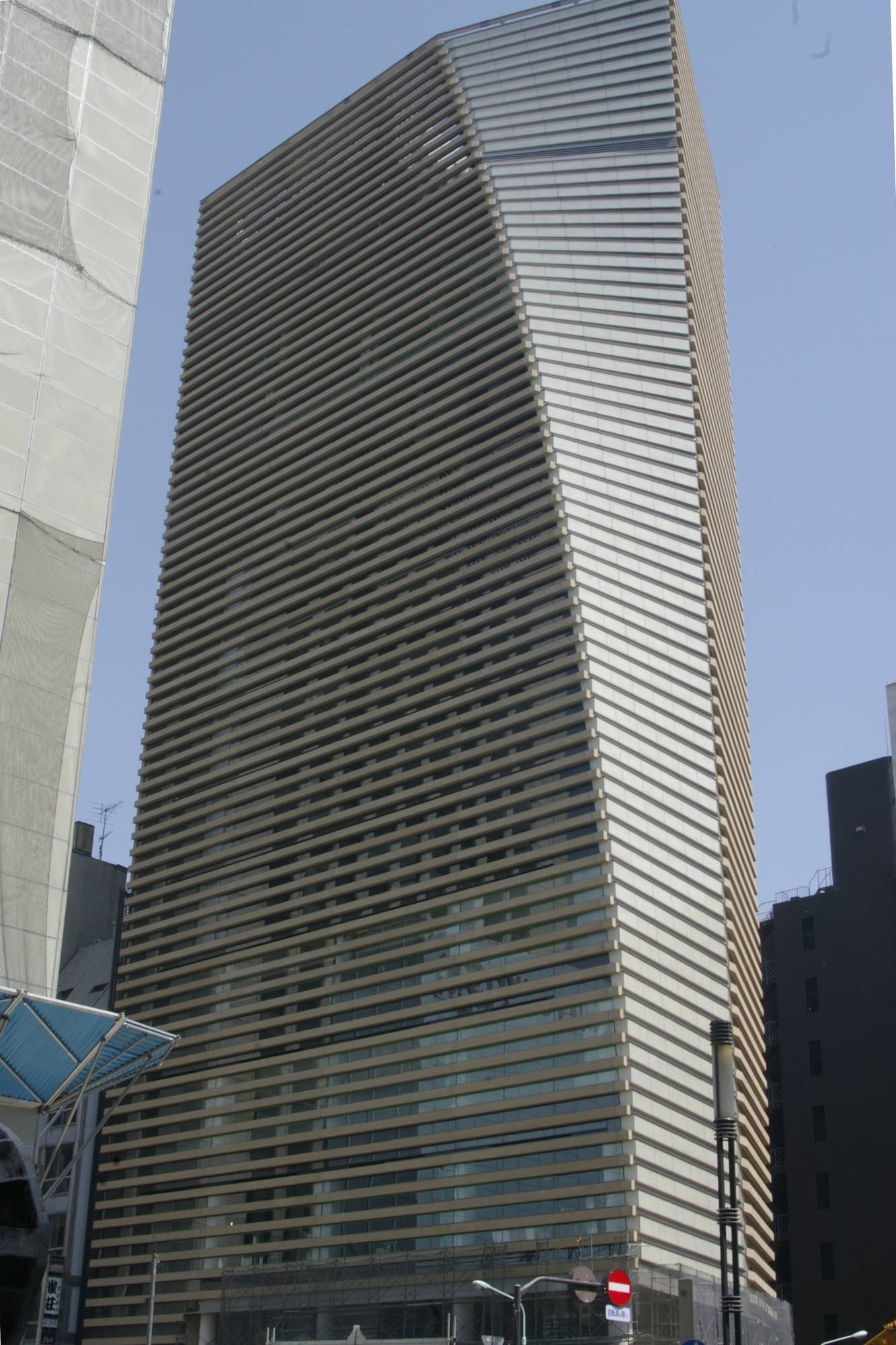
Also this building stands out. From one side it looks a little bit like a ship hull. From the other side it looks like the blade of a knife. There are no decoration elements. The power of this building comes from its ground shape alone. The reflectivity of the glass is a nice balance between full transparency of the windows and opaque elements between.

Check out the light effect at the top. I took this picture by accident. But the effect was planned by the architect. The reflectivity of the glass elements was changed. It now looks like the building is melting into the sky.

Relict of the past

If you look carefully, between all this steel and glass there is an old building, that I need to mention. Just because it is so misplaced. It is an relict from the old Shiodome area.

Zwei Relikte der Vergangenheit

Capsule Apartments

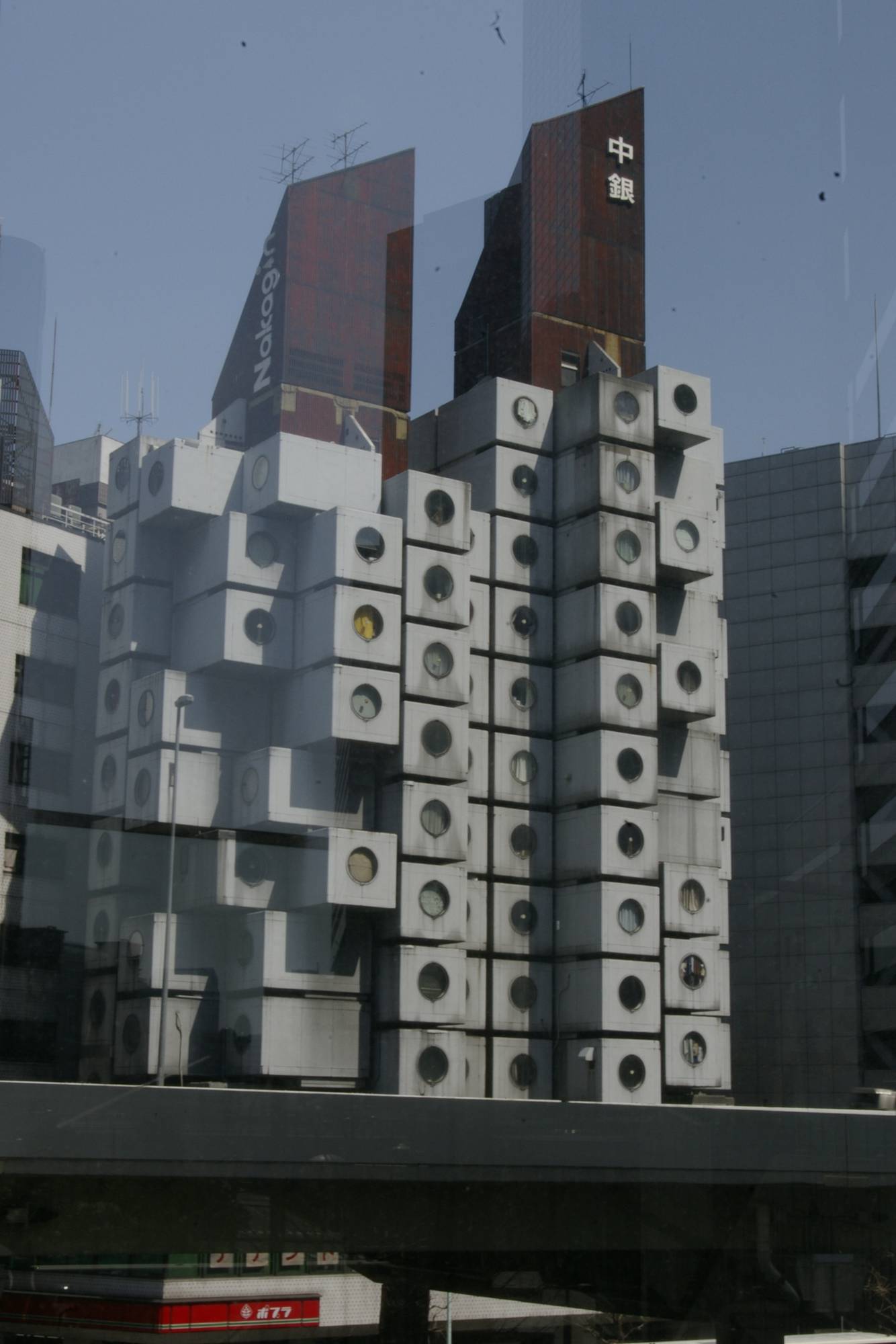
This famous building is planned to be demolished (situation in 2011). It is a witness of an older Tokyo. It was the attempt to modulize the city, to make the city organic. The concept: Each appartment is a cubilce that is attached to a central tower. If you need more appartments, you can cubicles, if you need less you can remove them. The building is adapting to the current need of living space. The Nakagin is a hotel. Only th bulleyes look strange. It is like a nightmare of living in the future, but it is a view into the history, when they tried to form a future that never came.

other skyscrapers in Shiodome

deutscher Blogeintrag