Archiv der Kategorie: Lexikon

modern architecture – Shinjuku

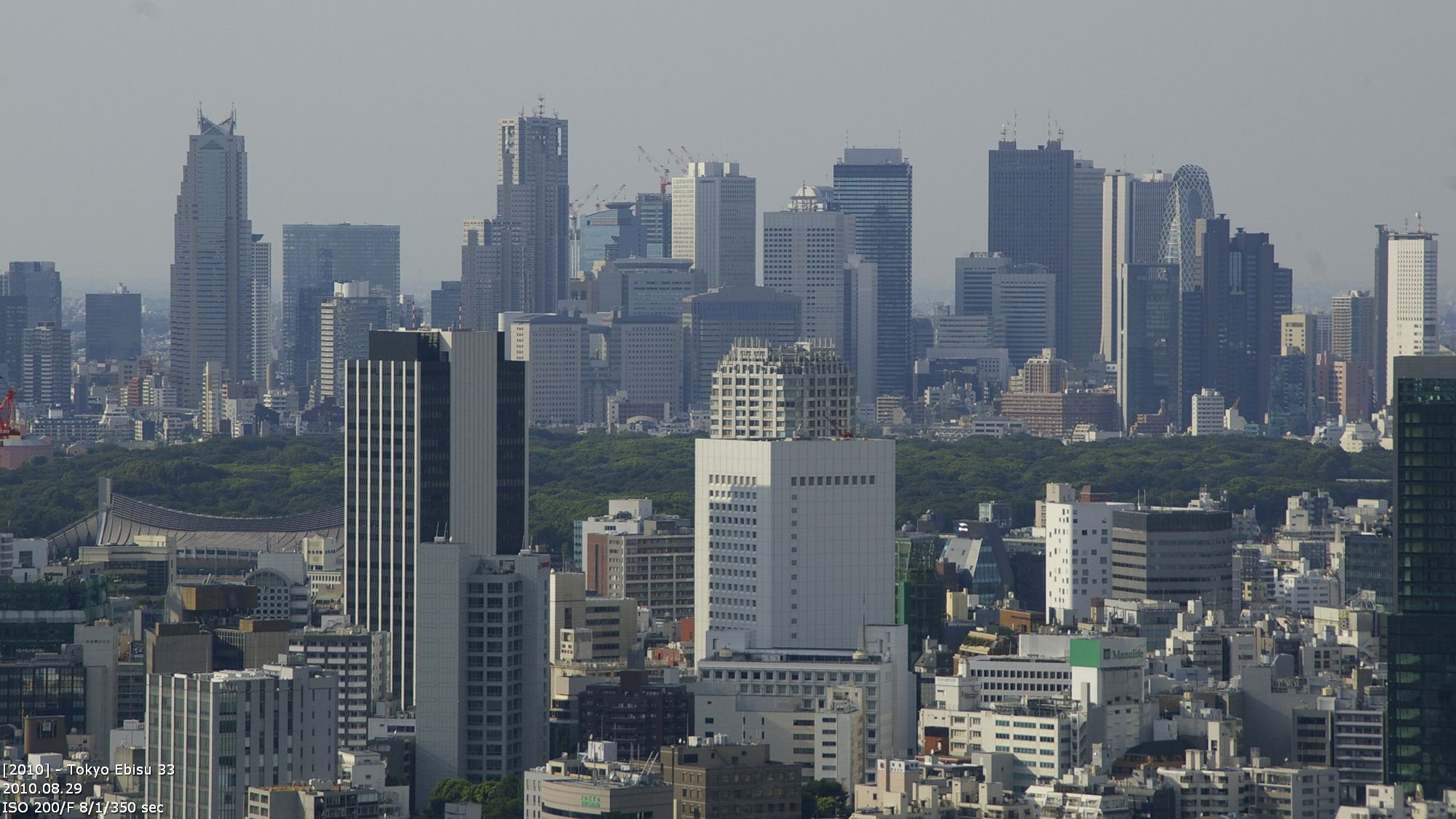
The tour thru Tokyo is starting in Shinjuku. Note: Shinjuku is not Tokyo. At least for the Japanese. Gaijins usually mean the whole metropolitain area if the say Tokyo, and also include Shinjuku, Shibuya, Roppongi and other cities. For Japanese Tokyo is only the area around Tokyo central station and the imperial palace. Shinjuku received it’s big rush during the bubble economy. During this time many buildings were built. One of the last was the metropolitain government building.
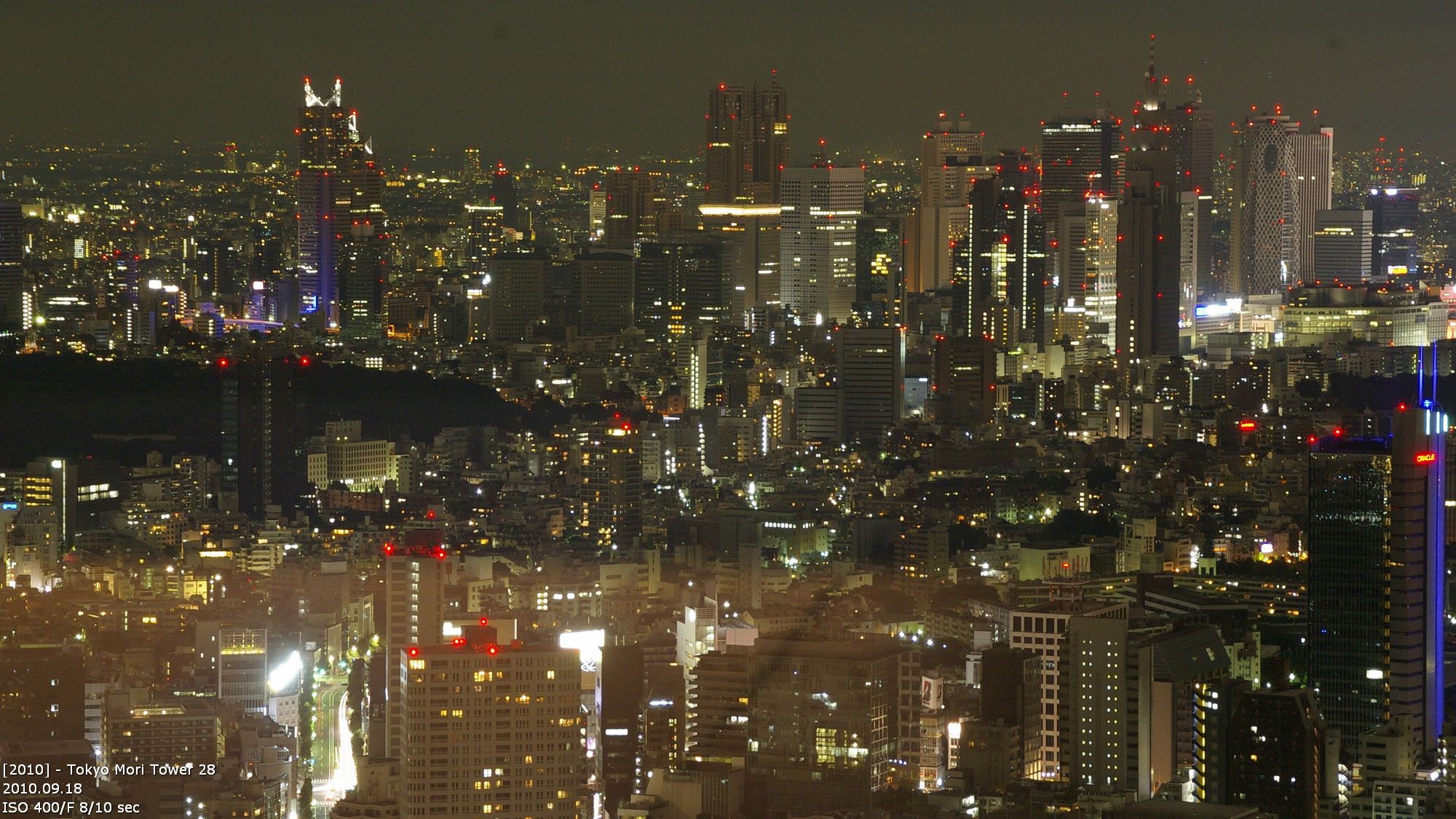
Shinjuku Skyline

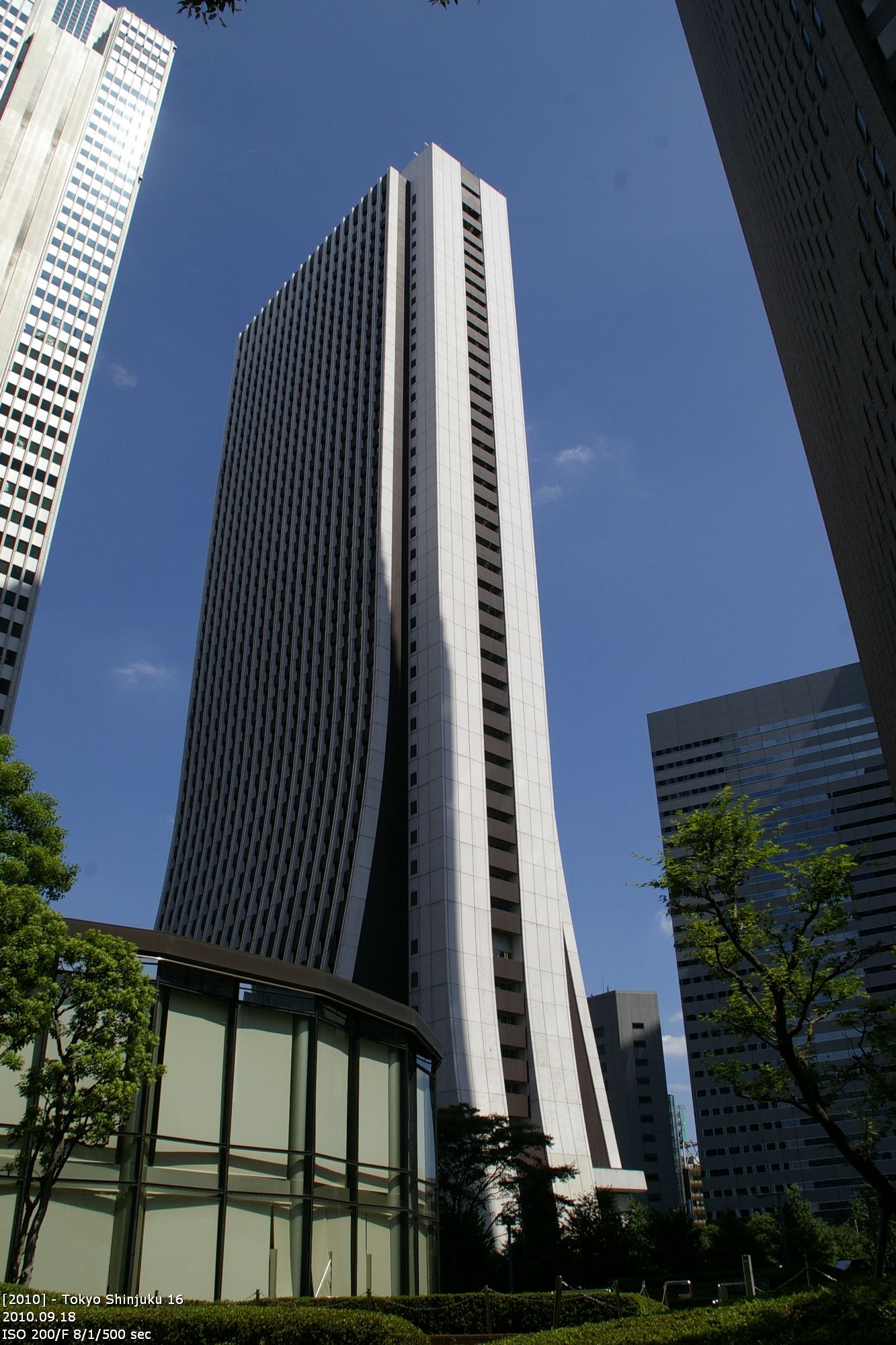
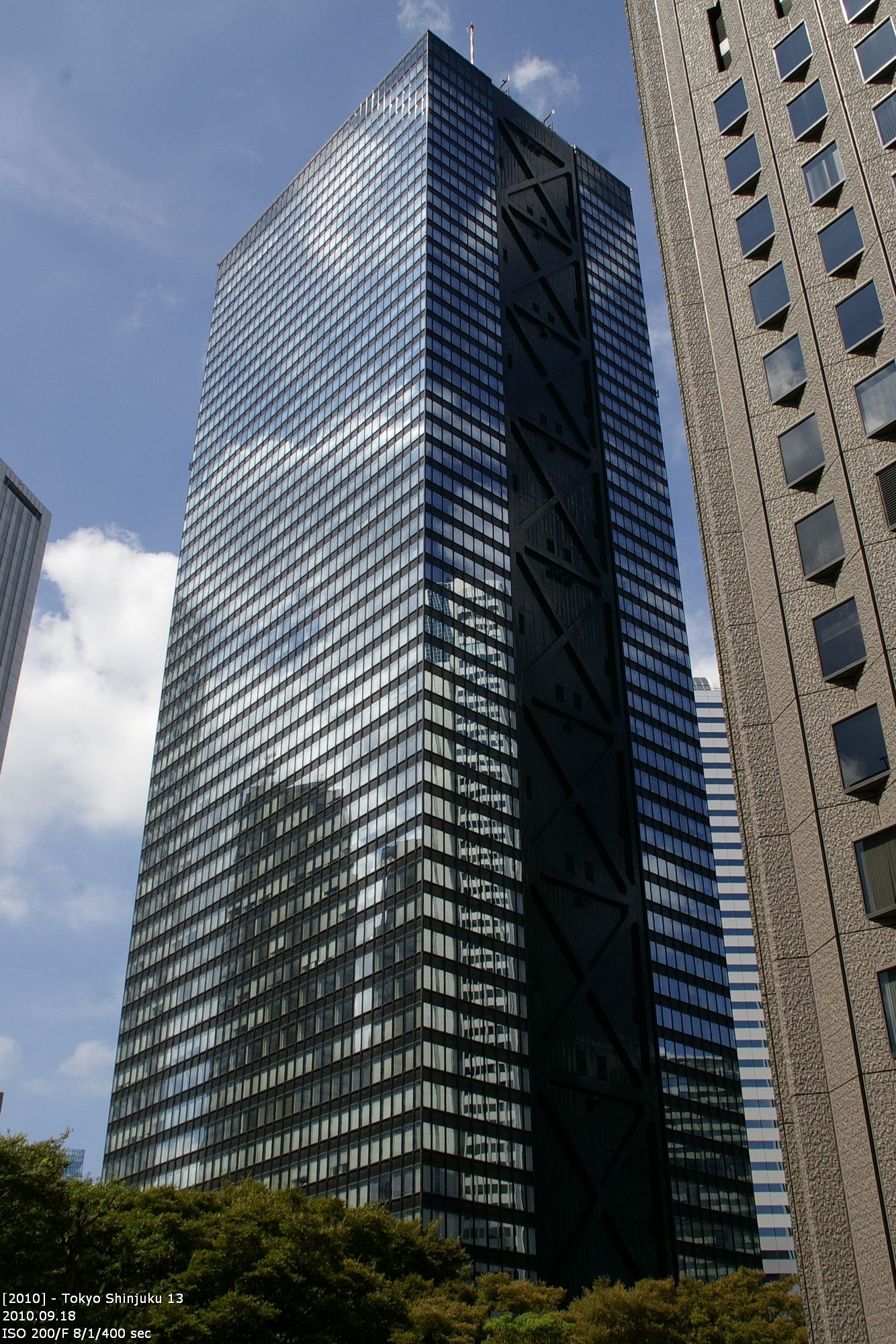
Sompo Japan Building
architect: Yoshikazu Uchida, 1973-1976, 200m, 40 floors

The Sompo building was designed by Yoshikazu Uchida and was built between 1973 and 1976. It was the landmark of Shinjuku for many years. Material, color and shape is a statement to the 70ies. The building has a height of 200m (antenna included) and 43 floors. In the 42 floor is a museum with a version of Vincent van Goghs sunflowers. In amime it was used as an indicator that the story is playing in Shinjuku. (e.g. City Hunter). The new landmark are the „Twin Tower“.
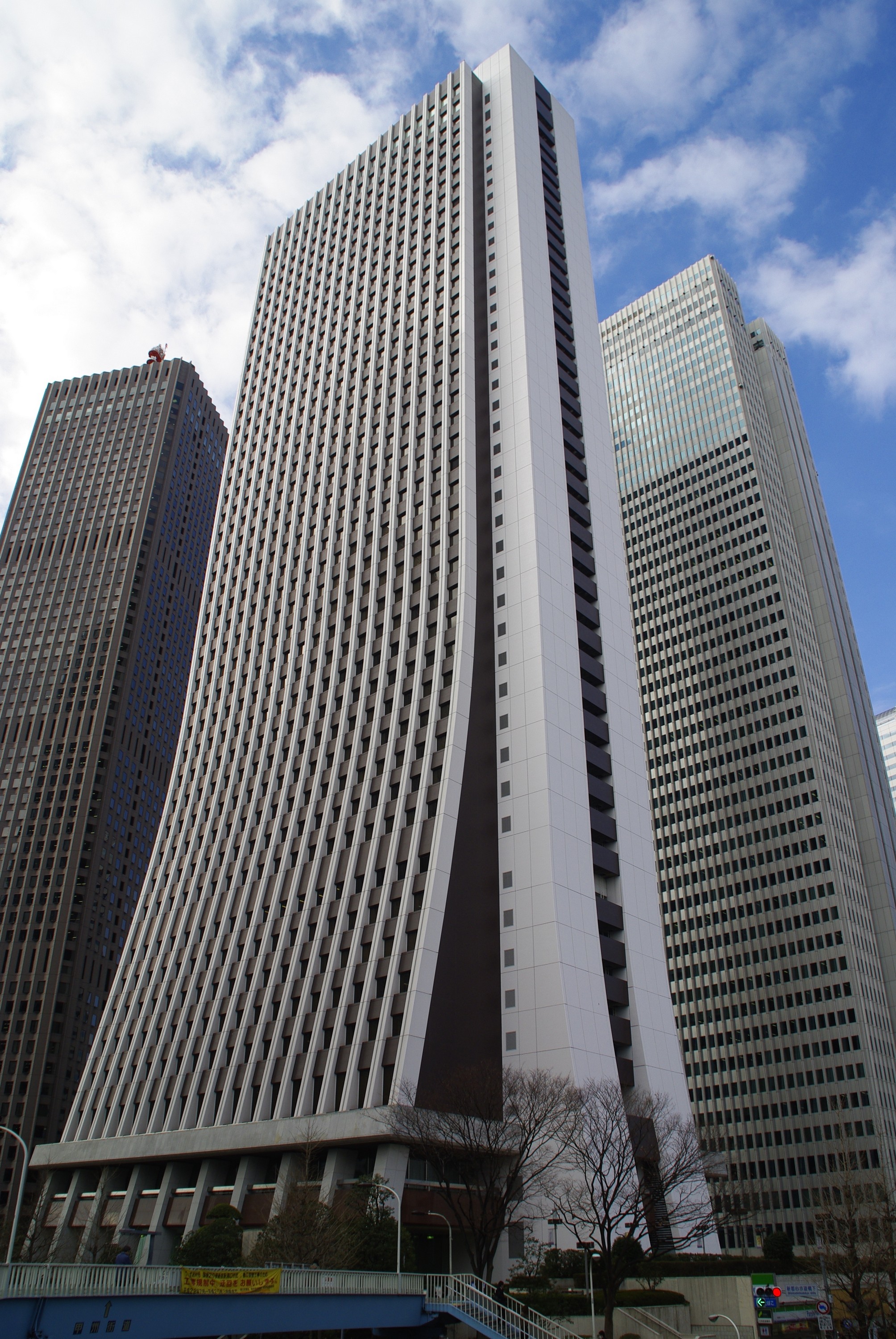
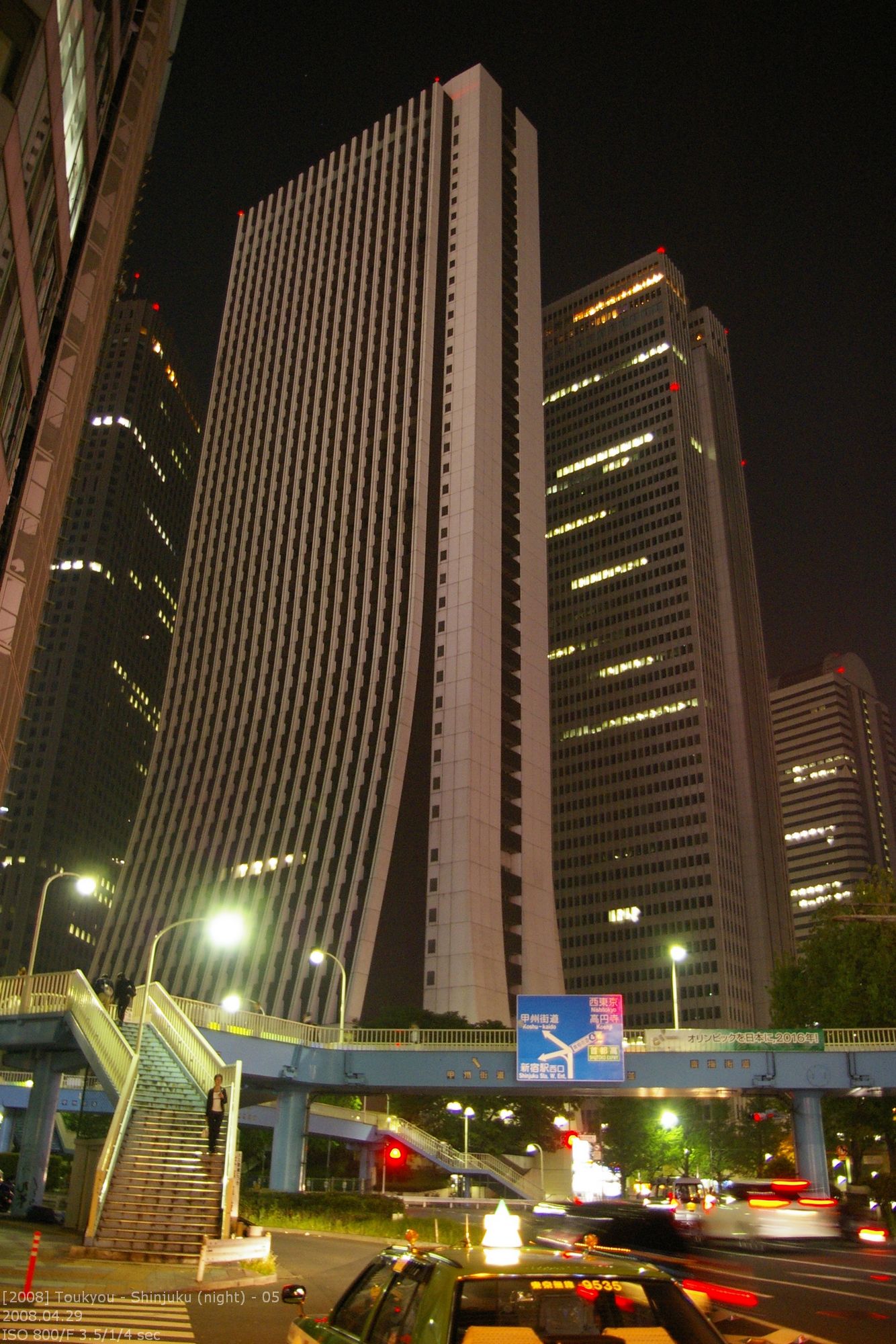
Das alte Wahrzeichen von Shinjuku

Tokyo Metropolitan Government Building
architect: Kenzo Tange, 1988-1991, 243,3m (No. 4 in Japan), 48 floors

The building is the office of the government of the Tokyo prefecture. It was designed by the architect Kenzo Tange. Before it was located at Tokyo Eki. This old building was from Kenzo Tange too. This old building was demolished. Today there is the Tokyo Itnernational Forum; another layout by Kenzo Tange.

The complex consists of three connected buildings The Twin Tower are building 1. The second building has 37 floors. It has three units with different height. The building is surrounded be streets and sidewalks in two levels.

The design has typical elements of Kenzo Tange. The verticals are dominant. The building is looking like a gothic cathedral, although Kenzo Tange is not using any gothic elements. But the resemblence to Notre Dame is obvious. And the design is just logical. Shinjuku was the center of the Bubble Economy and the money. Kenzo Tange placed the cathedral of this epoche into the center. His design is also a demonstration of the financial and political power of Tokyo. It is a momument of the megalomania of the 80ies. Therefore the building is also called バブルの塔 (Tower of Babel).
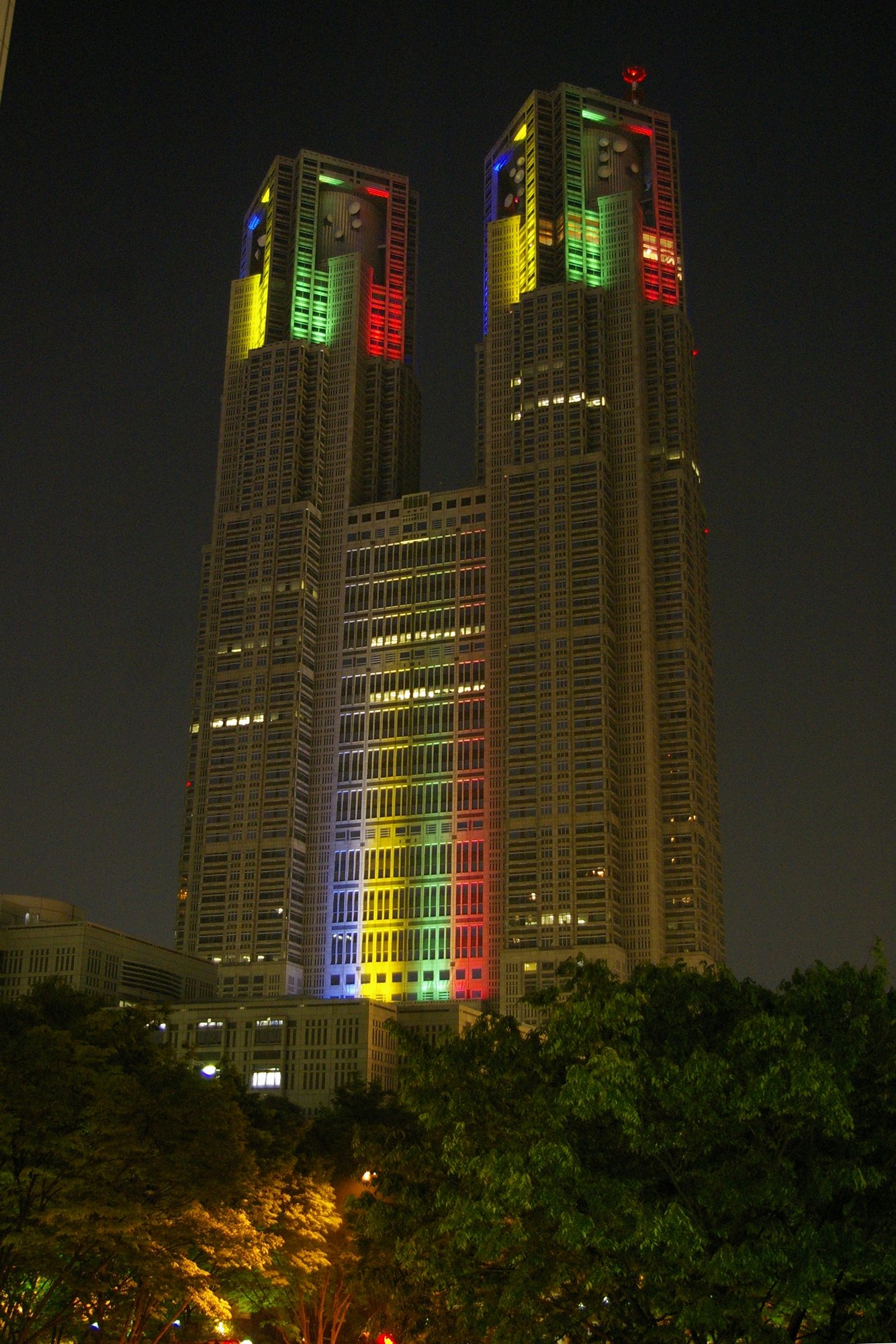
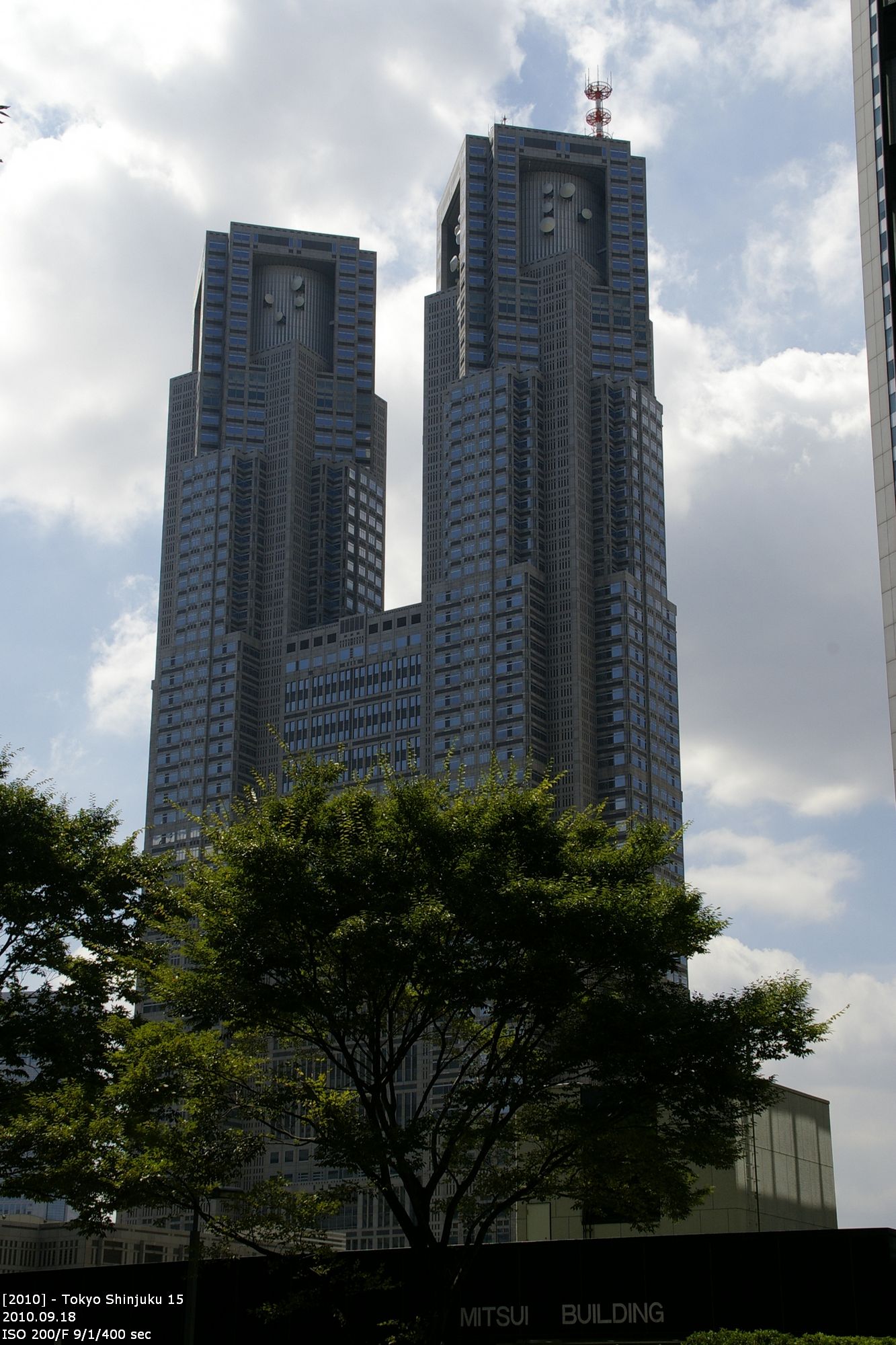
Das neue Wahrzeichen von Shinjuku

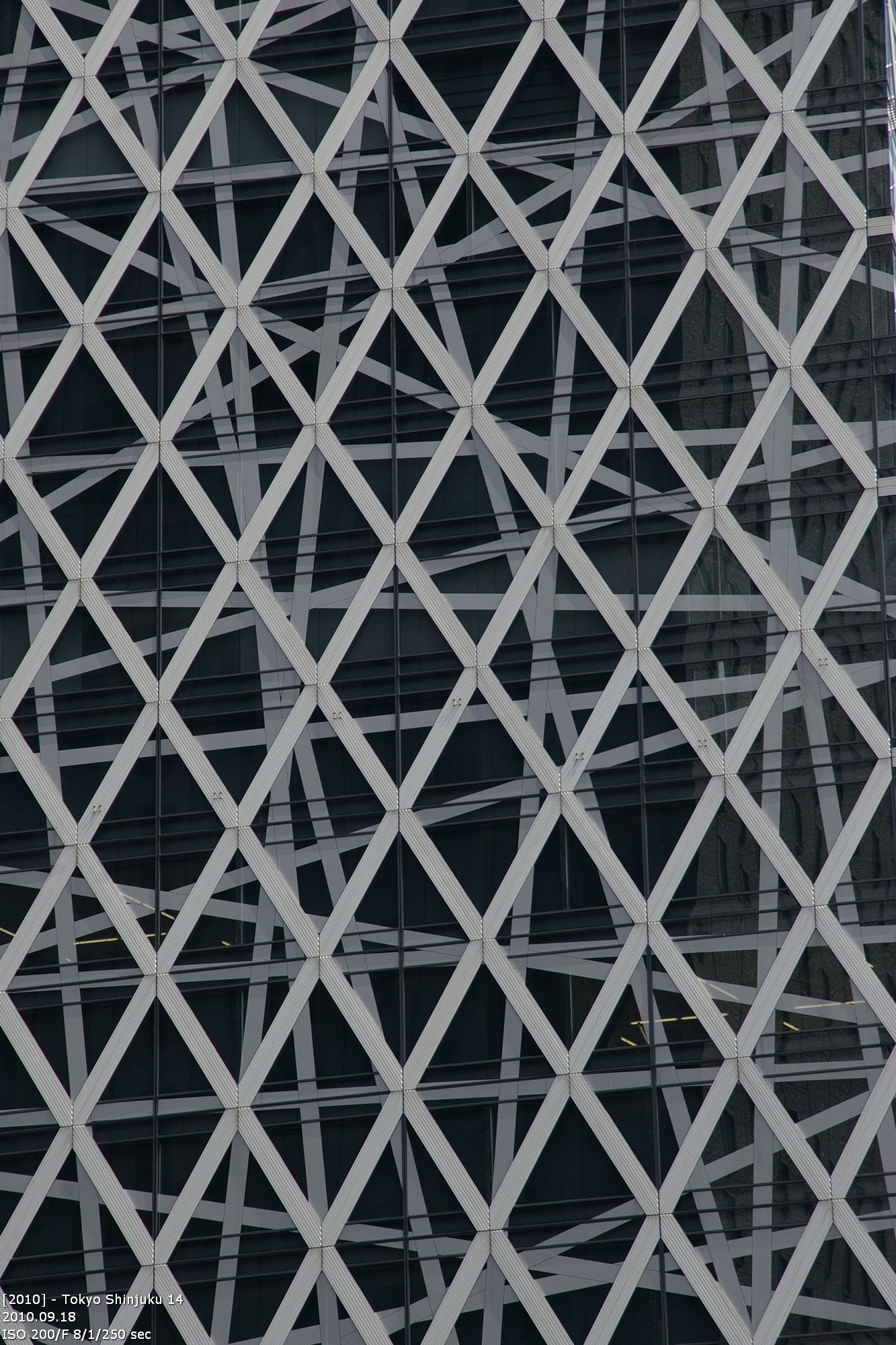
Mode Gakuen Cocoon Tower
architect: Kenzo Tange Associates, 2008, 204m

Beside this building, all other looks some kind of boring. This one really is an eyecatcher. The Cocoon Tower was finished in 2008 and only has a height of 204m which put him on place 17. (Funny, I cannot remember the construction side in 2004 and 2006). The design is from Tange Associates, a group of architects around Kenzo Tange. The building won the medal of Skyscaper of the Year. Tange won against 50 other competitors. There was only one rule: „Everything but rectangular“ The building is similar in shape and size to the Swiss Re HQ in London. But thats all. The building is covered with blue glass, that gives a free view to the aluminium construction underneath. This construction is the reason for the name cocoon.

Inside the building is the fashion school. Therefore it is the highest university building in the world. The cocoon shall cover the new ongoing designers and protect them until they are ready to face the world. Maybe it is because of the other architects involved, but Kenzo Tange is leaving his old habit of dominate the verticals. The design misses all his typical elements, that partly originated at Le Cobusier. With breaking with his old rules he also broke with a lot of convention of standard building design.
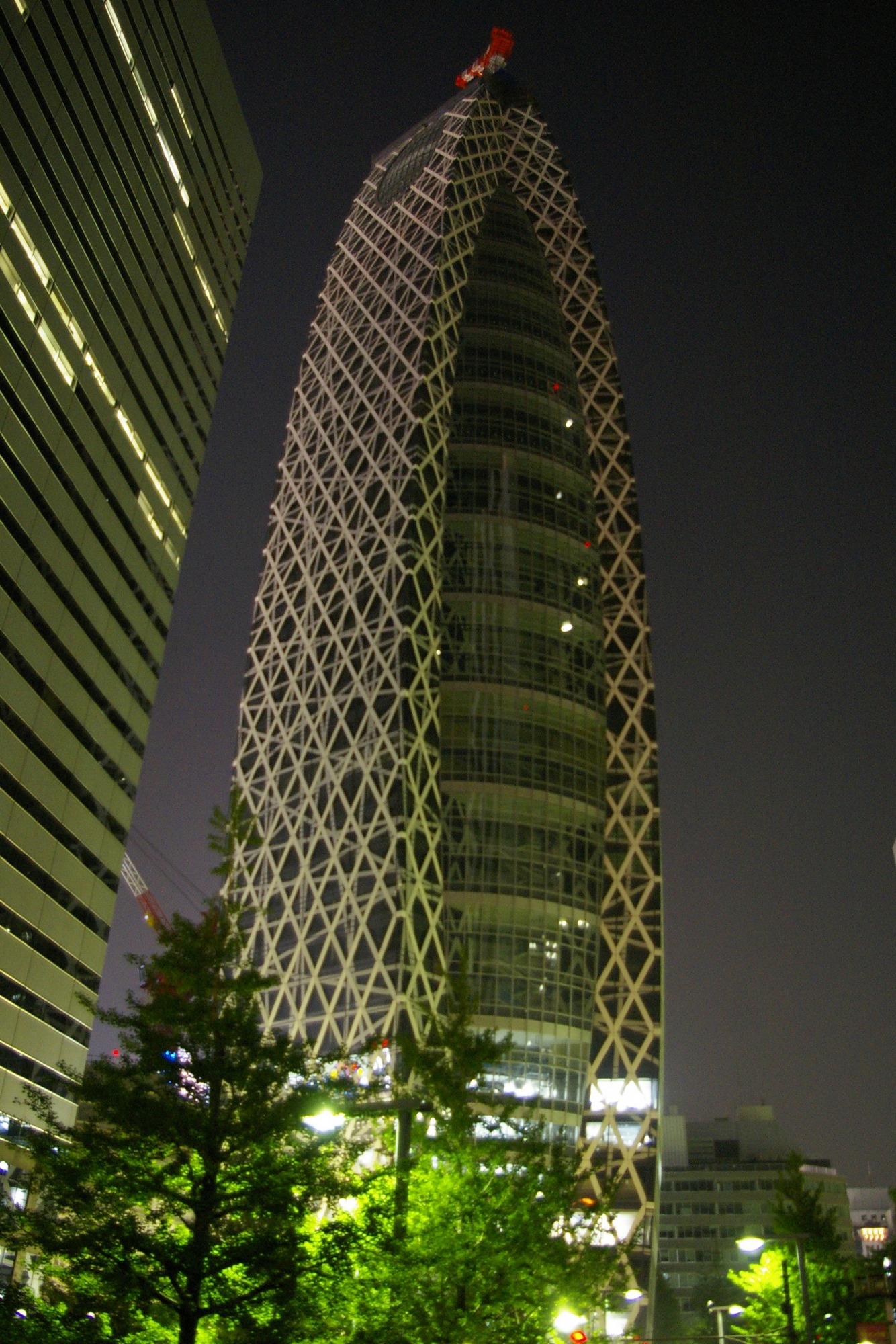
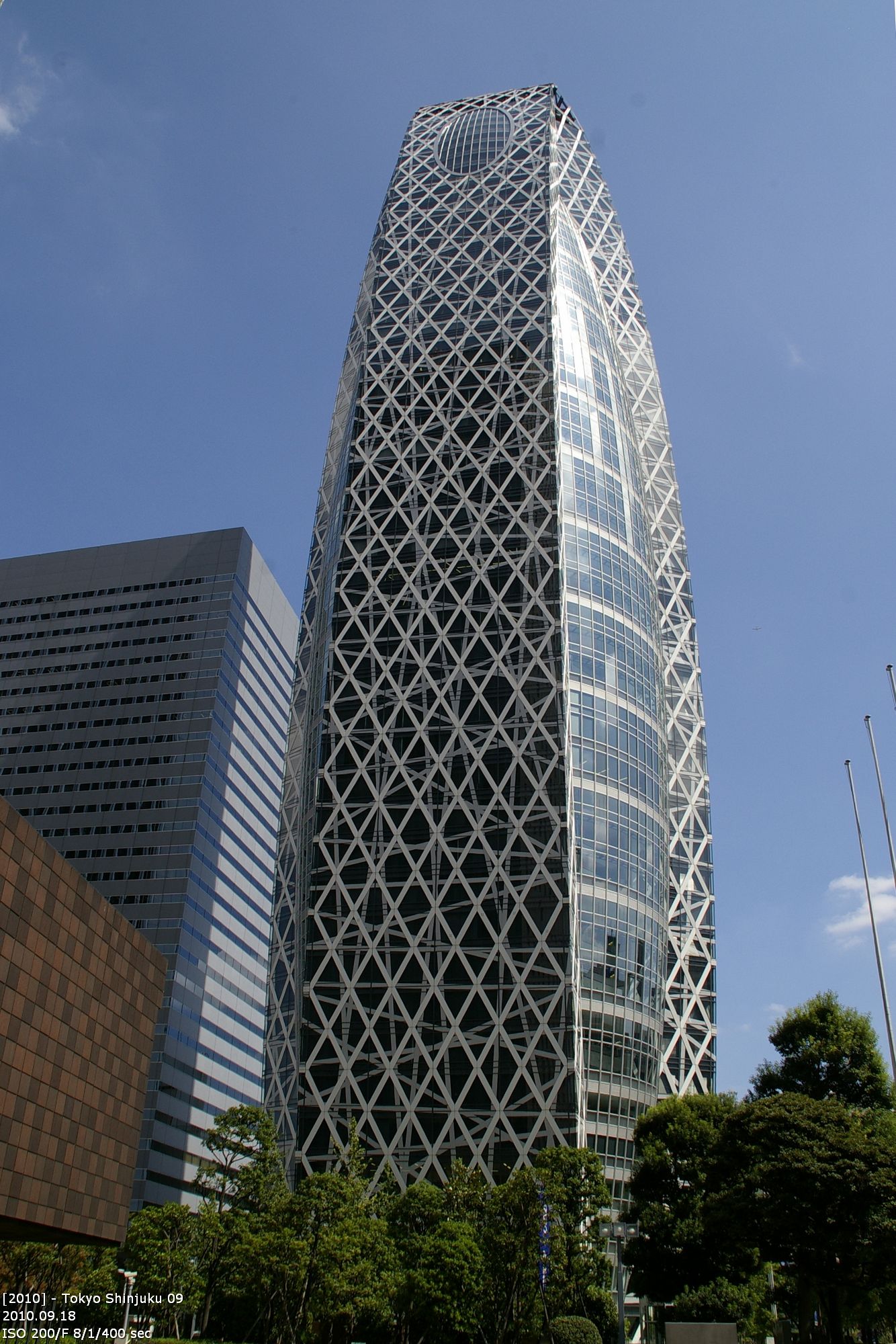
Universitätsgebäude Coocon Tower

NTT DoCoMo Yoyogi Buildung (links)
architect: Kajima Design, 2000, 270m incl. antenna

This building was part of an development project for the southern region of Shinjuku. It became the landmark of the Yoyogi area. It stands out, because it is not surrounded be other tall buildings, but by Yoyogi park, Meiji shrine and Shinjuku Gyoen. The building is seperated in three funtional units: in the lower third there are restaurants and shops. In the middle 27 floors are the offices of NTT DoCoMo. The upper half of the building is the third unit. It contains all telecommunications technics. Beside its height of 240m the building only has 28 floors above ground level.

The top of the building is stepped and reminds of the american sky scapers of the early 20iest century (like the Chrysler Building). It stepped top takes away the weight of the constructions. Noticeable are the riders at the point where the relief begins. This is a citation of the gothic archtectural language. Also noticeable is the 15m big clock, the can be seen from the Shinjuku side.
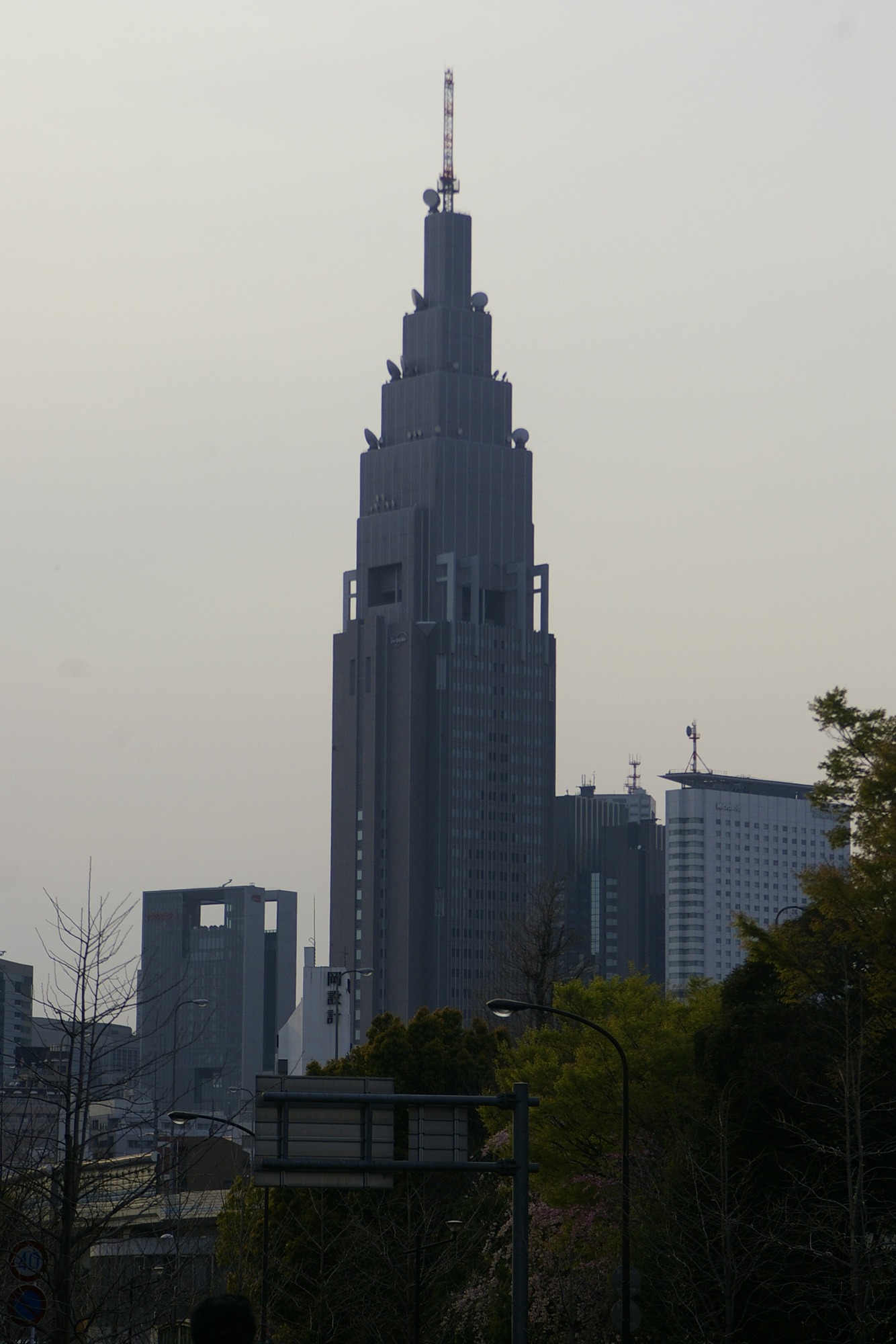
Mitsui Building und NTT DoCoMo Building

Shinjuku Mitsui Building (rechts)
architect: Nihon Sekkei Inc., 1974, 225m, 55 floors

Text folgt …

deutscher Blogeintrag

modern architecture in Japan

Preface

I have bought the book „Contemporary Architecture in Japan“. On every second page I saw a building I know. Therefore I decided to write my won book. I used my blog. I didn’t visit Japan in 2011. Enough blogspace.

Mori Tower, Roppongi Hill

Boundary Conditions

Japan has one problem: Not enough land for construction. There is only one way for city to grow; into the sky. Doing this there is another condition. The lots still have the ancient size. Sometimes this results in 10 story office buildings and parking lots with a ground plot of ony 30m^2. More about this topic you will find under „typical Japanese“. If there is a bigger lot available the built a big building, but not a boring one like in Germany. Japan seems to be a country for architects. Some buildings are real eyecatcher. And sometimes very complex buildings that are a city of there own.

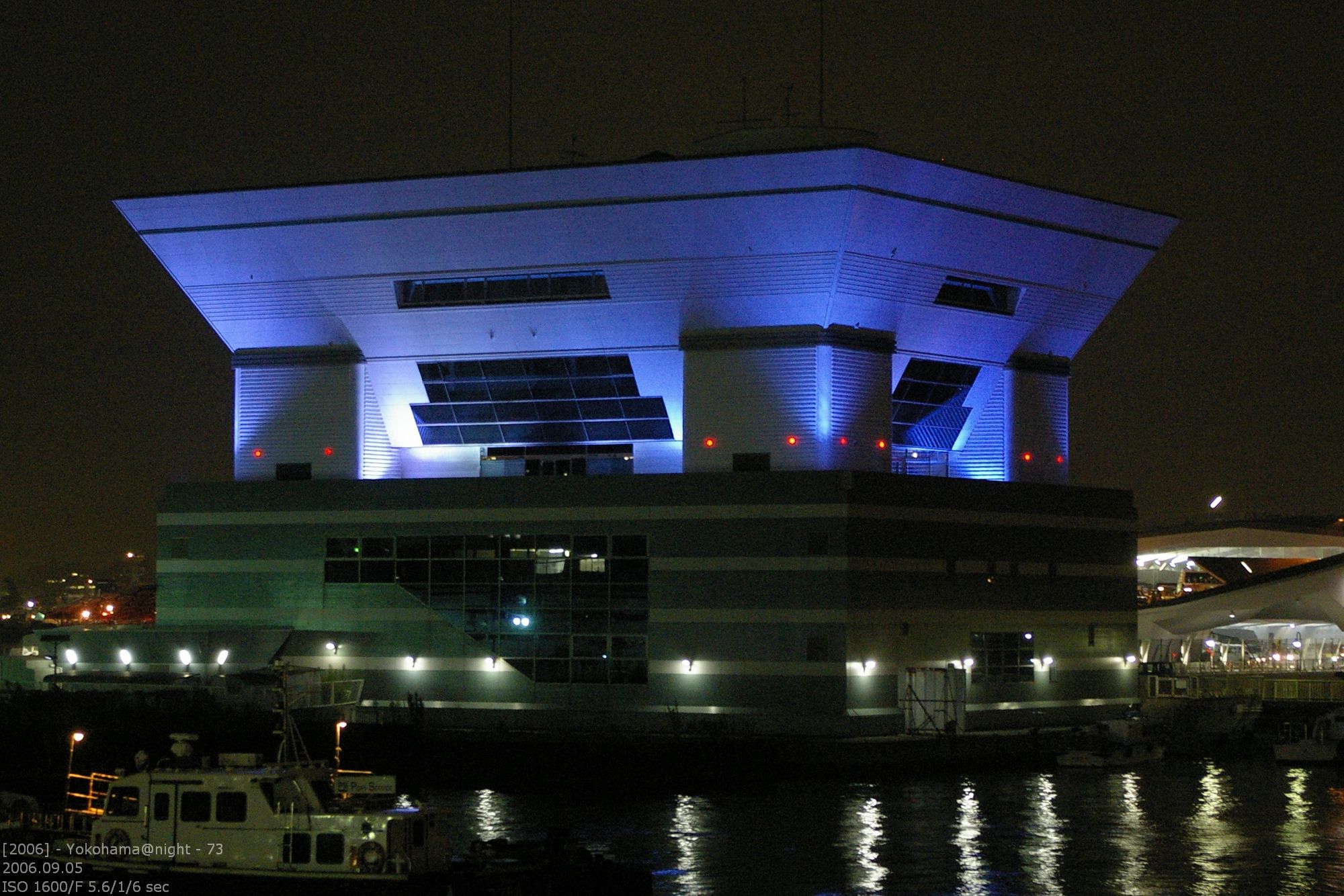
Lotsenstation Yokohama

Illuminati

The best in Japan is the night. Many buildings are illuminated at night. At day they are grey and uninspired but colorful at night. The best example is located in Mirai 21 in Yokohama. The building on the picture is the harbour pilot station.

deutscher Blogeintrag

Fire Departments in Japan

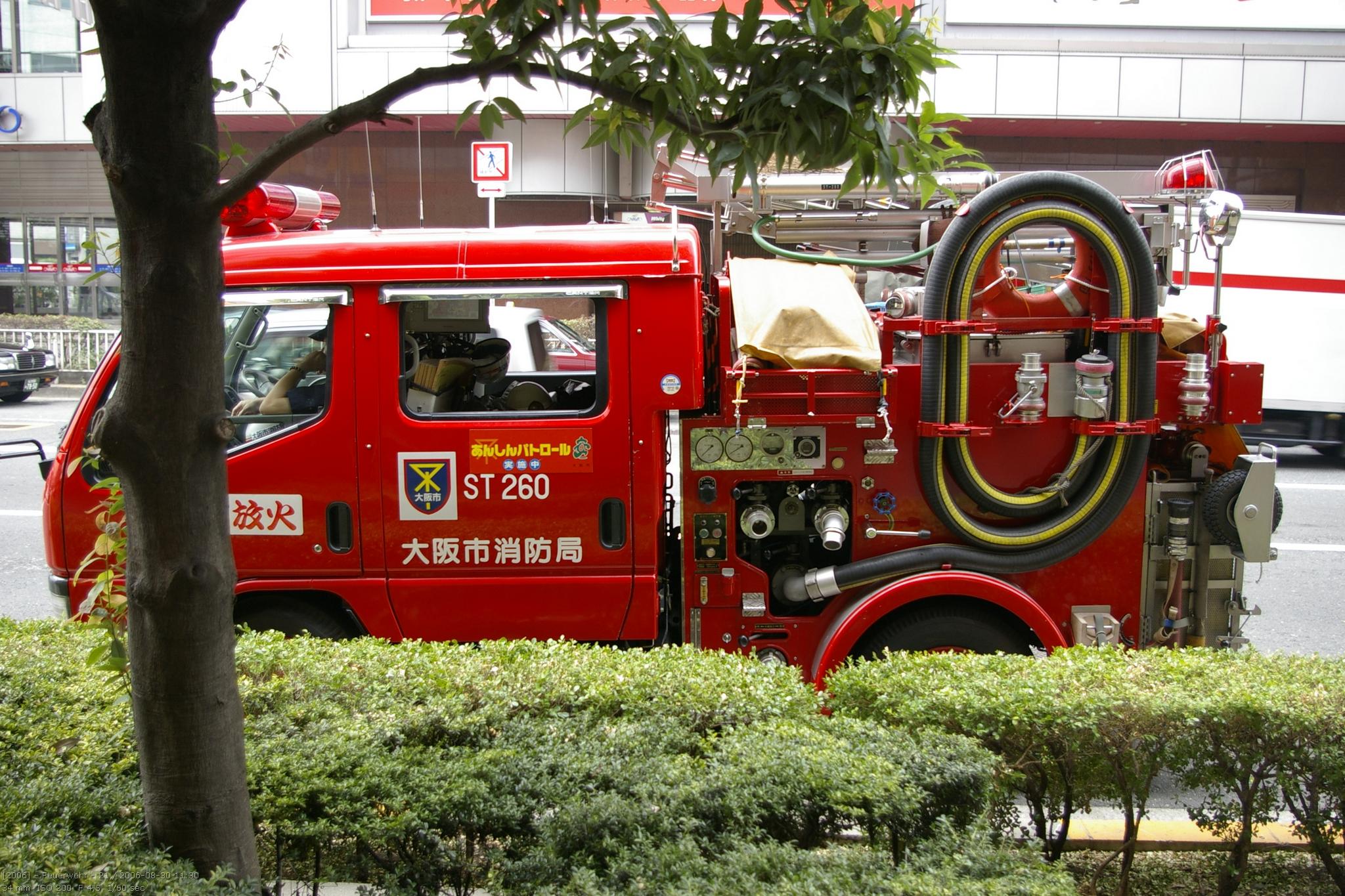
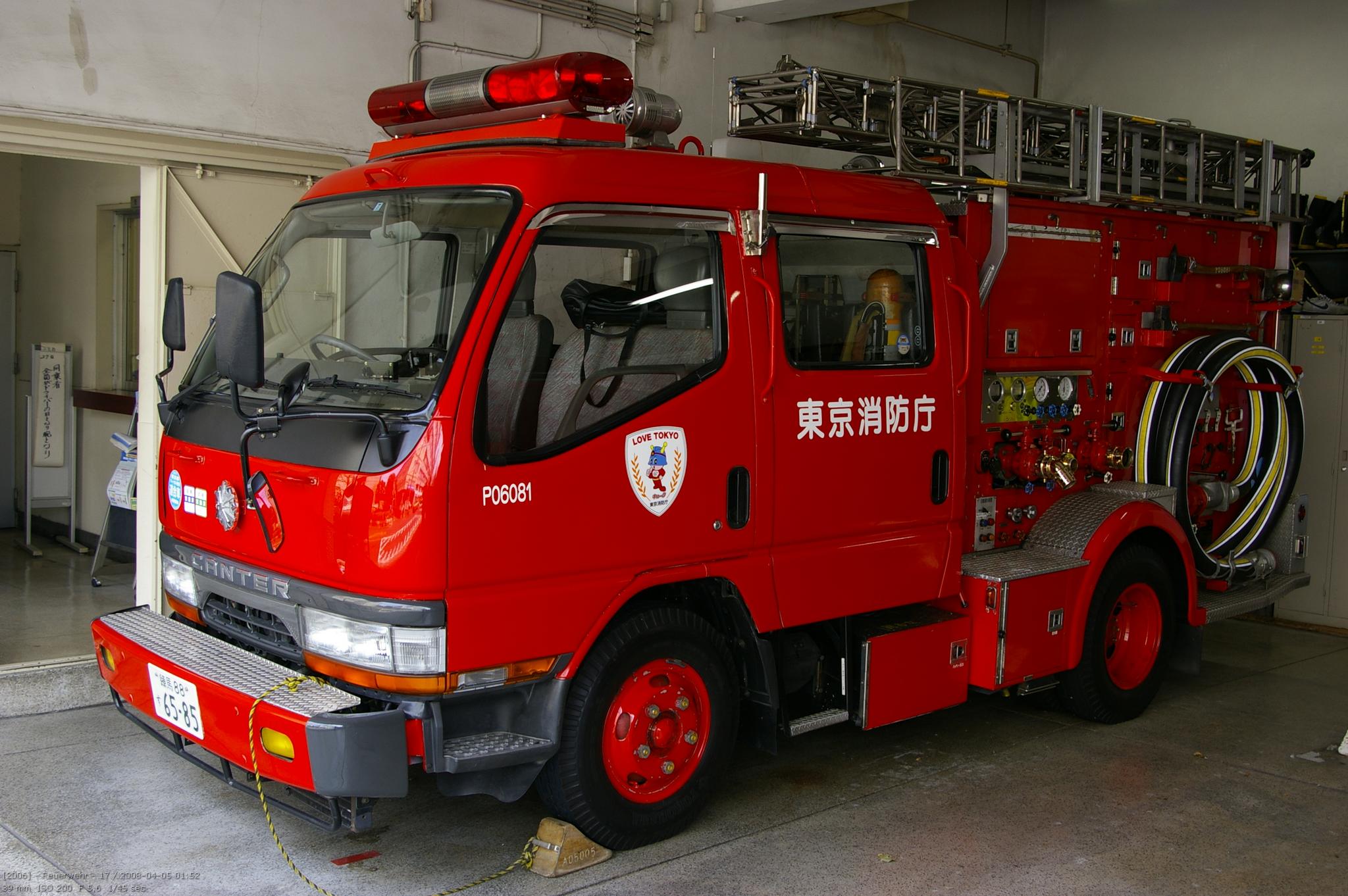
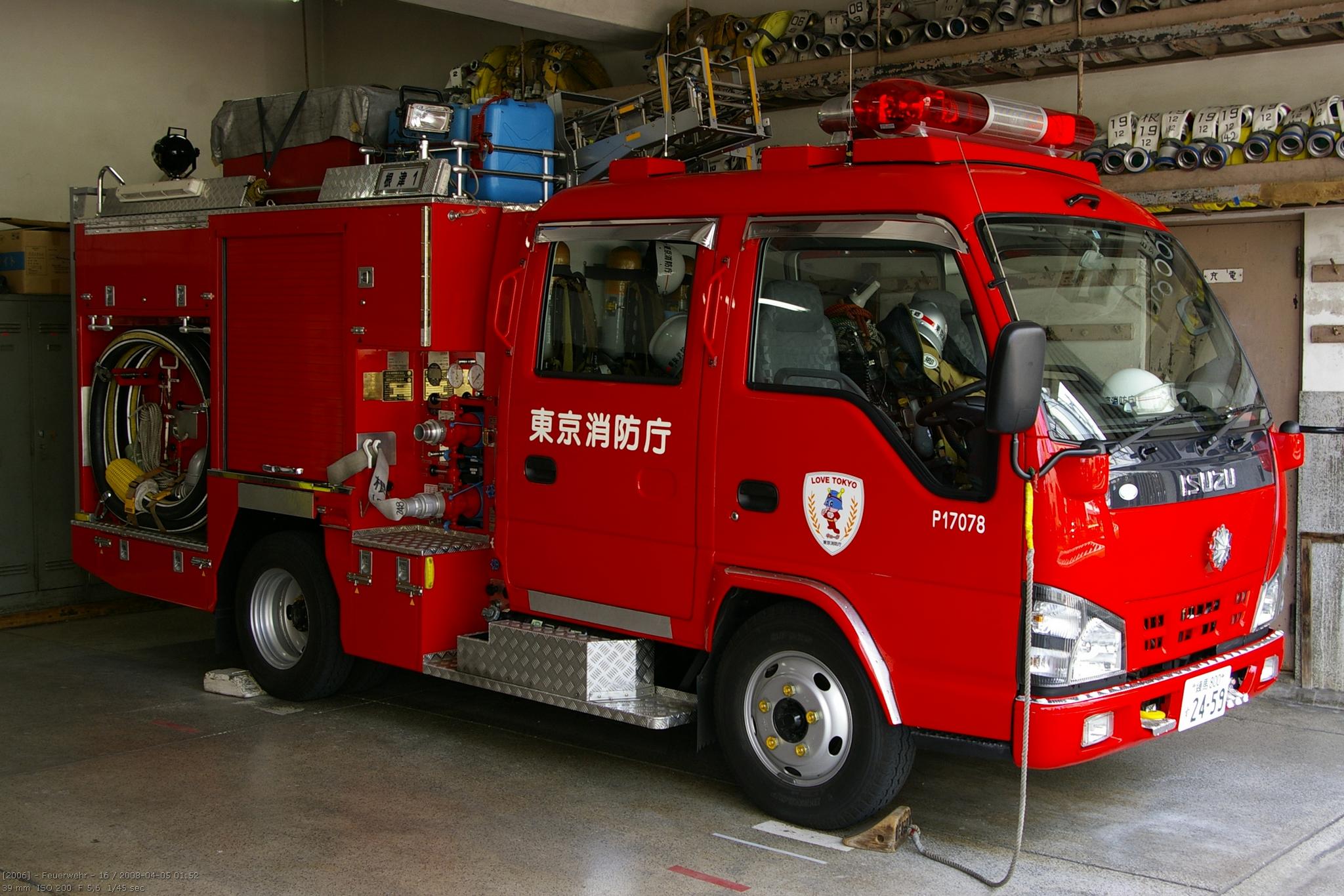
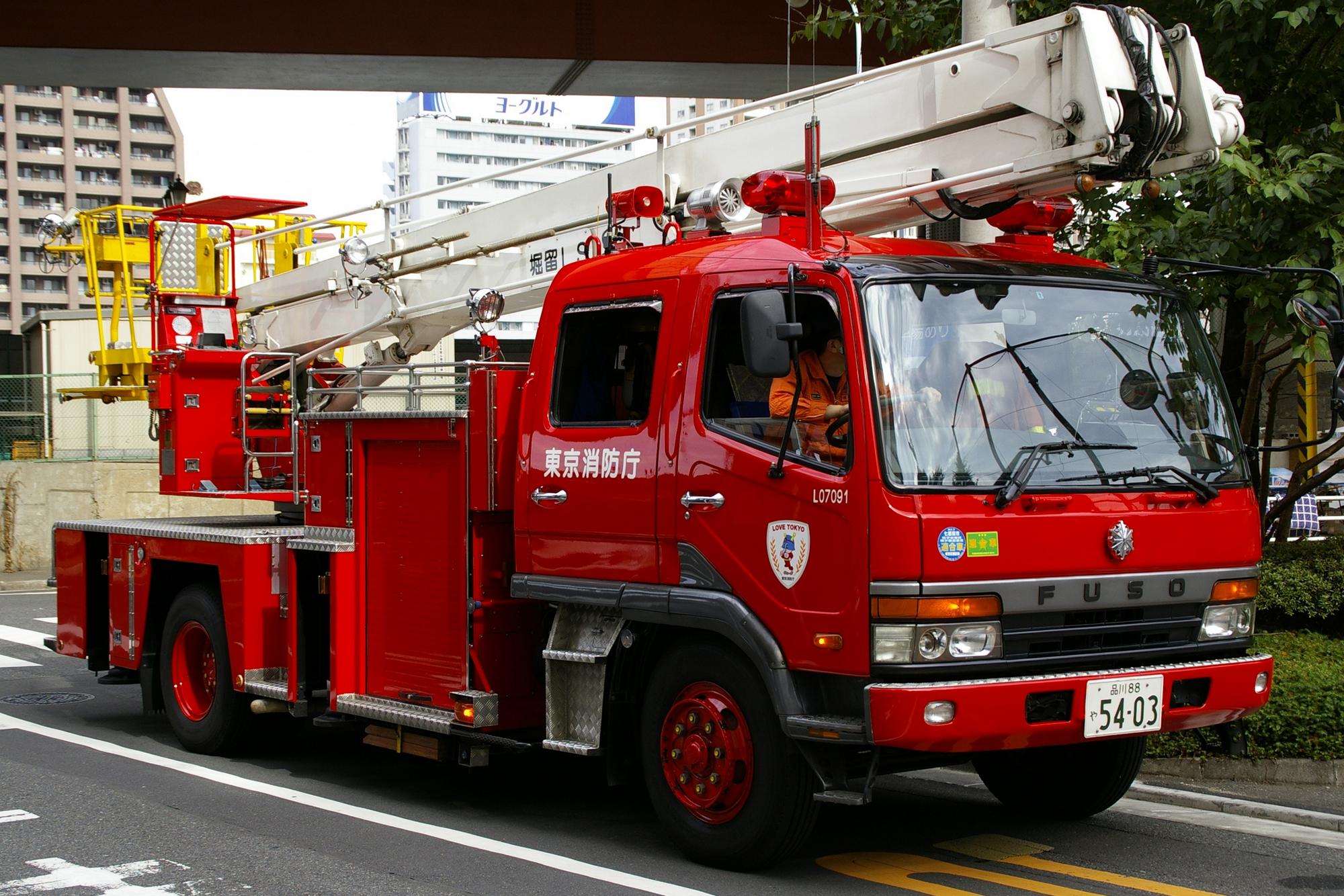
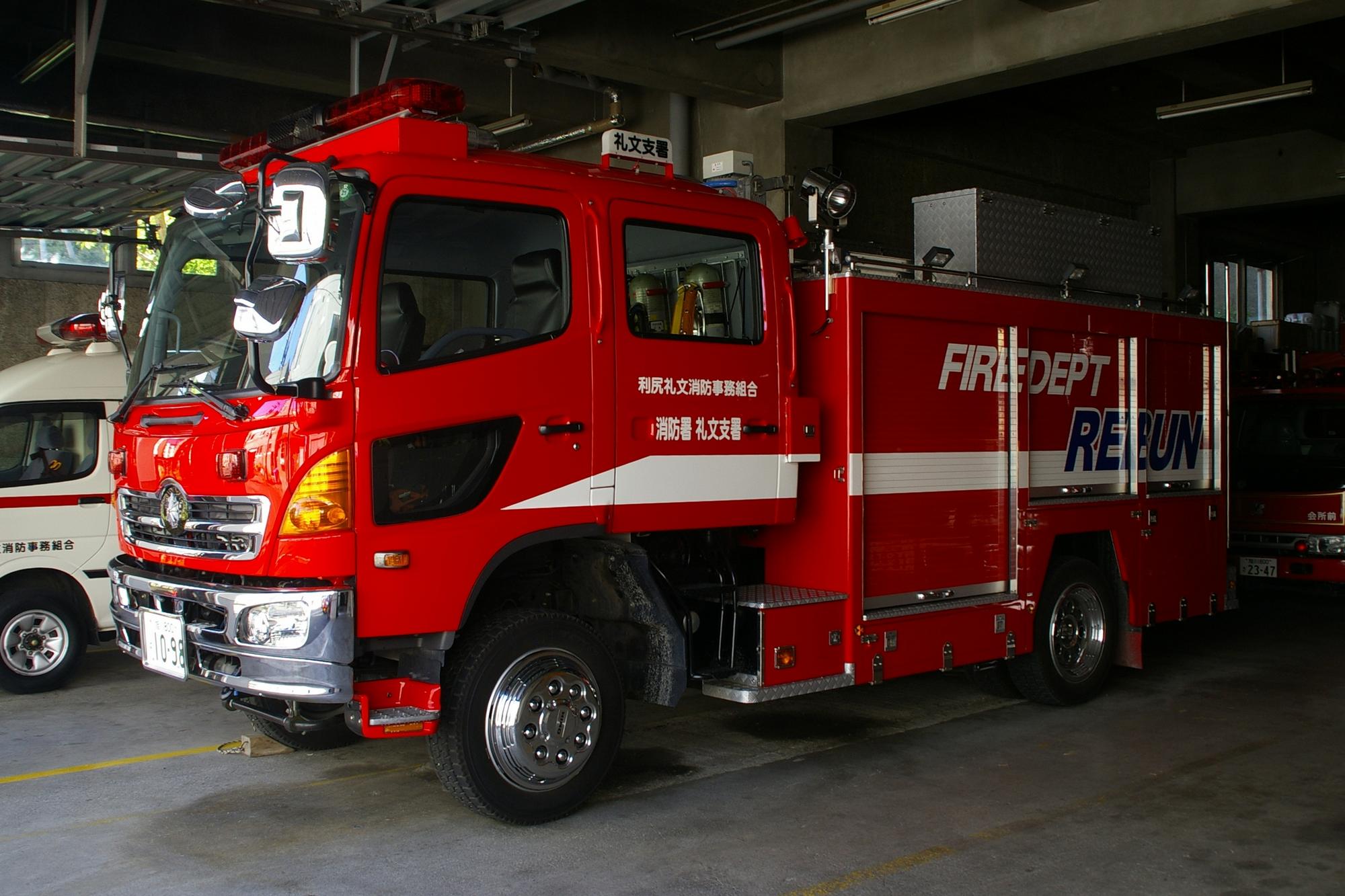
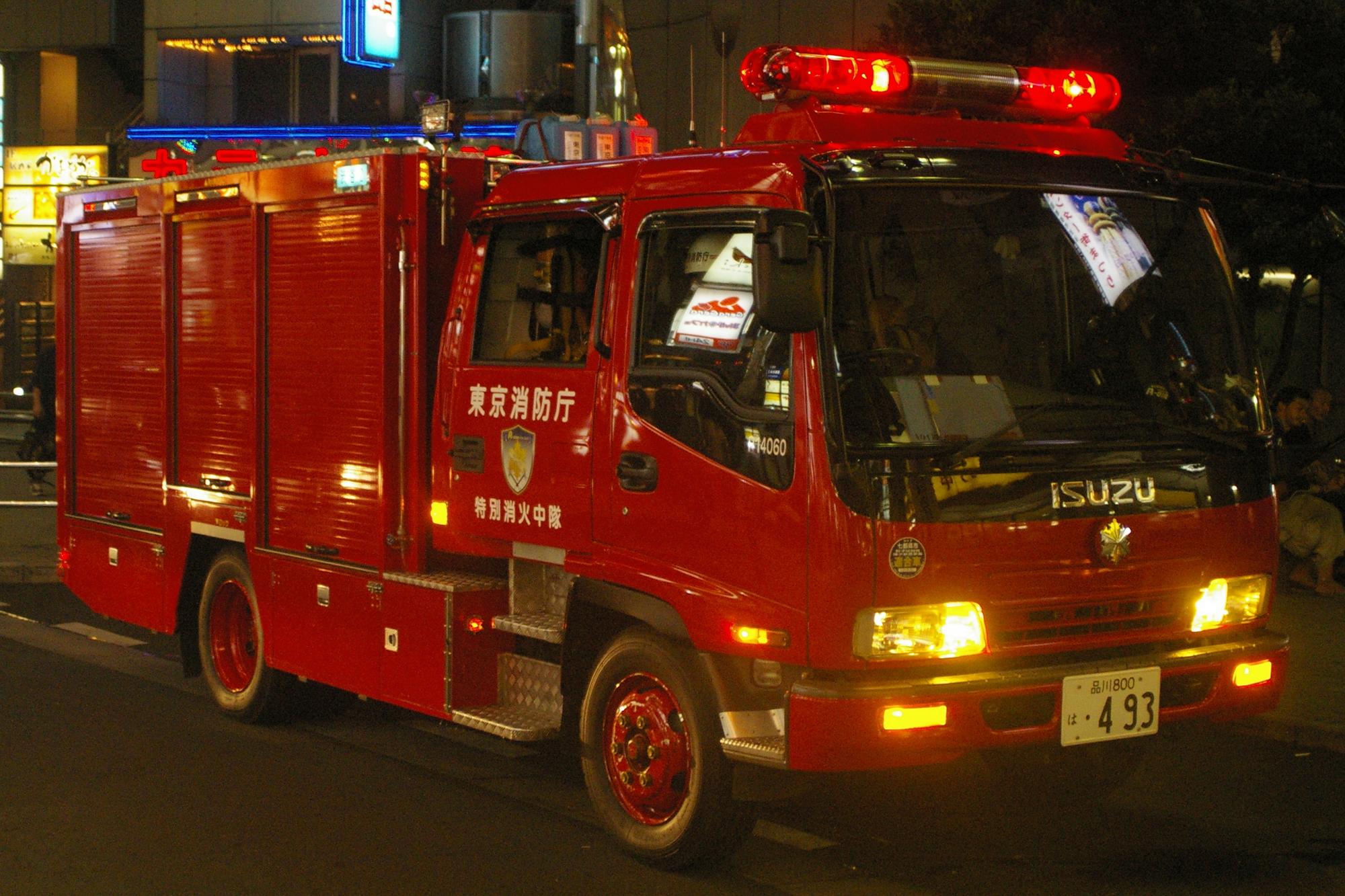
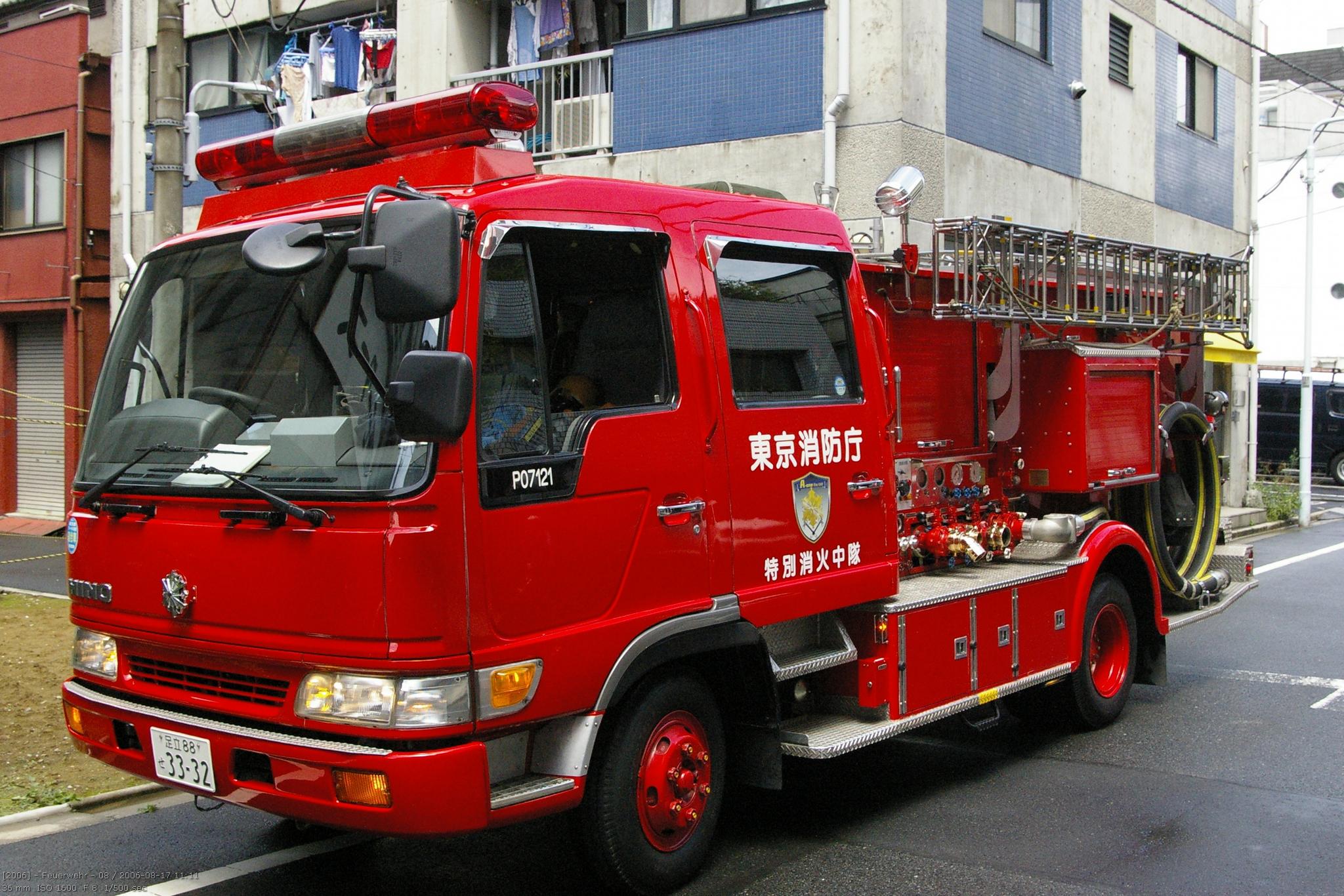
The fire department in Japan is maybe the best equiped fire department in the world. Like in America they have pumper, engines and ladders. Beside that there are exist special vehicles and units like super pumper, HazMat or the Hyper Rescue Team. But the size of the standard fire car is, let me say it this way: cute. Most of the cars or not bigger like an old German TSF (size of a delivery van). That is for a simple practical reason. In Tokyo you can see a lot of streets with 8 lanes or more, but also very narrow alleys that or just wide enough for a normal car. In Lübeck we have similar streets. Here this is always a one way road, but not in Japan. Mostly old shopping streets are that small. A big fire truck would get stuck at the first shop. But not these cute little cars with the short wheel base. They are extremly versatile.

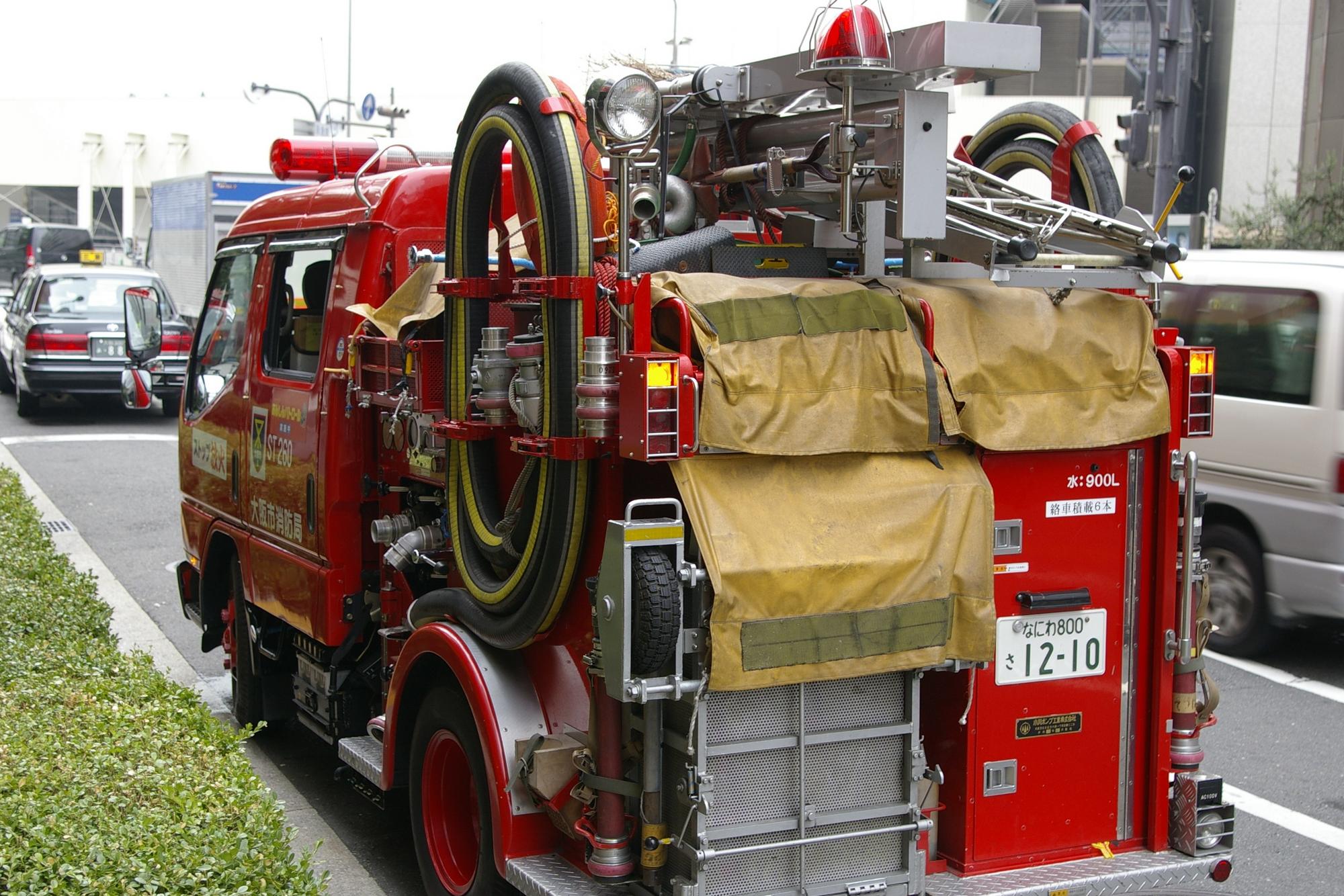
The look of this shrinked fire trucked is chaotic. In Germany all the equipment and even the pump is coverd by big shutters. At this cars most of the stuff is visible. But there is also a trend to compartments with shutters. The most noticeable thing is the suction hose. It is one peace and mounted to the pump (like on the picture). So far I never saw a portable pump, therefore the car itself has to be positioned at the lake.

Beside the normal fire trucks there many special vehicles. They are mainly for desasters. Japan does not have a THW (Germany) but many natural desasters. All the work is the job of the fire department. Because of the euarthquake they have many equipment for finding and rescueing buried survivors. And you have to add the playful nature of the Japanese. The have many robots, like a estinguish robot.

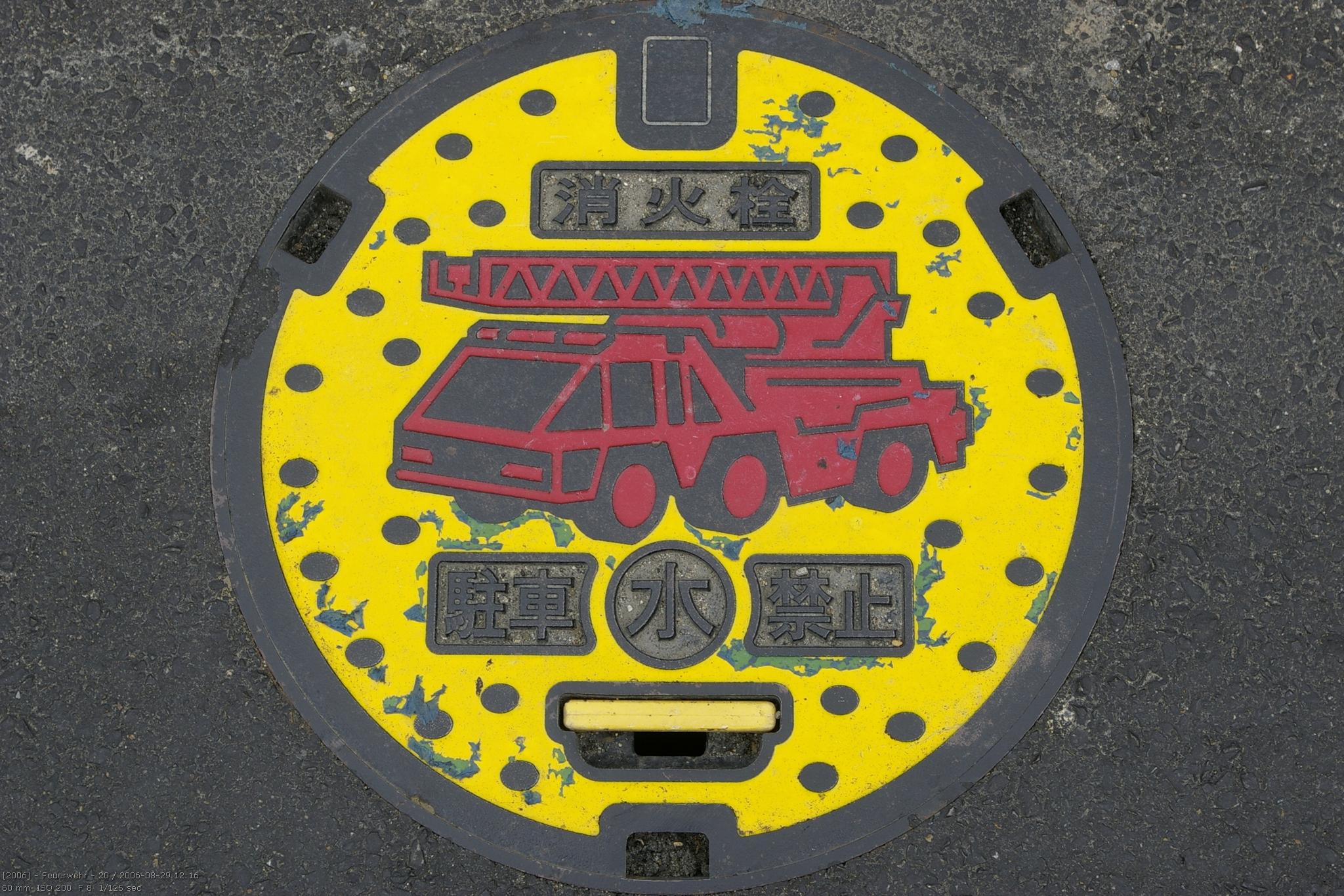
There are also cute details beside the cars. Hydrants are underground, like in Germany. But there is a big sign above them, so you can see them from far away. The signs are also useful for car drivers. Like in Germany parking on a hydrant is prohibited. In fine is very high compared to Germany and they check it. Oh yes. But avoiding a ticket is easy because of the big signs.

Here is the top of an hydrant. They look different in each city or city area. I really think about starting a picture gallery.

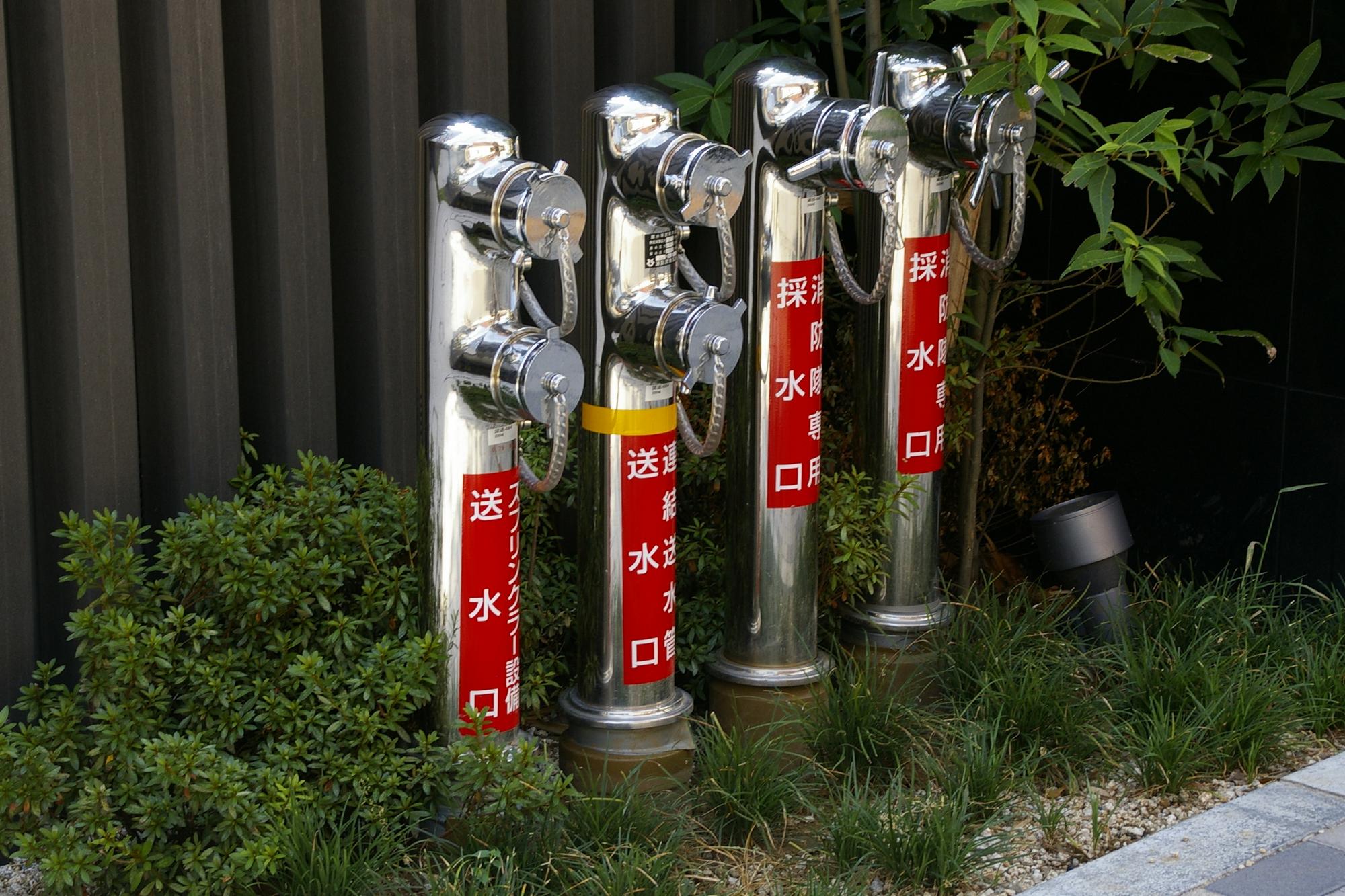
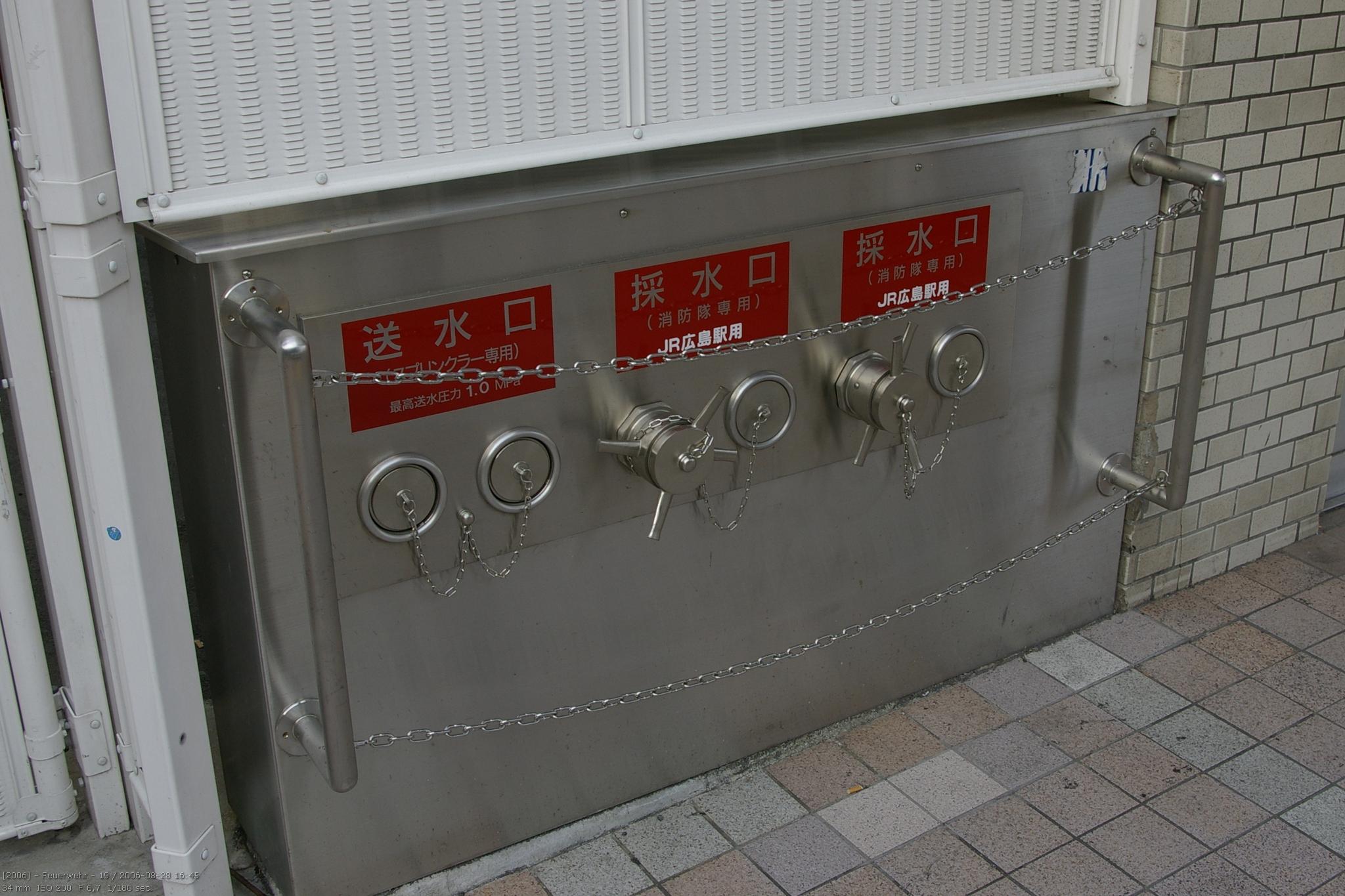
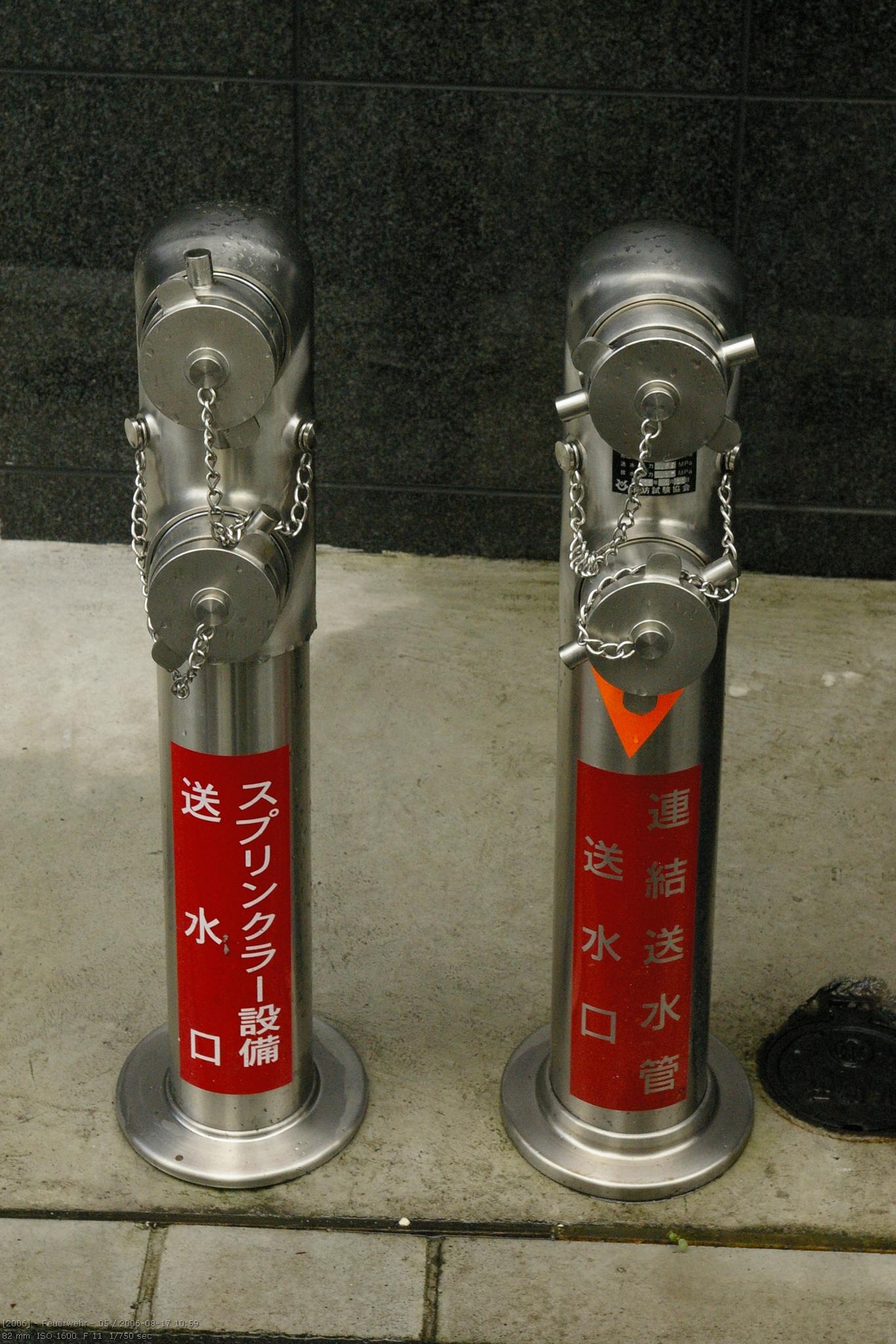
The connection to the riser pipes in high buildings are always in front of the building and easy to access. They not hide behind the dumpster. Most of them are all chrome and polished. They always look like right out of the box.

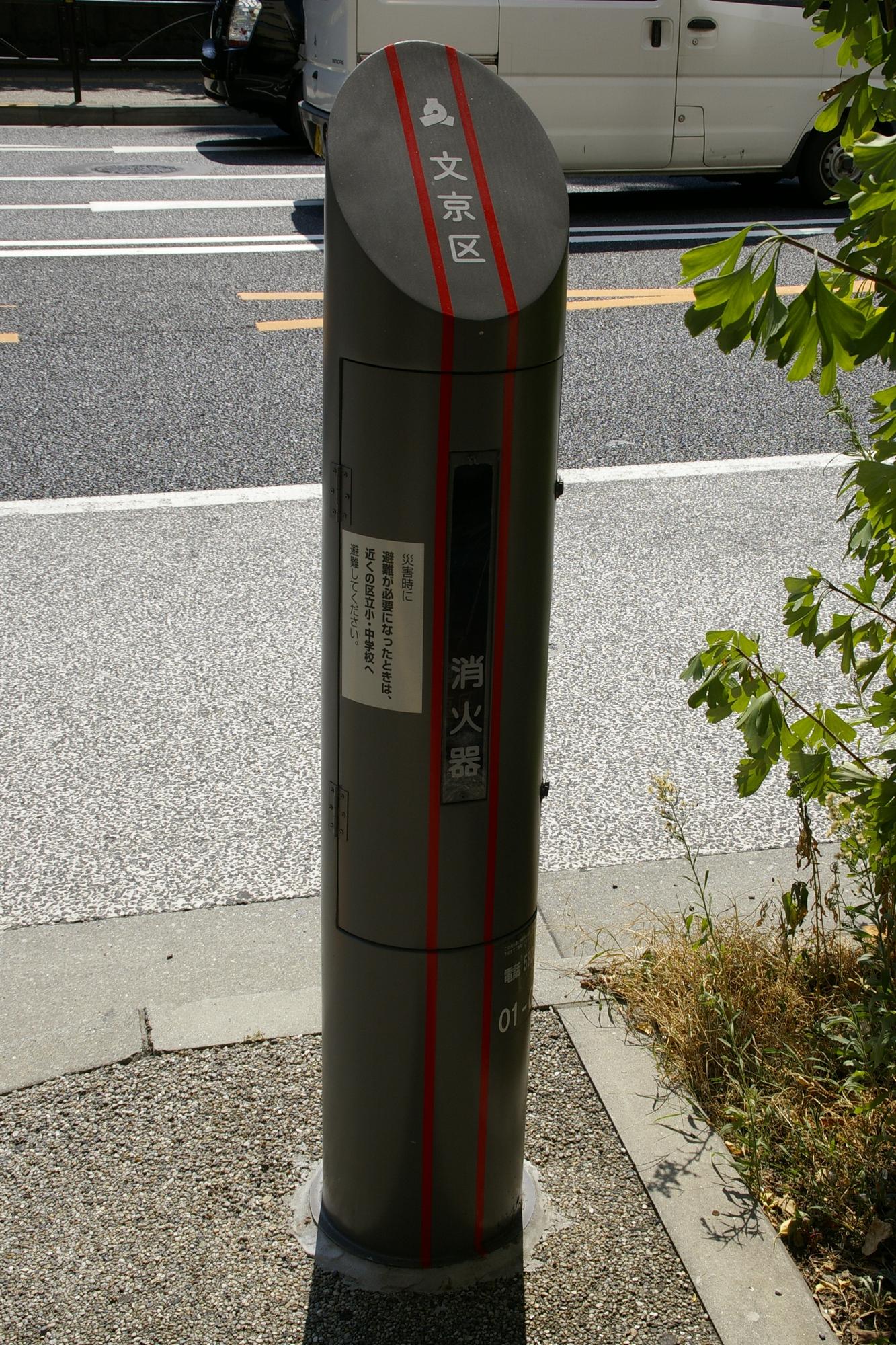
And those exist in Japan too: public fire extinguisher. In Germany they wouldn’t survive one party weekend, because there is always a stupid idiot that will destroy them just for fun. The Japanese are different. Even if they are young and totally drunk, they are never that antisocial like German teenagers. It doesn’t matter how hard and wild the party. This equipment is off-limits. (Maybe this is the fact that they could lose there job or beeing expelled from the university. In Japan you can still lose your face and become intolerable for your company.)

deutscher Blogeintrag

Onsen (part III) – Rules

It doesn’t if it is a onsen, ofuro, yu, rotenburo or the public bath room in a hotel: There are some very simple rules to follow. You should follow them unless you want to look like a complete idiot or be expelled from the bath. The rules are very simply. No need to worry.

  • If you are in Rome (Japan), do it like the Romans (Japanese).

This is not a real rule, but more like a very good advise. Be always low-key (Japanese appreciate self-effacement) und observe how the other behave. You will learn very quick how to act properly. If there is personal around, ask them for guidance. They will help.

Why? Japanese appreciate if foreign people try to learn, understand and follow their rules. They know that it is impossible to learn all the rules. It is important that you try, and if you do mistake, learn and do not redo the mistake again. Because the rules are important for Japanese, they will help you. This rule doesn’t aplly only for onsen, but for all in Japan.

  • Take of your shoes.

Like in Japanese houses you take of the shoes at the entrance. The border line is a smal step close to the door. In big sento like the Oedo onsen in Tokyo will will change into indoor slippers, that are always to small for European feet.

  • Take a shower before you enter the bath tub.

The bath tub is not for cleaning yourself but only for heat up and relax. You have to take shower before and after bathing in the tub. Take a shower very thorougly. There should no soap or shampoo be left on your body.

  • Sit down in the shower.

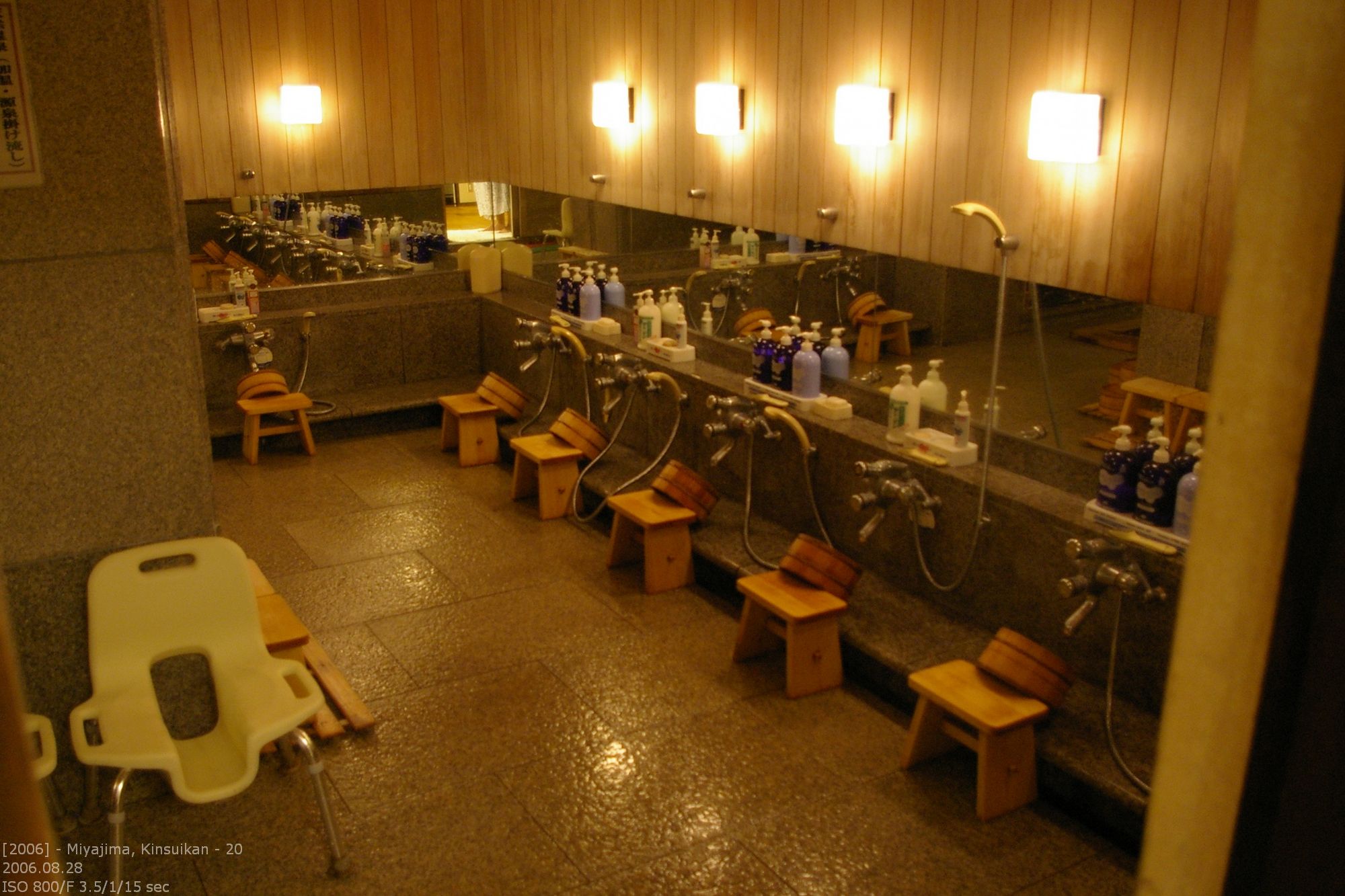
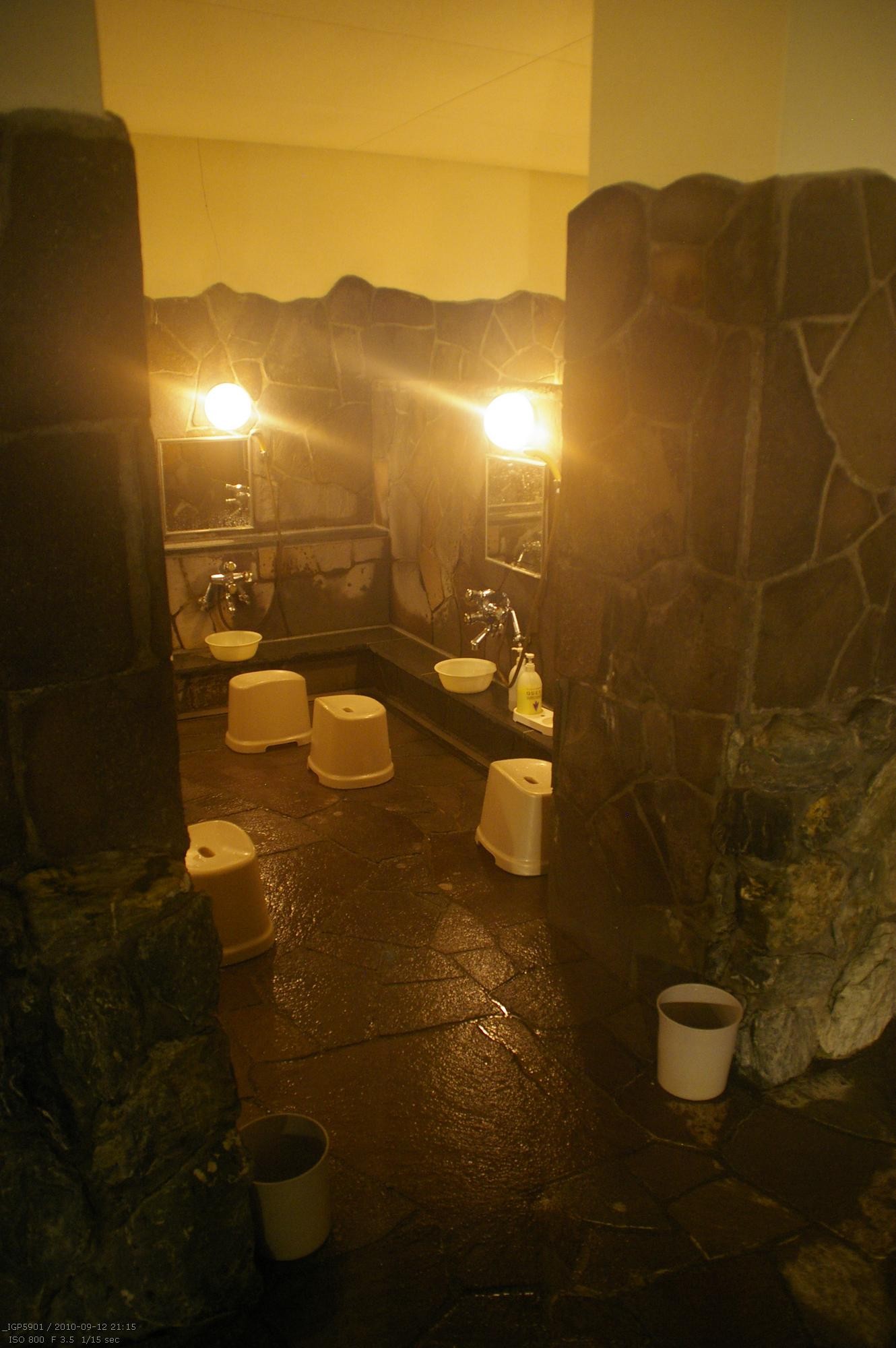
During the shower you sit on a small stool. Do not stand in the shower and avoid to hit other people with your water. There is a Japanese basic rule behind it: Never ever bother other people with your existance.

Duschen
  • The small towel always stays out of the bath tub.

If you see a Japanese with a towel, you can be sure that this is not the washing towel from the shower. But there are also many Japanese ignoring this rule. This doesn’t mean that you should do the same. The best position for the towel (not the one from the shower) is on the head. In winter time in a rotenburo this has the advantage that the head is protected against the cold.

  • After the bath towel yourself thoroughly before going to the changing room.
  • Remember: It is a bathing house not a swimming pool.

You take a bath. You are not swimming around or jump into the water. You take the bath naked. Therefore men and women are seperated.

  • In most onsen people with a tatoo are not allowed to enter.

This is due to the history of tatoos in Japan. Only Yakuza (Japanese mafia) had tatoos. This ban also include tine tatoos on your shoulder or ankle and also applies to foreign people. There are onsen that are very strict and other that don’t mind a small western style tatoo. But one thing is sure: Never start an argument. An no is a no.

Of course there are sento that allow tatoos. But these are run by the yakuza. If you take a bath there, you are in company of mobster. I really doubt that you will find such a sento or even get into it.

  • It is also not allowed to enter if you have a skin desease or an open wound.

There are many more of these rules. But they are minor and it is not a big deal if you don’t know them. Just learn them by experience. But if you don’t obey the rules above you can get yourself into big trouble. If you did a mistake: Say that you are sorry and promise to behave better in the future. (Notice that not knowing the rules is also bad behaviour in Japan.) Most of the Japanese are reacting positive to an excuse, if they see that your are honestly sorry. Use this situation for small talk. You usually et more information and advices how to behave correctly and not drop an clanger.

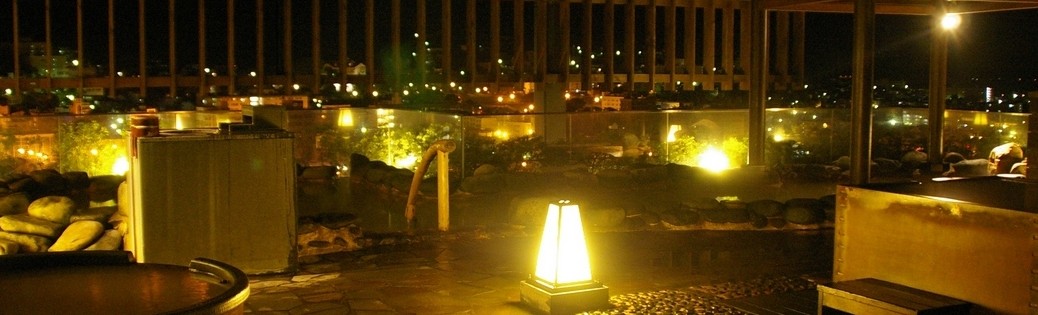
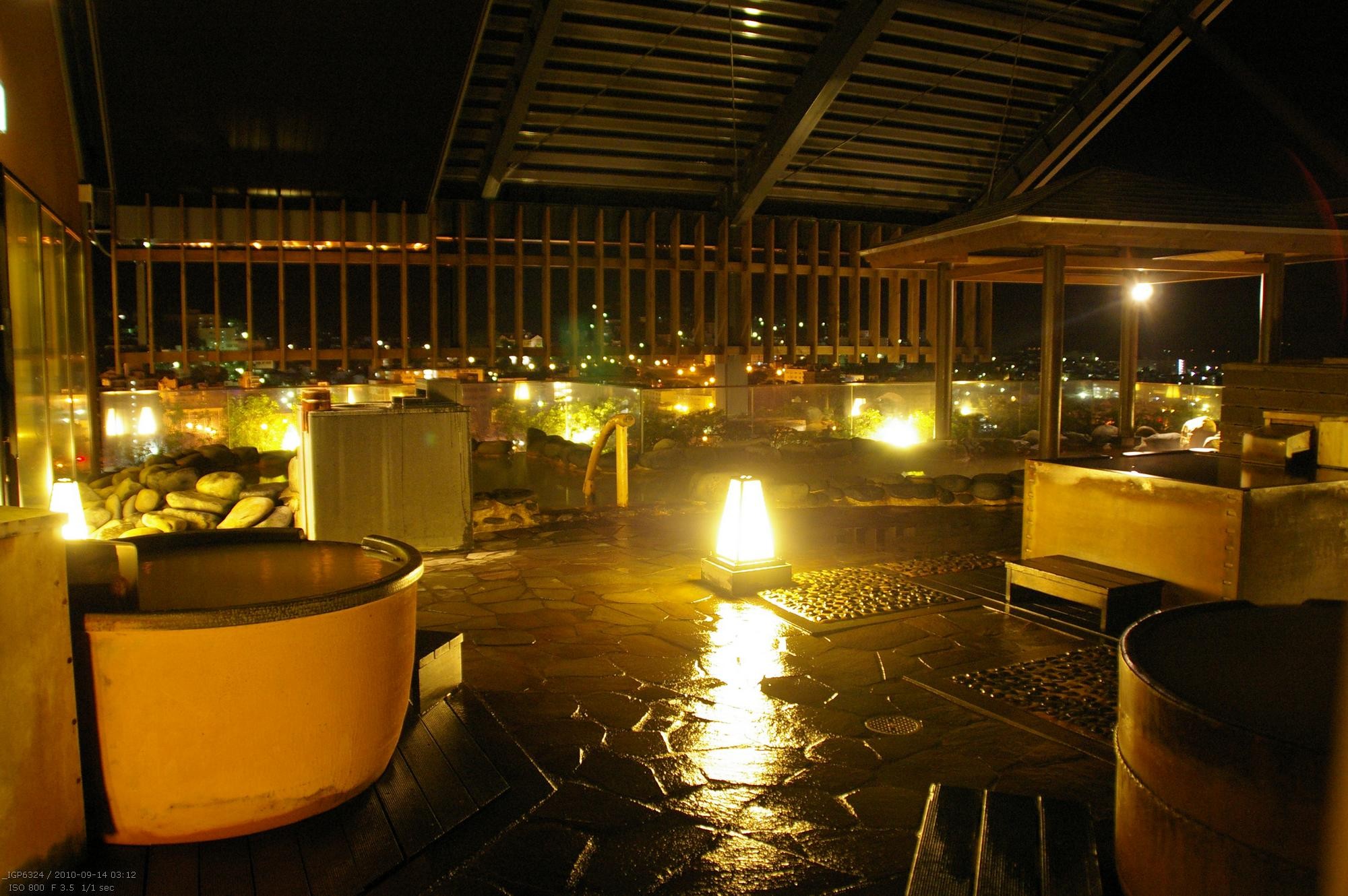
Awesome Rotenburo

Netsu no Yu (熱の湯)

Stay away from Netsu-no-yu. These are extremly hot onsen. Even a normal one is a challange for western people, because of temperature between 108 and 113°F. A Nestu-no-yu brings it up to 130°F. The water may be cooled down but it is still to hot for unexperienced people. If you are not used to this kind of heat you will give up if your foot is touching the water or you may faint because the circulation collapse.

Sake

Another good advice: Sake and onsen do not match, even if they have the same temperature. There are many anime and manga where you see people in the tub with sake floating around in a wooden bucket. Beside this bucket itself is not allowed in the tub it is also a stupid idea: The heat of the water makes you getting up sooner or later to cool down, but the sake at these temperature makes you sit down before you faint. This really is a challange for your body you shouldn’t underestimate. I tried it. Believe me: It’s a stupid idea.

And never try to bring a camera into a sento and take pictures. This is not only a very big fail on good behaviour but can bring you in deep trouble as well. It is a felony. All my picuteres were taken with the ok of the owner and after alle other guests left the onsen, usually after closing time If you want to take picture, ask politely at the front desk and let yourself accompanied by a member of the staff.

deutscher Blogeintrag

Onsen (part II) – terms around onsen

A Ofuro (風呂) is just a simple bath room with a tub. Hotels use this term sometimes to indicate that they provide more than a simple shower room. A Rotenburo (露天風呂) is bath tub outside under the free sky.

The terms „Private Rotenburo“ and „Private Onsen“ I have to explain. You take the bath naked. A onsen is a bath room and not a swimming pool. Therefore men and women are strictly seperated into different sections. The only exception is for small children that are accompanied by only one parent. If you traveling with your partner, even if you are married, you cannot take a bath together … beside in a private onsen/rotenburo. Like the names says, it is private. If it is in use there is a small sign at the door. If so, it is off limits for everyone else. Sometimes you find the term „family rotenburo“. I assume that this also stands for a big tub for the whole familiy.

A Yukata is the bath robe. Nothing more, nothing less. They provide them in hotels and you can wear them inside the hotel. In a hot spring resort you will see many Japanese that are walking around in the city wearing a yukata. I did it to in Shibu/Yudanaka in 2004 and Sounkyo in 2010. Very comfy. You also wear the yukata if you go to a shrine or temple festival or a firework, unless it is not that cheap blue and white version of the hotel. The yukata is a bath robe and also the informel version of the kimono.

Eingang

Onsen as a holiday experience

For Japanese onsen is more than just taking a bath. They create a complete holiday weekend around it; Friday to Sunday just relaxing in a onsen. Japanese have on 10 free days in a year (or even less). Therefore a weekend in an onsen is worth a lot. This is also the reason why theses places are so crowded at the weekend.

There are also many stereotypes around the myth of onsen. Specially if you travel with your girlfriend *hint*hint* Traditional ryokans do not allow to share a room if you are not married. Sometimes these rules are also apply for „private rotenburo“. There you are allown but you are still naked and not married.

„Onsen during wintertime“ was a priority on my list. This is one of the stereotypes. 2013 I realized this point. It was awesome. 17°F and I was sitting in the hot water of an rotenburo and enjoying the snow fall. I just skipped the sake because of bad experience in the past.

Writing

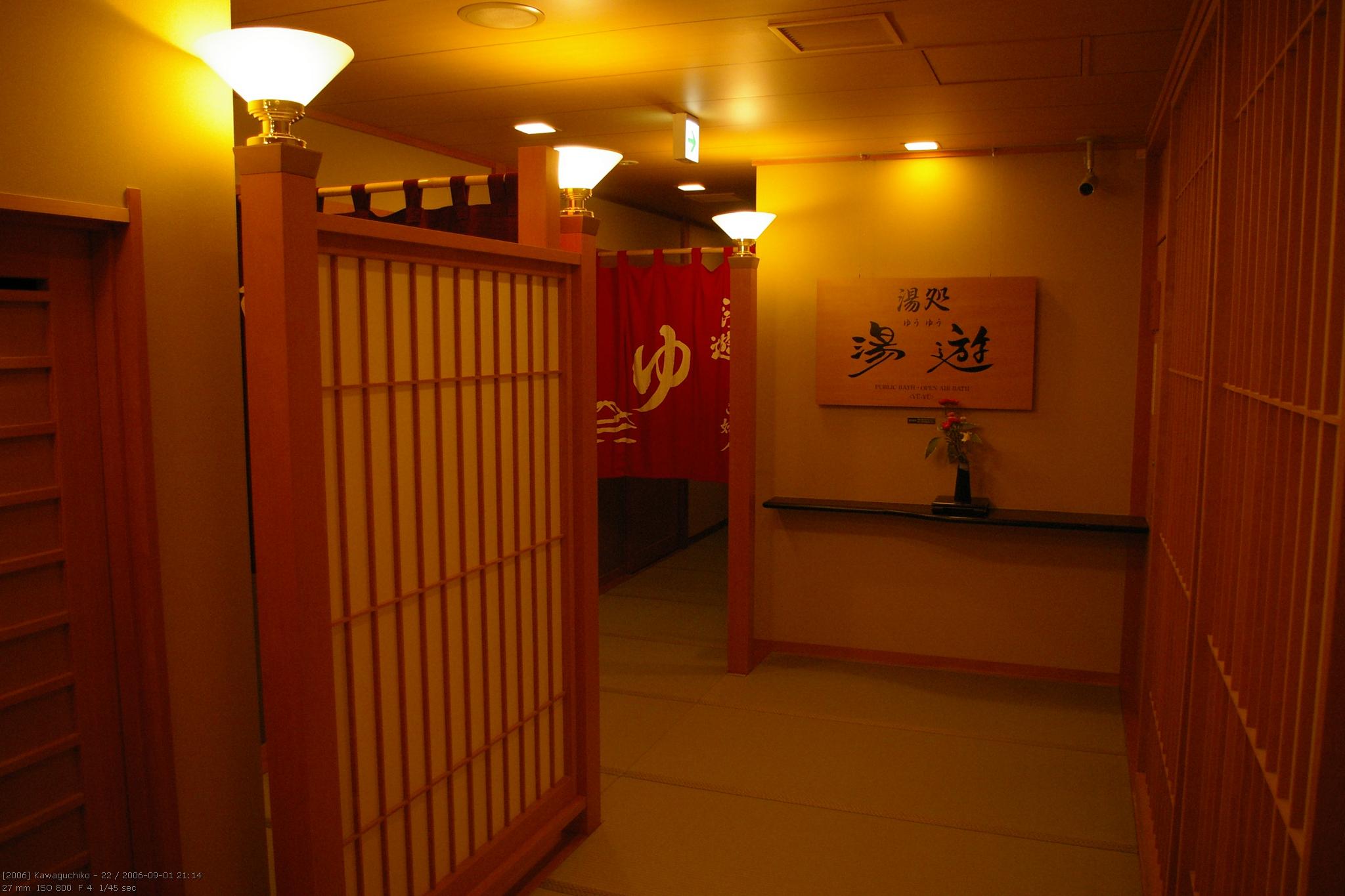
It doesn’t matter if you are looking for an onsen (温泉) or a sento (銭湯), you should look for the following character: 湯 and ゆ. Both are read „yu“ are translated „water“. Those character you will find on the flags next to the entrance door. If you want to take a bath, look for those characters.

Entrance und changing places

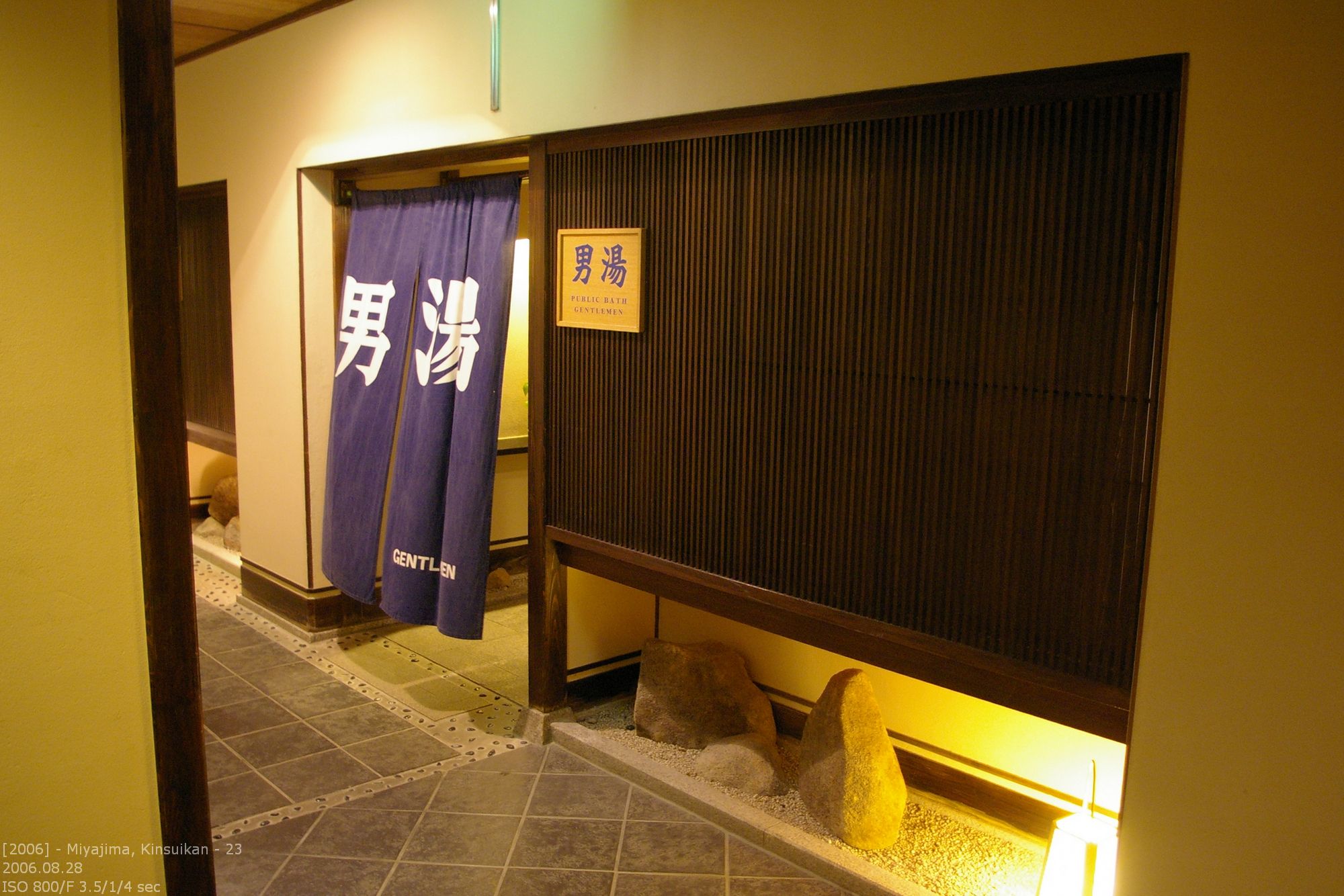
I already mentioned that the bath is seperated by sex. Therefore you have seperated changing rooms and entrance doors. They are always marked very clear. In a hotel there are sometimes noren with different color: blue = men; red = women. Additionally thery are Kanji printed on the noren or a small sign next to the door: 男 = otoko, man; 女 = onna, woman. Smaller onsen may a central entrance, with the ticket counter, and split behind this first door.

There is one specialty that can lead to embarrassing situation: Onsen may change sides! There are two possibilities: They chance sides once a day or twice a day. Usually once during closing time at night and in the afternoon. So be careful. Don’t use automatically the same door in the evening that you used in the morning or the same door you used yesterday. Always check out the noren and the signs. In hotels you will be informed about it during your check-in.

More on the next page …

deutscher Blogeintrag