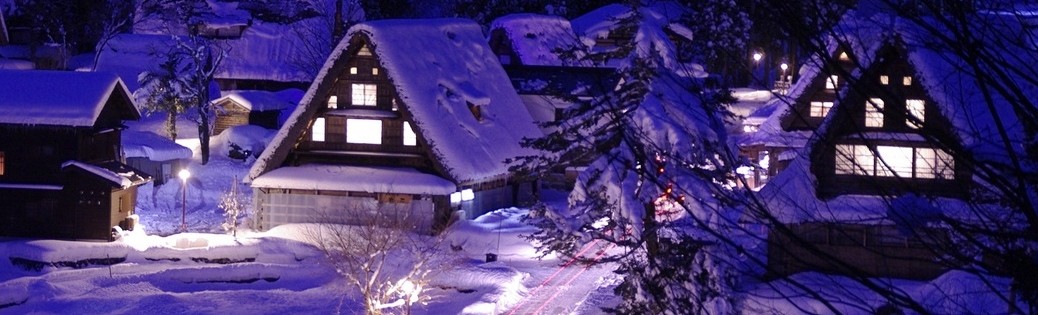
Door 12 – Obstacles

The is nothing new to report about the planning. I just need a day off.  But the topic of Japan is back on the schedule/the screen fast. At 9:24 I received a alert on my mobile: Major earthquake warning for Tokyo. The epicenter is at sea in front of the coast of Sendai. Tokyo will await a level 3 earthquake. I am online in a instant. A tsunami warning is already been issued; a evacuation order is out for the coast of Matsushima.

image4

My first idea: It is 2011 all over again. The epicenter is very close to the epicenter of Marck 11th, 2011. The tsunami will hit the same coast area. Lucky that I will visit the opposite site of Honshu; Kansai and Chubu. But another 7,3 magnitude earthquake can destroy my plans. One interrupted train track and my plans will be washed away.

image5

By the way. The snow level rises. Half of my travel route reports 20cm of snow. Nice. This is all I need. Tsunagi Onsen is still free of snow. I hope this will change. I hope that there are no surprises. Too much snow can be a problem too (Hokkaido is already reporting 1m), liked closed roads and canceled train connections.  But lucky that JR is not Deutsche Bahn.

image3

[deutscher Blogeintrag]

Door 11 – Waiting

The route is set. The request are send to the hotels and ryokans in Oosaka, Kyoto and Kisodani.  The JRP is ordered and the money has been wired. No it is waiting. Waiting for feedback. There is nothing new to report.

A good time to write some lines about the upcoming blog: If nothing happens I will try to write a small report at the end of every day. And I will also try to post some pictures. The end of the day means 10pm local time or 2pm in Germany. The blogs will not win a Pulitzer Price. And the pictures are raw. I will take of this when I am back. I want to discover Japan and not sit in front of my notebook.

There will be some „blackouts“. There is no internet access in Ainokura/Shirakawa. I am happy if I have electricity. The house I stay is a world heritage. It even doesn’t have central heating. Looks like some reports will be online delayed. The same goes for Kisodani. There I will also be offline. But I will arrive Tokyo two days later.

I am waiting for snow, too. The last report is not that good. The red line is my travel route. At the moment there is only snow at the mountain tops. Only Hokkaido is covered in snow. Asahikawa reports 1m of snow (the two yellow spots).

201212061500-00

I am excited how much snow I will see. Because it is the plan to soak in an onsen in the middle of nowhere covered in snow. I hope it will change within the next days. Today there was a weather warning for the northern coast with keywords like storm surge, high waves, gale and snow and thunderstorn. That reminds me, that I didn’t plan any backup days. This time there is now time for that. I stay not long enough in a hotel for that. Looks like all I can do is WAITING.

WetterwarnungThe actual weather forecast can be found under http://www.jma.go.jp/en/yoho/.

[deutscher Blogeintrag]

Door 10 – Exchange rates

The Yen exchange rate doesn’t like me. it is rising. It will be the worst rate since the beginning of my trips in 2004. Meaning: This will be the most expensive journey ever.

Yenkurs 14 Jahre

Here is the history of the exchange rate of the last 14 years. Low means good. I usually use the 10.000yen hotel room for example. On my first trip is costs $100 (75€). On my third trip it was $80 (60€). Therefore the hotels on this trip were from the high price section. I even booked the Deluxe Suite in Hotel Edoya or a room in the Nikko Kanaya. Sadly, I got used to this luxury.

On my last trip I got some trouble. The yen went up twice very steep. Thanks to Leman Brothers in 2008 and Greece in 2010. The displayed ratesin bank were 100:1 The highest rate ever for me. The reference hotel room was now at $130 (100€). An increase of 60% from the trip before.

Just to think about it. A deposit at your account will give you 2% p.a. If you had some yen in 2008 they would have made over 25% p.a. for 2 years. And if you had waited until today you would still have got 12% p.a. Better not think about it.

Yenkurs 6 Monate

And this time the exchange rate will be worse. No more Spa & Resort Hotels. Since 2010 the rate is still rising. The worst vaule was in July with a 107:1. But I have a little bit of luck. Since July the rate is falling slowly. It doesn’t look that big of a deal, but we are talking about 10%. On a $4500 trip it will save me $450.

I have to do something. Specially at the hotels. My plan was a night in Minakami. But 24000 yen for a night is not possible this time. We are talking about $320. In 2008 it were only $190 and a different story. Maybe I would have booked it then, just because it is theee onsen. But I placed my limit at 7000yen, and only want to go above it, if I have to, if there is no other room available. And I will change money as late as possible, to get the best exhange rate possible.

If I think about it: My 2008 trip cost me $5300. Today I would have to over $8500 for the same trip. Wow. In the other direction: My actual hotel cost calculation of $4000 in the old 2008-rate would shrink the cost to $2400. No, I don’t want to think about it. But there may be one positive aspect: Less annoying gaijins running around.

BTW … In two weeks I will be in Japan.

[deutscher Blogeintrag]

Door 9 – JRP is ordered

I wrote many big tables and checked them several times. The 2 week-JRP in combination with the 3-day nonJR-Kansai-Pass is the best option. I never expected this outcome; not with all this non-JR-trips. Therefore the advantage to single tickets is small. $130 only. It is a question of luxuary, reserved seats and fast connections, but also spontaneous changes in plan.

Who wants to get some information about my destinations on this tour will find some useful information here:

  • japan-guide – A very good webpage that also lists bus connection to single attractions. Busses are not listed in Hyerdia. I believe that this webpage is better for non-backpackers than the Lonely Planet. The website lists the attraction of „only“ 154 cities. This even is a lot if sort out ski resorts and hiking places.
  • JNTO – The official tourism information page
  • JPRail -A webpage that focus on train connections in Japan. Two years ago I found here all the information about the Hokutosei. The webpage has useful information about how to get from A to B.
  • wikitravel – I didn’t used it, but it looks quiet intersting.
  • specially for Toyama: www.info-toyama.com

[deutscher Blogeintrag]

Door 8 – Closed

I found this website by accident: Visiting Japan During New Year. I saw the list that you can call „Closed during New Year“. Lucky for me. Because I planned to visit the Castle in Matsumoto on my way from Kiso valley to Tokyo. But the castle is closed during that time. I still have Inuyama and Nagano for plan B. Last one is only a good idea if I decide for the big JRP.

The fish market is closed until January 4th, too. It was on my list for the 2nd. Getting up at 4am for nothing would have ruin my day. Maybe I move it to the 6th. The market is half way to Big Sight, where the Dezome Shiki takes place.

Also to mention that many shops and restaurants will be closed until the 4th. This explains all the trouble with booking a hotel during New Year. Everyone is on vacation. But it looks like all temples and shrines are open; because of New Year.  Maybe I should double check all  train connection with the real date. Maybe there is a special time table for these days, a canceled connection or a train leaving 10 minutes earlier.

btw:To calculate the fare, you can use google maps. This is pertty handy. The route planning function also has an option for walking from A to B. To get a better information about train connection you can use Hyperdia; like I will do in a few minutes.

From dawn till dusk

There is another factor I have to put into my calculations: Daylight. How much do I have. All last trips took place in September, during autumn equinox. Tokyo is closer to the equator. Therefore the days in summer are shorter than in Lübeck. But in winter they are longer. How big is the difference? Will it affect my plans (taking pictures at 5pm)?

The charts above are created with Kompf.de and show the problem. The the plots are not looking symmetrical is the result of the time equatian. But I will skip the physical background. The result for the trip is simple:

All 4 times before I had 12,75 hours of day light (5:15-18:00).
This time I have 3 hours less.

In the evening I will miss the 1,5 hours of light. My visit to two cities in one day (Asuka + Yoshino and Hikone + Eihei-ji) will need a tighter schedule. At 5pm the light is gone. At 4pm I have to increase the ASA sensitivity. Looks like i have to get up early and skip breakfast.

The next problem are the red and the dark blue areas in the charts. Dusk is come very quick. In the red area a picture is still possible with a tripod. After that you need a flash. The red area really is small. I recognized that before. It is dark in an instant. Not like in Lübeck where the dusk last forever in summer time. In June dusk and dawn become one. Midsummer. In a clear night you can see all the colours of the sunset during the whole night at the horizon, even 2am in morning. I had a picture on the title page of the local news paper.

I should double check the departure time of all trains too. On my first holiday I lost 3 days because of bad train connections. On my second trip there were two days ruined by badly planned day trips. On my last trip I checked a few connection before, but only because there was a ferry involved between Wakkanai and Rishiri and only two train to Wakkanai at the day.

[deutscher Blogeintrag]